SERVICES OFFERED
ENDOSCOPY
- Diagnostic & Therapeutic Upper GI Endoscopy
- Diagnostic & Therapeutic Colonoscopy
- Capsule Endoscopy
- ERCP & Cholangio-pancreatoscopy
- Endoscopic Ultrasound [EUS]
GI MOTILITY LAB
- 24 Hrs Esophageal pH-Impedance study
- Esophageal & Anorectal Manometry
BREATH TESTS
- Hydrogen Breath Test for small intestinal bacterial overgrowth
- Urea Breath Test for H. pylori infection
SURGERY
- Esophageal & Gastric Surgery
- Hepatectomy & Liver Surgery
- Pancreato – Billiary Surgery
- Colorectal Surgery
- Hernia Surgery – Laparoscopic & Open
- Minimally Invasive & Laparoscopia Surgery
- Gl Oncology Surgery
- Surgery for Piles, Fistula & Fissure
RADIOLOGY
- Digital X-Ray
- Ultrasound with Colour Doppler
- Liver Elastography [Fibroscan] for liver fibrosis and steatosis.
PATHOLOGY
CRITICAL CARE TAIL
- State of Art Intensive Care Unit & Expert Team for management of GI and hepato-pancreato-biliary diseases
ADVANCED SERVICES OFFERED
ERCP & CHOLANGIO-PANCREATOSCOPY
- Complex Pancreato-biliary Procedures
[Multiple biliary stent placement for hilar strictures;
mechanical lithotripsy for CBO stones] - Laser Lithotripsy Treatment for CBD / pancreatic stones
- CBD Stricture evaluation
- Ampullectomy
THIRD SPACE ENDOSCOPY
- Endoscopic Mucosal Resection [EMR] & Endoscopic Submucosal Dissection [ESD] for early gastrointestinal cancers
- Peroral Endoscopic Myotomy [POEM] for Zenker’s Diverticulum,
Achalasia Cardia, Gastroparesis, Hirschsprung’s disease - Submucuosal Tunneling & Endoscopic Resection [STER]
& Endoscopic Full-Thickness Resecton (EFTR] for subepithlial tumors
ANTIREFLUX TREATMENT [FOR GERD]
- Antireflux Mucosal Ablation [ARMA]
- Endoscopic Funcoplication
ENDOBARIATRICS [FOR WEIGHT LOSS]
- Gastric Balloon placement
- Endoscopic Sleeve Gastroplasty
ENDOSCOPIC ULTRASOUND [EUS]
- EUS & EUS – guided FNAC / Biopsy for diagnosis
- EUS – guided Pancreatic Cysto-gastrostomy / Choledocho-jejunostomy / Hepatico-gastrostomy
- EUS – guided Gastric Variceal Glue & Coil treatment
What Is Gastrointestinal Cancer Surgery?

Types of Gastrointestinal Cancers Treated With Surgery
- Colorectal cancer including colon cancer and rectal cancer
- Stomach cancer requiring gastrectomy
- Liver cancer including hepatocellular carcinoma
- Pancreatic cancer requiring pancreatic resection
- Gallbladder cancer requiring surgical removal
- Oesophageal cancer requiring oesophagectomy in selected cases
- Small intestine cancer requiring intestinal resection
- Ampullary cancer at the junction of the bile duct and pancreatic duct
- GI stromal tumours requiring surgical resection
- Liver metastases from colorectal or other primary cancers
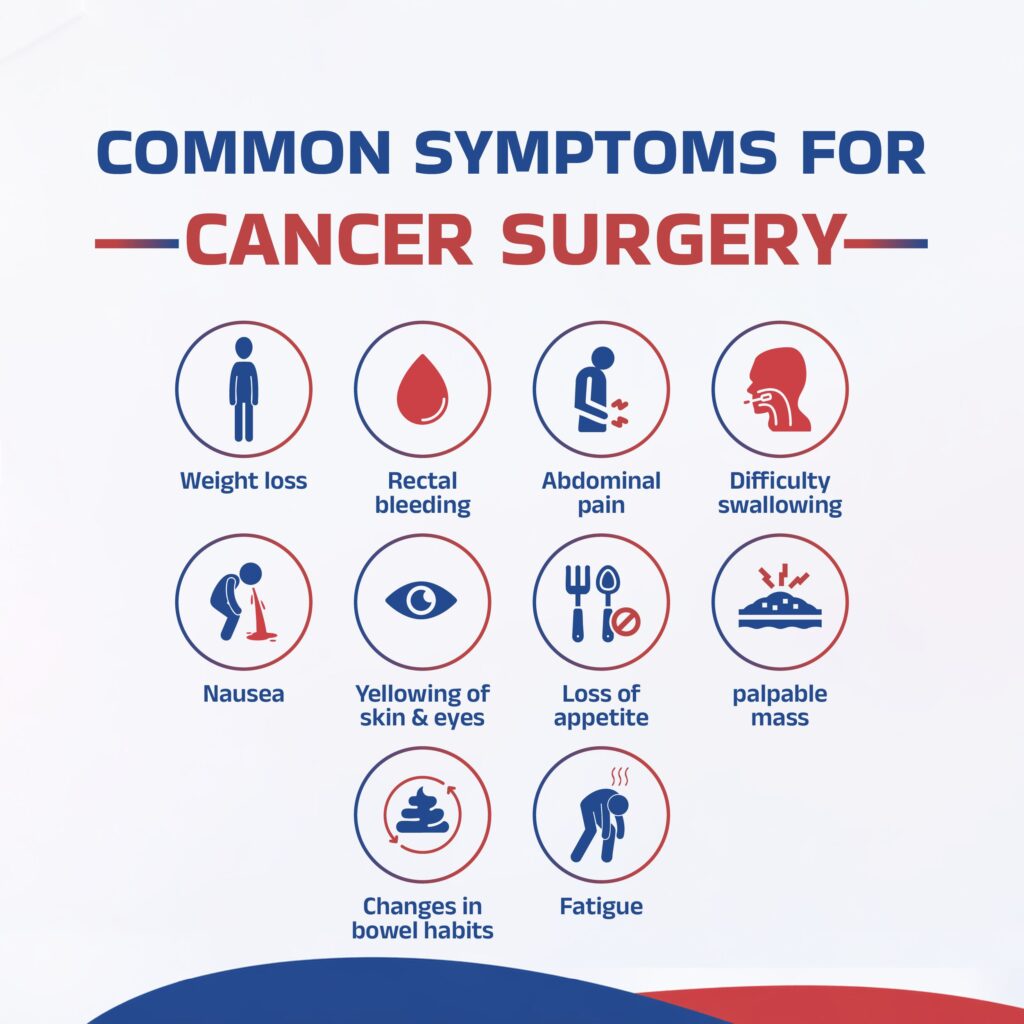
Common Symptoms That May Indicate Gastrointestinal Cancer
- Persistent and unexplained weight loss
- Blood in the stool or rectal bleeding
- Persistent abdominal pain or discomfort that is worsening
- Difficulty swallowing food or liquids
- Persistent nausea and vomiting
- Yellowing of the skin and eyes indicating jaundice
- Loss of appetite lasting more than a few weeks
- A palpable mass or lump in the abdomen
- Changes in bowel habits that persist for more than a few weeks
- Persistent fatigue and anaemia without an obvious cause
When Is Cancer Surgery Recommended?
- The tumour is resectable and surgical removal can be performed safely
- Surgery offers the potential for curative resection or significant clinical benefit
- The patient is fit enough to undergo the surgical procedure
- Surgery is recommended as part of a multimodal treatment plan including chemotherapy or radiation
- Palliative surgery is required to relieve symptoms such as obstruction or bleeding
- Recurrent or metastatic disease in selected cases where surgical intervention offers benefit
Cancer Surgery Options in Nagpur
| Surgical Approach | Suitable For |
|---|---|
| Laparoscopic colorectal cancer resection | Colon and rectal cancer, minimally invasive |
| Open colorectal surgery | Advanced or complex colorectal cancer |
| Gastrectomy | Stomach cancer requiring partial or total stomach removal |
| Hepatic resection | Liver cancer and liver metastases |
| Whipple procedure | Pancreatic cancer and periampullary tumours |
| Distal pancreatectomy | Cancer in the body or tail of the pancreas |
| Cholecystectomy with bile duct resection | Gallbladder cancer |
| Intestinal resection | Small intestine cancer and GI stromal tumours |
| Palliative surgical procedures | Symptom relief in non resectable cancer cases |
What Happens During Cancer Surgery?
- A comprehensive pre operative assessment including blood tests, advanced imaging, endoscopic evaluation and nutritional assessment
- A multidisciplinary review involving gastroenterology, surgical gastroenterology and other relevant specialists
- Administration of general anaesthesia to ensure complete patient comfort throughout
- Careful surgical removal of the tumour along with appropriate margins of surrounding tissue
- Assessment and removal of regional lymph nodes as required by oncological principles
- Reconstruction of the digestive tract as needed following resection
- Close haemostatic control and placement of drains as required
- Incisions are closed and the patient is transferred to the recovery area
Recovery After Cancer Surgery
- Hospital stay varies depending on the type and extent of surgery performed
- Nutritional support and dietary guidance are provided throughout the recovery period
- Gradual reintroduction of oral intake starting with fluids and progressing to normal food
- Close monitoring for post operative complications specific to the type of surgery
- Wound care and monitoring for any signs of infection at incision sites
- Regular follow up appointments for imaging and clinical assessment after surgery
- Further treatment such as chemotherapy or radiation may be recommended as part of the overall cancer treatment plan
- Full recovery timelines vary significantly depending on the type of surgery and individual healing
Why Choose LGI Hospital for Cancer Surgery in Nagpur?
- Dedicated GI Oncology Surgical Expertise: LGI Hospital in Nagpur has a team of surgical gastroenterologists with specialised expertise in gastrointestinal oncology surgery, covering the full spectrum of GI cancers from colorectal and stomach cancer to liver, pancreatic and biliary cancers.
- Advanced Minimally Invasive Cancer Surgery: The surgical team at LGI Hospital performs laparoscopic GI cancer surgery in suitable cases, offering patients the benefits of minimally invasive techniques while maintaining the highest oncological standards.
- Integrated Multidisciplinary Approach: Cancer care at LGI Hospital is approached with a multidisciplinary perspective, ensuring that every patient's treatment plan is comprehensively evaluated and coordinated across relevant specialities for the best possible outcome.
- Compassionate and Patient Centred Care: A cancer diagnosis is a profoundly challenging experience for patients and their families. The team at LGI Hospital is committed to providing not only the highest standard of surgical care but also compassionate, sensitive and patient focused support throughout the entire cancer surgery journey.
FAQ
Q1. Is cancer surgery painful?
GI cancer surgery is performed under general anaesthesia and patients do not experience pain during the procedure. Post operative discomfort varies depending on the type and extent of surgery. The surgical team at LGI Hospital provides comprehensive pain management and support throughout the recovery period to ensure patient comfort at every stage.
Q2. How long does cancer surgery take?
The duration of GI cancer surgery depends significantly on the type of cancer, its location and the complexity of the procedure. Procedures can range from two hours for less complex resections to eight hours or more for complex procedures such as the Whipple operation. The surgical team will provide a realistic estimate based on the individual pre operative assessment.
Q3. Is cancer surgery the only treatment option?
Cancer surgery is one of the primary treatment modalities for GI cancers. Depending on the type, stage and location of the cancer, surgery may be used alone or in combination with other treatments such as chemotherapy, radiation therapy or targeted therapy. The appropriate treatment plan is determined through a comprehensive multidisciplinary evaluation tailored to each individual patient.
Q4. Recovery after cancer surgery in Nagpur — what to expect?
Recovery after GI cancer surgery varies widely depending on the type and extent of the procedure. Hospital stays can range from three to fourteen days or longer. Full recovery may take several weeks to months. Further treatment such as chemotherapy may be recommended after surgery. The surgical team at LGI Hospital provides personalised recovery guidance and ongoing monitoring for every patient.
Q5. Which hospital is best for cancer surgery in Nagpur?
LGI Hospital in Dhantoli, Nagpur is a dedicated single speciality gastroenterology hospital with experienced surgical gastroenterologists who have specialised expertise in GI oncology surgery covering the full spectrum of gastrointestinal cancers. The hospital provides advanced surgical capabilities, minimally invasive techniques and a compassionate multidisciplinary approach to cancer care under one roof.