
SERVICES OFFERED
ENDOSCOPY
- Diagnostic & Therapeutic Upper GI Endoscopy
- Diagnostic & Therapeutic Colonoscopy
- Capsule Endoscopy
- ERCP & Cholangio-pancreatoscopy
- Endoscopic Ultrasound [EUS]
GI MOTILITY LAB
- 24 Hrs Esophageal pH-Impedance study
- Esophageal & Anorectal Manometry
BREATH TESTS
- Hydrogen Breath Test for small intestinal bacterial overgrowth
- Urea Breath Test for H. pylori infection
SURGERY
- Esophageal & Gastric Surgery
- Hepatectomy & Liver Surgery
- Pancreato – Billiary Surgery
- Colorectal Surgery
- Hernia Surgery – Laparoscopic & Open
- Minimally Invasive & Laparoscopia Surgery
- Gl Oncology Surgery
- Surgery for Piles, Fistula & Fissure
RADIOLOGY
- Digital X-Ray
- Ultrasound with Colour Doppler
- Liver Elastography [Fibroscan] for liver fibrosis and steatosis.
PATHOLOGY
CRITICAL CARE TAIL
- State of Art Intensive Care Unit & Expert Team for management of GI and hepato-pancreato-biliary diseases
ADVANCED SERVICES OFFERED
ERCP & CHOLANGIO-PANCREATOSCOPY
- Complex Pancreato-biliary Procedures
[Multiple biliary stent placement for hilar strictures;
mechanical lithotripsy for CBO stones] - Laser Lithotripsy Treatment for CBD / pancreatic stones
- CBD Stricture evaluation
- Ampullectomy
THIRD SPACE ENDOSCOPY
- Endoscopic Mucosal Resection [EMR] & Endoscopic Submucosal Dissection [ESD] for early gastrointestinal cancers
- Peroral Endoscopic Myotomy [POEM] for Zenker’s Diverticulum,
Achalasia Cardia, Gastroparesis, Hirschsprung’s disease - Submucuosal Tunneling & Endoscopic Resection [STER]
& Endoscopic Full-Thickness Resecton (EFTR] for subepithlial tumors
ANTIREFLUX TREATMENT [FOR GERD]
- Antireflux Mucosal Ablation [ARMA]
- Endoscopic Funcoplication
ENDOBARIATRICS [FOR WEIGHT LOSS]
- Gastric Balloon placement
- Endoscopic Sleeve Gastroplasty
ENDOSCOPIC ULTRASOUND [EUS]
- EUS & EUS – guided FNAC / Biopsy for diagnosis
- EUS – guided Pancreatic Cysto-gastrostomy / Choledocho-jejunostomy / Hepatico-gastrostomy
- EUS – guided Gastric Variceal Glue & Coil treatment
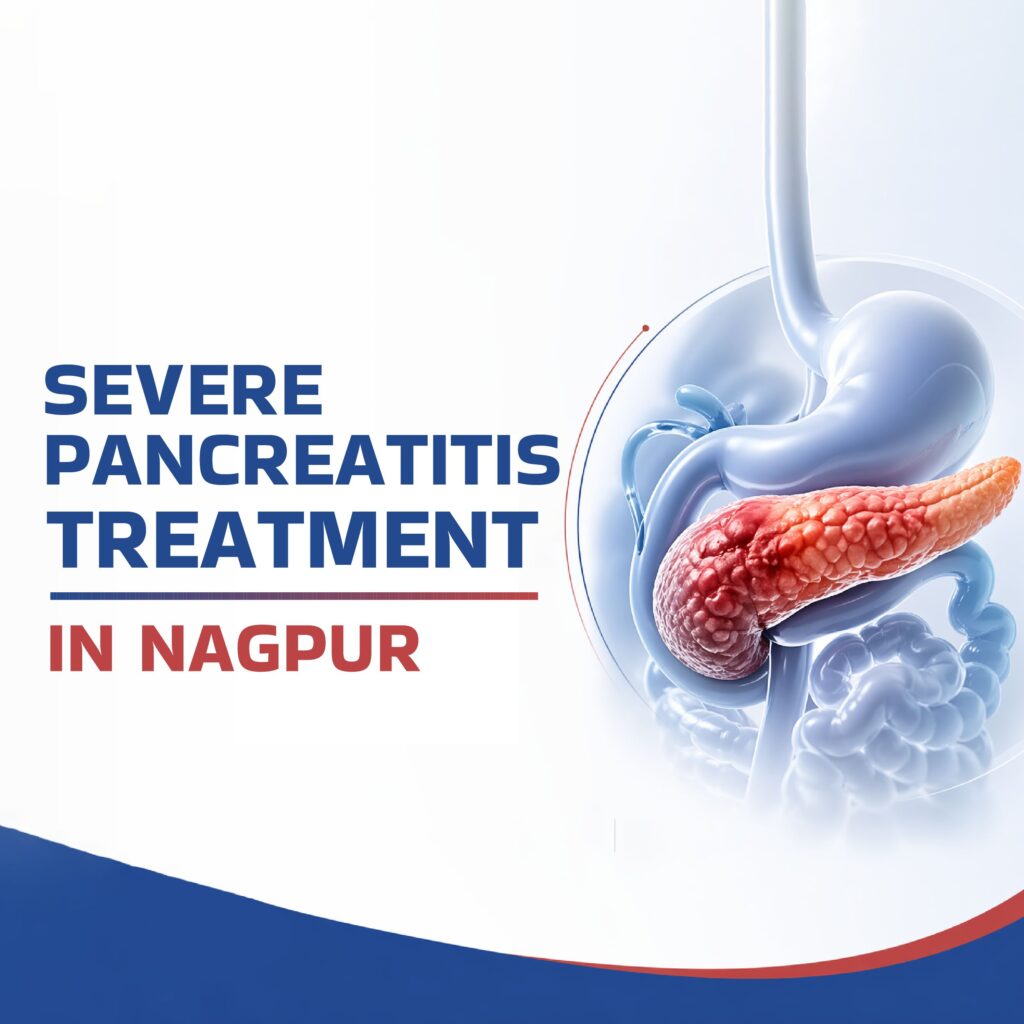
What Is Severe Pancreatitis?

Common Symptoms of Severe Pancreatitis
- Sudden and severe upper abdominal pain that radiates through to the back
- Pain that is persistent and does not resolve with simple pain relief
- Persistent nausea and vomiting
- Abdominal distension and tenderness
- High fever and rapid heart rate
- Rapid breathing and signs of respiratory distress in some cases
- Confusion or altered mental state indicating systemic involvement
- Reduced or absent urine output indicating kidney involvement
- Yellowing of the skin or eyes if bile duct involvement is present
- Progressive deterioration in overall clinical condition
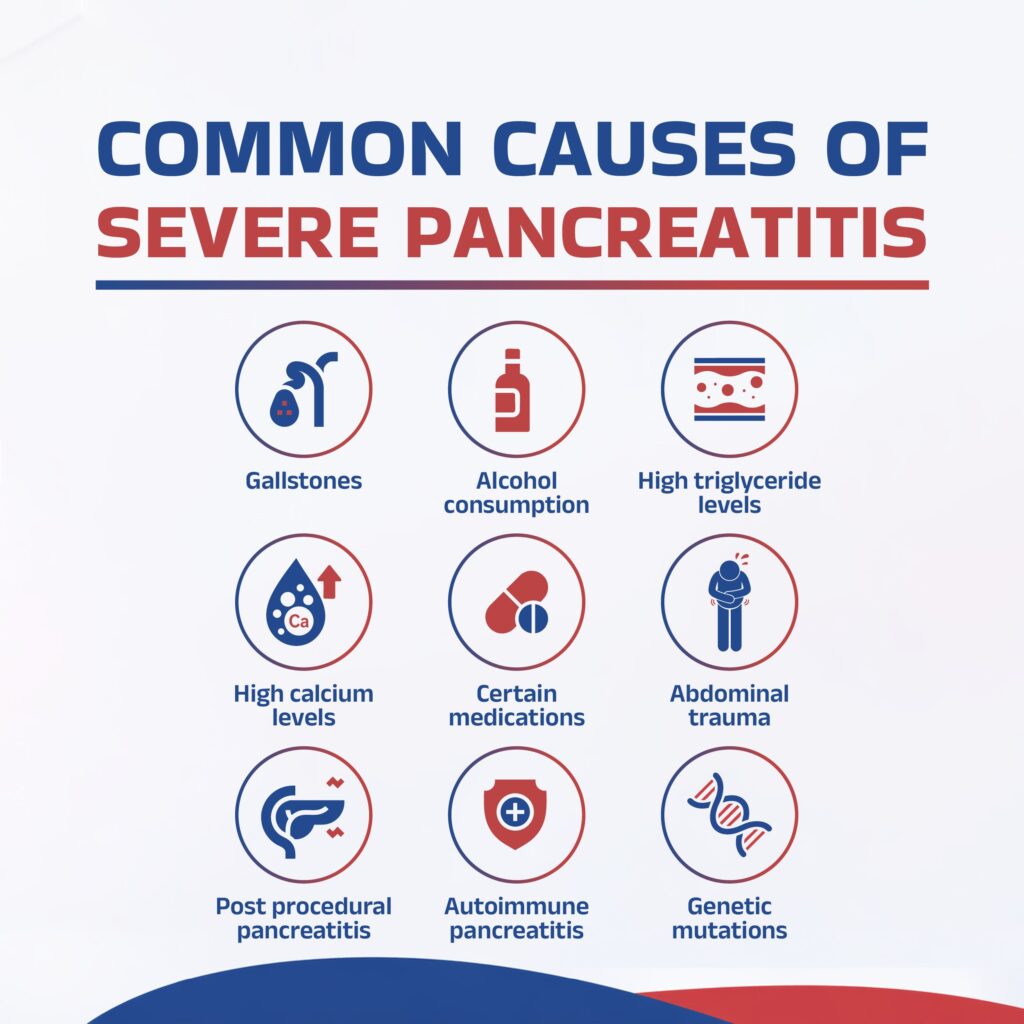
Common Causes of Severe Pancreatitis
- Gallstones obstructing the pancreatic duct or common bile duct
- Excessive and prolonged alcohol consumption
- Very high triglyceride levels in the blood
- High calcium levels in the blood known as hypercalcaemia
- Certain medications that trigger severe pancreatic inflammation
- Abdominal trauma or injury affecting the pancreas
- Post procedural pancreatitis following ERCP in some cases
- Autoimmune pancreatitis in selected cases
- Genetic mutations affecting pancreatic enzyme regulation
When Should You Seek Immediate Medical Attention for Severe Pancreatitis?
- Sudden and severe upper abdominal pain that is not relieved by rest or simple medication
- Upper abdominal pain that radiates straight through to the back
- Persistent vomiting that prevents adequate fluid intake
- High fever accompanied by severe abdominal pain
- Rapid heart rate and rapid breathing with abdominal pain
- Confusion or altered mental state with abdominal symptoms
- Progressive worsening of symptoms over a short period
- Known history of gallstones or pancreatitis with sudden severe abdominal pain
Severe Pancreatitis Treatment Options in Nagpur
| Treatment Approach | Purpose |
|---|---|
| Immediate hospitalisation and ICU admission | Stabilisation and round the clock monitoring |
| Identification and treatment of underlying cause | Addressing the root cause of liver failure |
| Nutritional support and fluid management | Supporting liver recovery and overall health |
| Management of hepatic encephalopathy | Reducing ammonia levels and protecting brain function |
| Treatment of ascites | Draining fluid and managing abdominal swelling |
| Management of coagulopathy | Addressing bleeding tendency due to reduced clotting factors |
| Antibiotic therapy | Preventing and treating infections common in liver failure |
| Renal support | Managing kidney complications associated with liver failure |
| Specialist hepatology consultation | Ongoing liver specific management and decision making |
Why Choose LGI Hospital for Severe Pancreatitis Treatment in Nagpur?
- Integrated Gastroenterology and Intensive Care Expertise: LGI Hospital in Nagpur has a dedicated team comprising specialist gastroenterologists with focused pancreato-biliary expertise and experienced intensivists who work together to provide comprehensive and coordinated severe pancreatitis management with round the clock intensive care support.
- Advanced Endoscopic and Interventional Capabilities: LGI Hospital is equipped with advanced endoscopic facilities including ERCP for management of gallstone related pancreatitis and interventional capabilities for drainage of pancreatic fluid collections, ensuring that all aspects of severe pancreatitis management are available under one roof.
- Twenty Four Hour Emergency and ICU Care: LGI Hospital provides twenty four hour emergency admission and intensive care for severe pancreatitis, ensuring that patients receive immediate specialist attention and critical care without delay from the moment of presentation.
- Multidisciplinary and Evidence Based Management: Severe pancreatitis management at LGI Hospital is guided by current evidence based protocols and delivered through a coordinated multidisciplinary team approach, ensuring that every patient receives comprehensive, consistent and effective care throughout their clinical course.
FAQ
Q1. Can severe pancreatitis be cured?
The outcome of severe pancreatitis depends on the extent of pancreatic damage, the presence of complications and the patient’s overall health. With prompt specialist intervention and comprehensive intensive care management, many patients with severe pancreatitis recover, though the recovery process can be prolonged. Some patients may experience long term effects on pancreatic function including digestive insufficiency or diabetes. Early and appropriate management significantly improves outcomes.
Q2. What are the symptoms of severe pancreatitis?
Common symptoms of severe pancreatitis include sudden and intense upper abdominal pain radiating to the back, persistent vomiting, high fever, rapid heart rate, abdominal distension, confusion and progressive deterioration in overall health. Severe pancreatitis can deteriorate rapidly and requires immediate emergency medical attention.
Q3. What causes severe pancreatitis?
The most common causes of severe pancreatitis are gallstones and excessive alcohol consumption. Other causes include very high triglyceride levels, certain medications, abdominal trauma and autoimmune conditions. Identifying the underlying cause is essential for guiding treatment and preventing recurrence.
Q4. How long does severe pancreatitis treatment take?
The duration of severe pancreatitis treatment varies considerably depending on the extent of disease, the presence and severity of complications and the individual patient’s response to treatment. Hospitalisation may range from several weeks to months in complex cases. Recovery after discharge may continue over several additional months. The treating team will provide guidance on the expected clinical course based on each individual patient’s condition.
Q5. Is severe pancreatitis life threatening?
Yes, severe pancreatitis is a potentially life threatening condition with a significant risk of serious complications including infected pancreatic necrosis, multi organ failure and sepsis. However, with prompt admission to a specialised centre, expert intensive care management and a multidisciplinary treatment approach, outcomes have improved significantly. Early specialist intervention is the most critical factor in improving survival and recovery in severe pancreatitis.