
SERVICES OFFERED
ENDOSCOPY
- Diagnostic & Therapeutic Upper GI Endoscopy
- Diagnostic & Therapeutic Colonoscopy
- Capsule Endoscopy
- ERCP & Cholangio-pancreatoscopy
- Endoscopic Ultrasound [EUS]
GI MOTILITY LAB
- 24 Hrs Esophageal pH-Impedance study
- Esophageal & Anorectal Manometry
BREATH TESTS
- Hydrogen Breath Test for small intestinal bacterial overgrowth
- Urea Breath Test for H. pylori infection
SURGERY
- Esophageal & Gastric Surgery
- Hepatectomy & Liver Surgery
- Pancreato – Billiary Surgery
- Colorectal Surgery
- Hernia Surgery – Laparoscopic & Open
- Minimally Invasive & Laparoscopia Surgery
- Gl Oncology Surgery
- Surgery for Piles, Fistula & Fissure
RADIOLOGY
- Digital X-Ray
- Ultrasound with Colour Doppler
- Liver Elastography [Fibroscan] for liver fibrosis and steatosis.
PATHOLOGY
CRITICAL CARE TAIL
- State of Art Intensive Care Unit & Expert Team for management of GI and hepato-pancreato-biliary diseases
ADVANCED SERVICES OFFERED
ERCP & CHOLANGIO-PANCREATOSCOPY
- Complex Pancreato-biliary Procedures
[Multiple biliary stent placement for hilar strictures;
mechanical lithotripsy for CBO stones] - Laser Lithotripsy Treatment for CBD / pancreatic stones
- CBD Stricture evaluation
- Ampullectomy
THIRD SPACE ENDOSCOPY
- Endoscopic Mucosal Resection [EMR] & Endoscopic Submucosal Dissection [ESD] for early gastrointestinal cancers
- Peroral Endoscopic Myotomy [POEM] for Zenker’s Diverticulum,
Achalasia Cardia, Gastroparesis, Hirschsprung’s disease - Submucuosal Tunneling & Endoscopic Resection [STER]
& Endoscopic Full-Thickness Resecton (EFTR] for subepithlial tumors
ANTIREFLUX TREATMENT [FOR GERD]
- Antireflux Mucosal Ablation [ARMA]
- Endoscopic Funcoplication
ENDOBARIATRICS [FOR WEIGHT LOSS]
- Gastric Balloon placement
- Endoscopic Sleeve Gastroplasty
ENDOSCOPIC ULTRASOUND [EUS]
- EUS & EUS – guided FNAC / Biopsy for diagnosis
- EUS – guided Pancreatic Cysto-gastrostomy / Choledocho-jejunostomy / Hepatico-gastrostomy
- EUS – guided Gastric Variceal Glue & Coil treatment
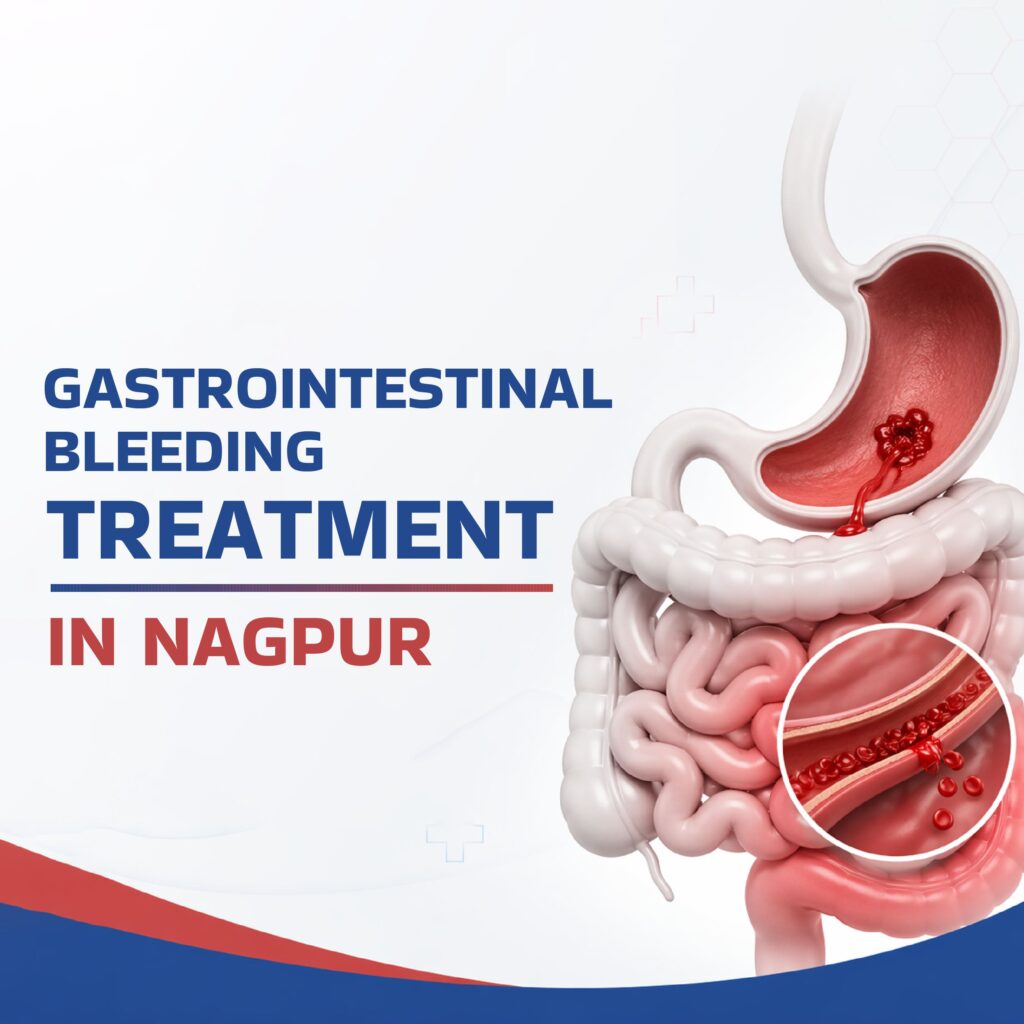
What Is Gastrointestinal Bleeding?

Common Symptoms of Gastrointestinal Bleeding
- Vomiting of blood, which may be bright red or resemble coffee grounds
- Passage of black, tarry and foul smelling stools known as melaena
- Passage of fresh red or dark red blood in the stool
- Abdominal pain or discomfort accompanying bleeding
- Dizziness, lightheadedness or fainting due to blood loss
- Rapid heart rate and low blood pressure in significant bleeding
- Pallor and weakness due to acute blood loss
- Fatigue and shortness of breath in chronic blood loss causing anaemia
- Confusion or altered mental state in severe acute haemorrhage
Common Causes of Gastrointestinal Bleeding
Upper GI bleeding causes:
- Peptic ulcers in the stomach or duodenum
- Oesophageal varices due to portal hypertension in liver cirrhosis
- Mallory Weiss tears at the junction of the oesophagus and stomach
- Gastritis and erosive oesophagitis
- Oesophageal or stomach cancer
Lower GI bleeding causes:
- Haemorrhoids causing rectal bleeding
- Colonic diverticulosis causing sudden lower GI bleeding
- Colorectal cancer or polyps
- Inflammatory bowel disease including Crohn's disease and ulcerative colitis
- Angiodysplasia or abnormal blood vessels in the bowel wall
- Ischaemic colitis due to reduced blood supply to the colon
When Should You Seek Immediate Medical Attention for GI Bleeding?
- Vomiting of blood in any quantity
- Passage of black tarry stools
- Passage of large amounts of fresh red blood in the stool
- Dizziness, fainting or loss of consciousness with bleeding
- Rapid heart rate and weakness accompanying any form of GI bleeding
- Significant abdominal pain with bleeding
- Known liver disease or cirrhosis with any episode of vomiting blood
- A sudden and significant drop in blood pressure with abdominal symptoms
Gastrointestinal Bleeding Treatment Options in Nagpur
| Treatment Approach | Purpose |
|---|---|
| Emergency hospitalisation and resuscitation | Stabilising the patient and restoring blood volume |
| Blood transfusion when required | Replacing lost blood and restoring haemodynamic stability |
| Urgent upper endoscopy | Diagnosing and treating upper GI bleeding sources |
| Urgent colonoscopy | Diagnosing and treating lower GI bleeding sources |
| Endoscopic haemostasis techniques | Stopping active bleeding using injection, clipping or cauterisation |
| Endoscopic band ligation | Treating oesophageal varices causing bleeding |
Most cases of gastrointestinal bleeding can be effectively managed with endoscopic treatment. Surgical intervention is reserved for cases where endoscopic management has not been successful or where emergency surgical access is required.
Why Choose LGI Hospital for Gastrointestinal Bleeding Treatment in Nagpur?
- Advanced Emergency Endoscopy Capabilities: LGI Hospital in Nagpur has specialist gastroenterologists with advanced expertise in emergency endoscopy for gastrointestinal bleeding, including upper endoscopy, colonoscopy, endoscopic haemostasis and oesophageal variceal band ligation, ensuring rapid and effective endoscopic bleeding control.
- Twenty Four Hour Emergency and ICU Care: LGI Hospital provides round the clock emergency admission and intensive care for acute gastrointestinal bleeding, ensuring that patients receive immediate specialist evaluation and intervention without delay at any hour of the day or night.
- Integrated Gastroenterology and Intensive Care Team: The management of GI bleeding at LGI Hospital involves seamless collaboration between specialist gastroenterologists and experienced intensivists, ensuring that both the source of bleeding and the systemic effects of blood loss are addressed comprehensively and simultaneously.
- Comprehensive GI Bleeding Management Under One Roof: From emergency resuscitation and urgent diagnostic endoscopy to endoscopic treatment, intensive care monitoring and surgical backup when required, LGI Hospital in Dhantoli, Nagpur provides complete gastrointestinal bleeding care under one dedicated roof.
FAQ
Q1. Can gastrointestinal bleeding be cured?
Yes, gastrointestinal bleeding can be effectively treated and resolved in the majority of cases when the source of bleeding is accurately identified and appropriately managed. Most cases of upper GI bleeding due to peptic ulcers or varices respond well to endoscopic treatment. Lower GI bleeding from haemorrhoids, diverticulosis or polyps is also highly treatable. Long term management of the underlying cause is important to prevent recurrence.
Q2. What are the symptoms of gastrointestinal bleeding?
Common symptoms include vomiting of blood, passage of black tarry stools known as melaena, passage of fresh red blood in the stool, abdominal pain, dizziness, rapid heart rate, pallor and weakness. In chronic bleeding, fatigue and anaemia may be the primary presenting symptoms. Any episode of GI bleeding should be promptly evaluated by a specialist.
Q3. What causes gastrointestinal bleeding?
Common causes of upper GI bleeding include peptic ulcers, oesophageal varices, gastritis and Mallory Weiss tears. Common causes of lower GI bleeding include haemorrhoids, colorectal cancer, diverticulosis, inflammatory bowel disease and colonic polyps. Accurate identification of the source and cause through endoscopy is essential for appropriate treatment.
Q4. How long does gastrointestinal bleeding treatment take?
The duration of treatment depends on the source, cause and severity of the bleeding. Acute bleeding episodes managed with endoscopic haemostasis may be controlled within a single procedure. However, hospitalisation for monitoring and supportive care typically continues for several days after the bleeding has been controlled. Long term management of the underlying cause is an important part of preventing recurrence.
Q5. Which hospital is best for gastrointestinal bleeding treatment in Nagpur?
LGI Hospital in Dhantoli, Nagpur is a dedicated single speciality gastroenterology hospital with specialist gastroenterologists who have advanced expertise in emergency endoscopy and gastrointestinal bleeding management. The hospital provides twenty four hour emergency care, advanced endoscopic haemostasis capabilities and integrated intensive care support under one roof.