
SERVICES OFFERED
ENDOSCOPY
- Diagnostic & Therapeutic Upper GI Endoscopy
- Diagnostic & Therapeutic Colonoscopy
- Capsule Endoscopy
- ERCP & Cholangio-pancreatoscopy
- Endoscopic Ultrasound [EUS]
GI MOTILITY LAB
- 24 Hrs Esophageal pH-Impedance study
- Esophageal & Anorectal Manometry
BREATH TESTS
- Hydrogen Breath Test for small intestinal bacterial overgrowth
- Urea Breath Test for H. pylori infection
SURGERY
- Esophageal & Gastric Surgery
- Hepatectomy & Liver Surgery
- Pancreato – Billiary Surgery
- Colorectal Surgery
- Hernia Surgery – Laparoscopic & Open
- Minimally Invasive & Laparoscopia Surgery
- Gl Oncology Surgery
- Surgery for Piles, Fistula & Fissure
RADIOLOGY
- Digital X-Ray
- Ultrasound with Colour Doppler
- Liver Elastography [Fibroscan] for liver fibrosis and steatosis.
PATHOLOGY
CRITICAL CARE TAIL
- State of Art Intensive Care Unit & Expert Team for management of GI and hepato-pancreato-biliary diseases
ADVANCED SERVICES OFFERED
ERCP & CHOLANGIO-PANCREATOSCOPY
- Complex Pancreato-biliary Procedures
[Multiple biliary stent placement for hilar strictures;
mechanical lithotripsy for CBO stones] - Laser Lithotripsy Treatment for CBD / pancreatic stones
- CBD Stricture evaluation
- Ampullectomy
THIRD SPACE ENDOSCOPY
- Endoscopic Mucosal Resection [EMR] & Endoscopic Submucosal Dissection [ESD] for early gastrointestinal cancers
- Peroral Endoscopic Myotomy [POEM] for Zenker’s Diverticulum,
Achalasia Cardia, Gastroparesis, Hirschsprung’s disease - Submucuosal Tunneling & Endoscopic Resection [STER]
& Endoscopic Full-Thickness Resecton (EFTR] for subepithlial tumors
ANTIREFLUX TREATMENT [FOR GERD]
- Antireflux Mucosal Ablation [ARMA]
- Endoscopic Funcoplication
ENDOBARIATRICS [FOR WEIGHT LOSS]
- Gastric Balloon placement
- Endoscopic Sleeve Gastroplasty
ENDOSCOPIC ULTRASOUND [EUS]
- EUS & EUS – guided FNAC / Biopsy for diagnosis
- EUS – guided Pancreatic Cysto-gastrostomy / Choledocho-jejunostomy / Hepatico-gastrostomy
- EUS – guided Gastric Variceal Glue & Coil treatment
What Is Liver Failure?

Common Symptoms of Liver Failure
- Yellowing of the skin and eyes, known as jaundice
- Abdominal swelling due to fluid accumulation, known as ascites
- Extreme fatigue and weakness
- Nausea and loss of appetite
- Confusion, disorientation or altered mental state, known as hepatic encephalopathy
- Easy bruising and prolonged bleeding
- Dark coloured urine and pale stools
- Swelling in the legs and ankles
- Bleeding from the digestive tract in some cases
- Rapid deterioration in overall health in acute cases
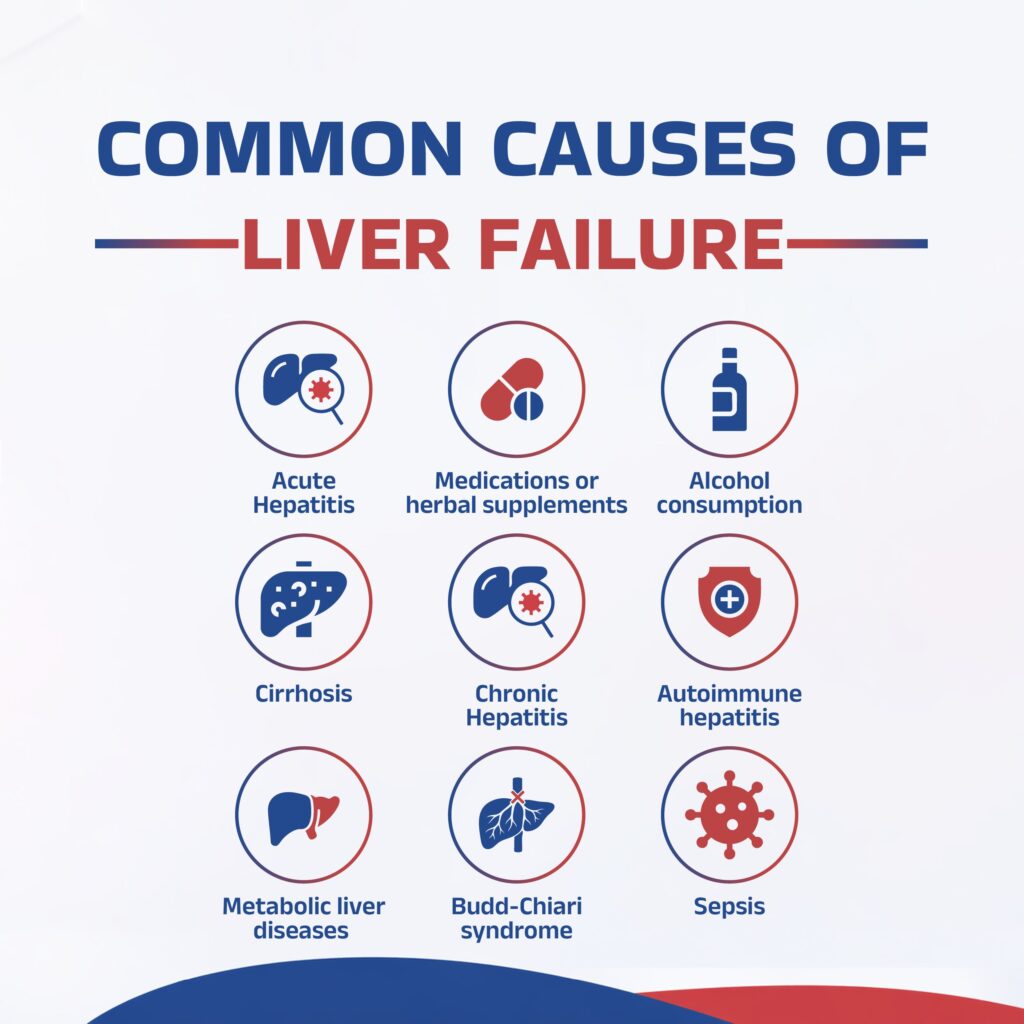
Common Causes of Liver Failure
- Acute viral hepatitis particularly Hepatitis A and B causing acute liver failure
- Drug induced liver injury from medications or herbal supplements taken in excess
- Excessive alcohol consumption over a prolonged period leading to alcoholic liver disease and cirrhosis
- Non alcoholic fatty liver disease progressing to cirrhosis and end stage liver disease
- Chronic Hepatitis B or C progressing to cirrhosis
- Autoimmune hepatitis causing progressive liver damage
- Metabolic liver diseases including Wilson's disease and haemochromatosis
- Budd-Chiari syndrome involving obstruction of hepatic veins
- Sepsis related liver dysfunction in critically ill patients
When Should You Seek Immediate Medical Attention for Liver Failure?
- Sudden onset of jaundice accompanied by confusion or altered consciousness
- Rapid progression of abdominal swelling
- Uncontrolled bleeding from any site
- Extreme and sudden deterioration in overall health
- Confusion, disorientation or loss of consciousness in a person with known liver disease
- High fever accompanied by jaundice and abdominal pain
- Inability to keep food or water down with progressive weakness
Liver Failure Treatment Options in Nagpur
| Treatment Approach | Purpose |
|---|---|
| Immediate hospitalisation and ICU admission | Stabilisation and round the clock monitoring |
| Identification and treatment of underlying cause | Addressing the root cause of liver failure |
| Nutritional support and fluid management | Supporting liver recovery and overall health |
| Management of hepatic encephalopathy | Reducing ammonia levels and protecting brain function |
| Treatment of ascites | Draining fluid and managing abdominal swelling |
| Management of coagulopathy | Addressing bleeding tendency due to reduced clotting factors |
| Antibiotic therapy | Preventing and treating infections common in liver failure |
| Renal support | Managing kidney complications associated with liver failure |
| Specialist hepatology consultation | Ongoing liver specific management and decision making |
Why Choose LGI Hospital for Liver Failure Treatment in Nagpur?
- Integrated Hepatology and Intensive Care Expertise: LGI Hospital in Nagpur has a dedicated team comprising specialist hepatologists, gastroenterologists and experienced intensivists who work together to provide comprehensive and coordinated liver failure management with round the clock intensive care support.
- Twenty Four Hour Emergency and ICU Care: LGI Hospital provides twenty four hour emergency admission and intensive care for acute liver failure, ensuring that patients receive immediate specialist attention and critical care intervention without delay.
- Advanced Monitoring and Management Capabilities: LGI Hospital in Dhantoli, Nagpur is equipped with advanced intensive care monitoring and management facilities to support the complex and rapidly evolving needs of patients with acute and chronic liver failure.
- Multidisciplinary and Patient Centred Approach: Liver failure management at LGI Hospital involves a coordinated multidisciplinary team approach ensuring that every aspect of the patient's condition is addressed comprehensively, with clear and compassionate communication with the patient and their family throughout.
FAQ
Q1. Can liver failure be cured?
The outcome of liver failure depends on the type, underlying cause and severity of the condition. Acute liver failure caused by certain treatable conditions such as drug toxicity or viral hepatitis may resolve with appropriate intensive management and supportive care. Chronic liver failure due to advanced cirrhosis is more complex and may require long term specialist management. Early specialist evaluation and intervention significantly improves outcomes in both forms of liver failure.
Q2. What are the symptoms of liver failure?
Common symptoms of liver failure include jaundice, abdominal swelling due to fluid accumulation, extreme fatigue, confusion or altered mental state known as hepatic encephalopathy, easy bruising, dark urine, pale stools and progressive deterioration in overall health. Acute liver failure can develop rapidly and requires immediate emergency medical attention.
Q3. What causes liver failure?
Liver failure can be caused by acute viral hepatitis, drug induced liver injury, excessive alcohol consumption, progressive liver cirrhosis from chronic liver disease, autoimmune conditions and metabolic liver diseases. Identifying the underlying cause is essential for guiding appropriate treatment and management.
Q4. How long does liver failure treatment take?
The duration of liver failure treatment depends entirely on the type, cause and severity of the condition and the individual patient’s response to treatment. Acute liver failure may require weeks of intensive hospital care. Chronic liver failure requires ongoing long term specialist management. The treating hepatology and intensive care team will provide guidance on the expected treatment course based on the individual patient’s condition.
Q5. Is liver failure life threatening?
Yes, liver failure is a serious and potentially life threatening condition, particularly in its acute form. However, with prompt specialist intervention, appropriate intensive care management and treatment of the underlying cause, many patients with liver failure can be stabilised and recover. Early medical attention is the most critical factor in improving outcomes for patients with liver failure.