
SERVICES OFFERED
ENDOSCOPY
- Diagnostic & Therapeutic Upper GI Endoscopy
- Diagnostic & Therapeutic Colonoscopy
- Capsule Endoscopy
- ERCP & Cholangio-pancreatoscopy
- Endoscopic Ultrasound [EUS]
GI MOTILITY LAB
- 24 Hrs Esophageal pH-Impedance study
- Esophageal & Anorectal Manometry
BREATH TESTS
- Hydrogen Breath Test for small intestinal bacterial overgrowth
- Urea Breath Test for H. pylori infection
SURGERY
- Esophageal & Gastric Surgery
- Hepatectomy & Liver Surgery
- Pancreato – Billiary Surgery
- Colorectal Surgery
- Hernia Surgery – Laparoscopic & Open
- Minimally Invasive & Laparoscopia Surgery
- Gl Oncology Surgery
- Surgery for Piles, Fistula & Fissure
RADIOLOGY
- Digital X-Ray
- Ultrasound with Colour Doppler
- Liver Elastography [Fibroscan] for liver fibrosis and steatosis.
PATHOLOGY
CRITICAL CARE TAIL
- State of Art Intensive Care Unit & Expert Team for management of GI and hepato-pancreato-biliary diseases
ADVANCED SERVICES OFFERED
ERCP & CHOLANGIO-PANCREATOSCOPY
- Complex Pancreato-biliary Procedures
[Multiple biliary stent placement for hilar strictures;
mechanical lithotripsy for CBO stones] - Laser Lithotripsy Treatment for CBD / pancreatic stones
- CBD Stricture evaluation
- Ampullectomy
THIRD SPACE ENDOSCOPY
- Endoscopic Mucosal Resection [EMR] & Endoscopic Submucosal Dissection [ESD] for early gastrointestinal cancers
- Peroral Endoscopic Myotomy [POEM] for Zenker’s Diverticulum,
Achalasia Cardia, Gastroparesis, Hirschsprung’s disease - Submucuosal Tunneling & Endoscopic Resection [STER]
& Endoscopic Full-Thickness Resecton (EFTR] for subepithlial tumors
ANTIREFLUX TREATMENT [FOR GERD]
- Antireflux Mucosal Ablation [ARMA]
- Endoscopic Funcoplication
ENDOBARIATRICS [FOR WEIGHT LOSS]
- Gastric Balloon placement
- Endoscopic Sleeve Gastroplasty
ENDOSCOPIC ULTRASOUND [EUS]
- EUS & EUS – guided FNAC / Biopsy for diagnosis
- EUS – guided Pancreatic Cysto-gastrostomy / Choledocho-jejunostomy / Hepatico-gastrostomy
- EUS – guided Gastric Variceal Glue & Coil treatment
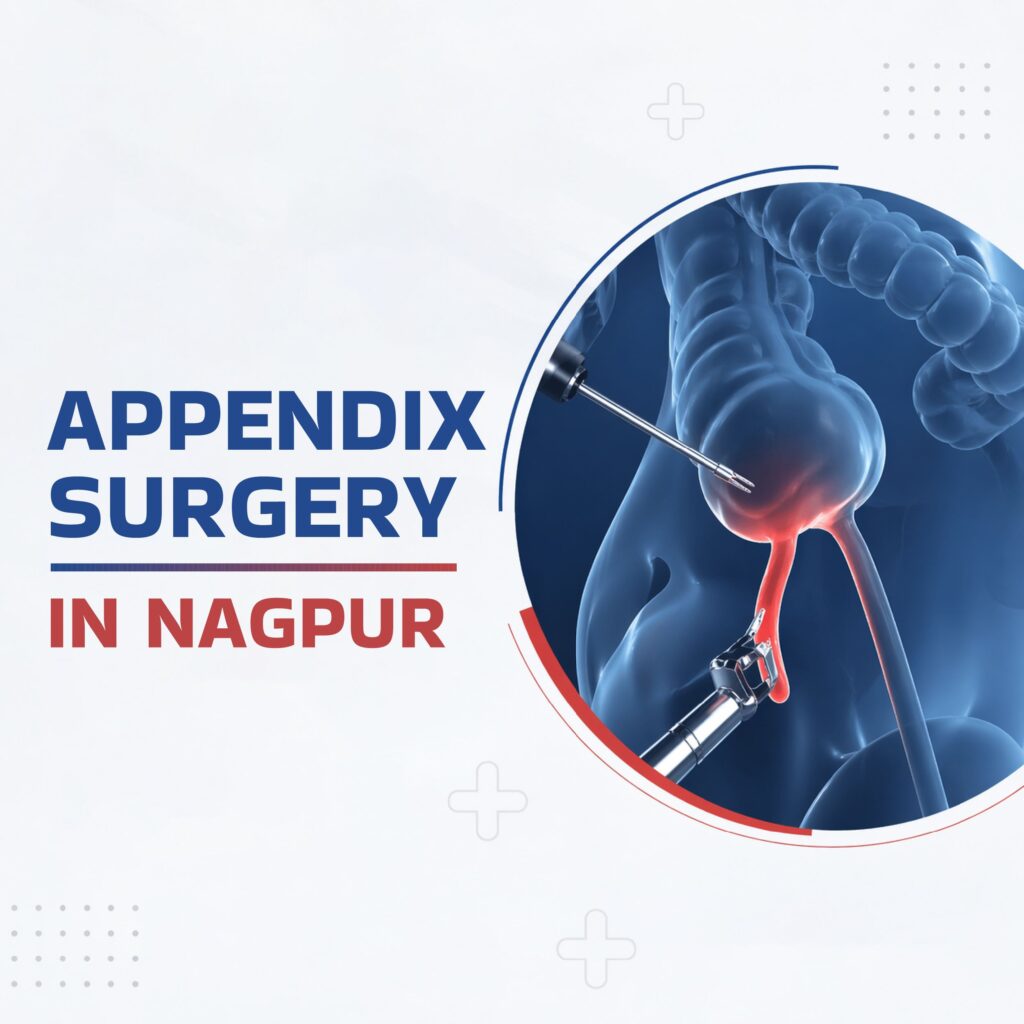
What Is Appendicitis?

Common Symptoms of Appendicitis
- Pain that begins around the navel and gradually moves to the lower right abdomen
- Pain that worsens with movement, coughing or deep breathing
- Nausea and vomiting
- Loss of appetite
- Fever that may worsen as the condition progresses
- Abdominal tenderness, particularly in the lower right quadrant
- Inability to pass gas in some cases
- Diarrhea or constipation in some patients
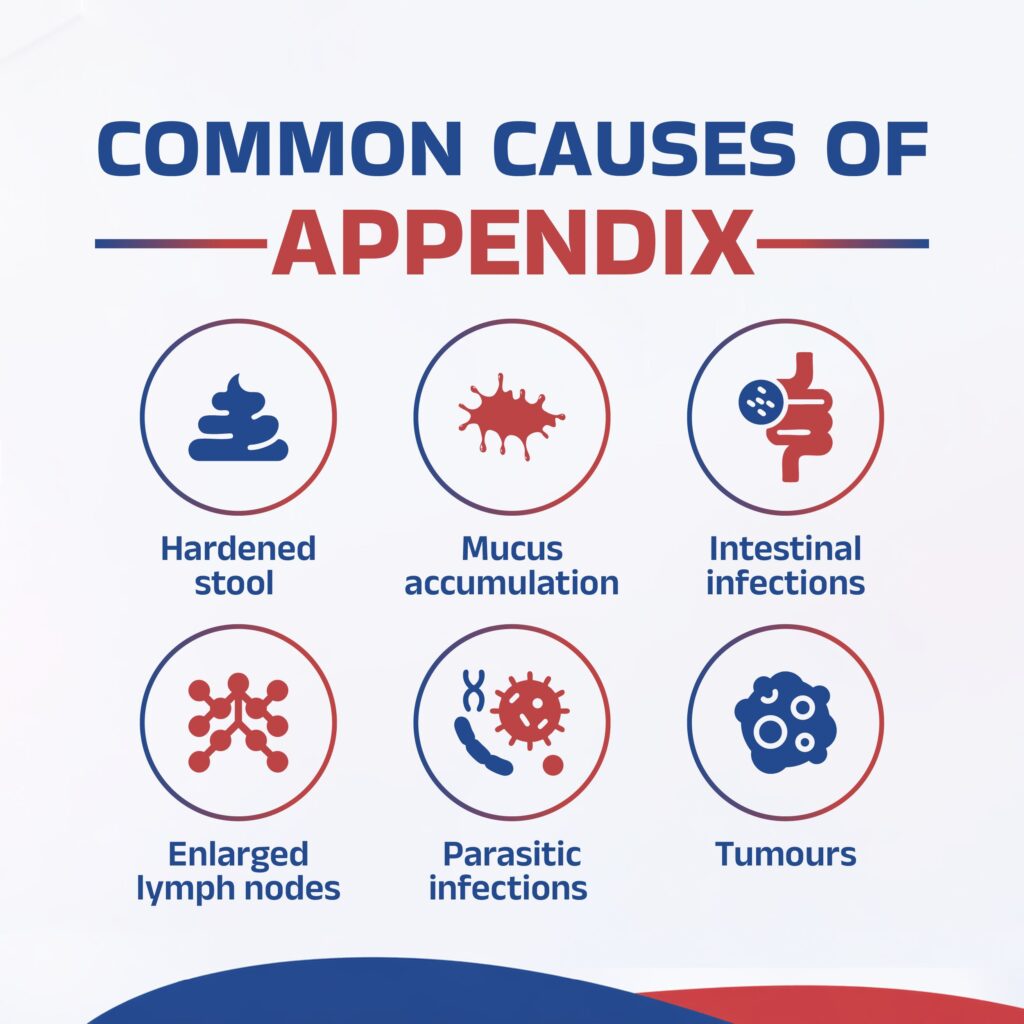
Common Causes of Appendicitis
- Hardened stool or faecal matter blocking the opening of the appendix
- Mucus accumulation inside the appendix
- Intestinal infections causing inflammation and swelling
- Enlarged lymph nodes near the appendix pressing on it
- Parasitic infections in some cases
- Tumours of the appendix in rare cases
When Should You See a Doctor for Appendicitis?
- Sudden and severe pain in the lower right abdomen
- Pain that started around the navel and moved to the lower right side
- Fever accompanied by abdominal pain
- Persistent nausea and vomiting with abdominal pain
- Abdominal pain that is rapidly worsening
- A rigid or board like abdomen indicating possible rupture
- Inability to find a comfortable position due to abdominal pain
Appendix Surgery Options in Nagpur
| Surgical Approach | Suitable For |
|---|---|
| Laparoscopic appendectomy | Most cases of appendicitis, minimally invasive |
| Open appendectomy | Ruptured appendix or complex cases requiring direct access |
| Emergency surgical intervention | Perforated appendix with peritonitis |
| Drainage procedure | Abscess formation before definitive surgery in selected cases |
What Happens During Appendix Surgery?
- A pre operative assessment including blood tests, imaging and clinical evaluation
- Administration of general anaesthesia to ensure patient comfort throughout
- The surgeon makes two to three small incisions in the abdomen
- A laparoscope and surgical instruments are inserted through the incisions
- The inflamed appendix is carefully identified, detached and removed
- The abdominal cavity is checked for any signs of infection or fluid
- Incisions are closed and the patient is moved to the recovery area
Recovery After Appendix Surgery
- Mild soreness or discomfort at the incision sites for a few days after surgery
- A light diet in the first few days following surgery progressing to normal food as tolerated
- Avoiding heavy lifting and strenuous physical activity for two to four weeks
- Attending all scheduled follow up appointments with the surgical team
- Returning to light activities within a few days for uncomplicated laparoscopic cases
- Monitoring incision sites for any signs of infection and reporting promptly if noticed
- Full recovery typically occurs within two to four weeks for laparoscopic surgery
Why Choose LGI Hospital for Appendix Surgery in Nagpur?
- Experienced Surgical Gastroenterologists: LGI Hospital in Nagpur has a dedicated team of skilled surgical gastroenterologists with extensive experience in performing laparoscopic and open appendectomy including emergency surgical intervention for complicated appendicitis.
- Advanced Laparoscopic Surgical Capabilities: The surgical team at LGI Hospital prioritises minimally invasive laparoscopic techniques wherever appropriate, offering patients the benefits of smaller incisions, reduced post operative discomfort and faster recovery.
- Round the Clock Emergency Surgical Care: LGI Hospital provides twenty four hour emergency surgical care for acute appendicitis, ensuring that patients receive prompt and effective surgical intervention without delay.
- Comprehensive Pre and Post Operative Care: From emergency assessment and pre operative preparation through to surgery, post operative monitoring and follow up, LGI Hospital provides complete and seamless appendix surgery care under one roof.
FAQ
Q1. Is appendix surgery painful?
Appendix surgery is performed under general anaesthesia and patients do not experience pain during the procedure. Post operative discomfort is generally mild and well managed with appropriate pain relief. Laparoscopic appendectomy is associated with significantly less post operative pain and a faster recovery compared to open surgical approaches.
Q2. How long does appendix surgery take?
Laparoscopic appendectomy for uncomplicated appendicitis is typically completed within thirty to sixty minutes. More complex cases involving a ruptured appendix or peritonitis may take longer. The surgical team will provide an accurate estimate based on the individual assessment and findings during surgery.
Q3. What happens after appendix surgery?
After appendix surgery, patients are monitored in the recovery area before being transferred to a ward. The surgical team provides detailed post operative instructions including dietary guidelines, activity restrictions and wound care. Follow up appointments are scheduled to monitor healing and ensure complete recovery.
Q4. Recovery after appendix surgery in Nagpur — what to expect?
Most patients undergoing laparoscopic appendectomy are discharged within one to two days and can return to light activities within a week. Full recovery typically occurs within two to four weeks. Patients who undergo open surgery for a ruptured appendix may require a longer hospital stay and recovery period. The surgical team provides personalised recovery guidance for every patient.
Q5. Which hospital is best for appendix surgery in Nagpur?
LGI Hospital in Dhantoli, Nagpur is a dedicated single speciality gastroenterology hospital with experienced surgical gastroenterologists who perform advanced laparoscopic appendectomy and emergency appendix surgery. The hospital provides round the clock emergency surgical care and comprehensive post operative support under one roof.