
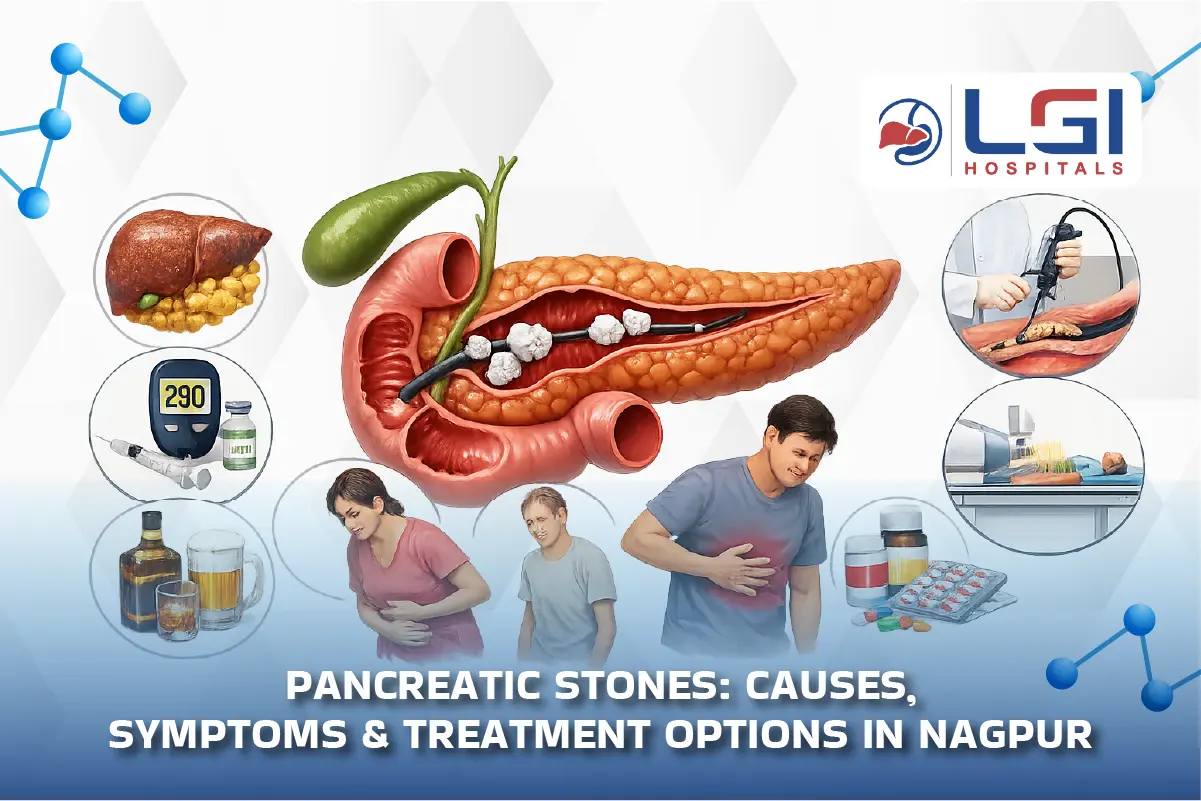
Pancreatic stones are hard deposits that form inside the pancreatic duct, blocking the normal flow of digestive enzymes. They are a common complication of chronic pancreatitis and, when left untreated, can lead to severe pain, digestive problems, and permanent damage to the pancreas. In India, the condition is more prevalent than most people realise — and awareness remains low.
This guide covers everything you need to know about pancreatic stones: what causes them, how to recognise the symptoms early, the available treatment options including non-surgical dissolution and surgery, and when to seek specialist care at a gastroenterology hospital in Nagpur.
What Are Pancreatic Stones?
Pancreatic stones — also called pancreatic duct calculi or pancreatic lithiasis — are calcium carbonate or calcium phosphate deposits that develop inside the main pancreatic duct or its branches. Unlike gallstones, which form in the gallbladder, pancreatic stones form within the duct system of the pancreas itself.
The stones can range from a few millimetres to over a centimetre and may be single or multiple. Even a small stone can block the narrow pancreatic duct, causing a painful build-up of pressure and triggering repeated episodes of pancreatitis.
To understand why this happens, it helps to know the role of the pancreas in your digestive system. The pancreas produces enzymes and hormones that are essential for breaking down food and regulating blood sugar. When stones obstruct the duct, this entire process is disrupted.
At a Glance: Pancreatic stones are calcium deposits inside the pancreatic duct. They are most commonly linked to chronic pancreatitis and cause recurring abdominal pain, poor digestion, and sometimes jaundice.
What Causes Pancreatic Stones?
Pancreatic stones do not develop overnight. They are almost always the result of long-term inflammation or damage to the pancreas. The most common causes include:
- Chronic pancreatitis — Repeated inflammation of the pancreas damages the duct walls and causes protein plugs to form. Over time, calcium deposits around these plugs and hardens into stones. This is the single most common cause.
- Alcohol overuse — Heavy, prolonged alcohol consumption is a leading trigger of chronic pancreatitis in India, directly increasing the risk of stone formation.
- Tropical pancreatitis (fibrocalculous pancreatic diabetes) — A form specific to tropical countries including India, often seen in young, non-alcoholic patients. The exact cause is not fully understood but may involve nutritional deficiencies.
- Genetic mutations — Mutations in genes such as SPINK1 and CFTR are associated with hereditary pancreatitis and a higher risk of pancreatic stone formation.
- Hypercalcaemia — Elevated calcium levels in the blood (due to hyperparathyroidism or other causes) can increase calcium deposits in the pancreatic duct.
- Idiopathic causes — In some cases, no clear cause is identified.
For a deeper understanding of how inflammation leads to structural damage, read our guide on pancreatitis treatment and how it progresses when left unmanaged.
India-specific note: Tropical pancreatitis is a uniquely high-prevalence condition in South and Southeast Asia. Young patients in India presenting with recurrent abdominal pain and malnutrition should be evaluated for this condition even in the absence of alcohol use.
Symptoms of Pancreatic Stones
The symptoms of pancreatic stones are often similar to those of chronic pancreatitis, because the two conditions are closely linked. Common signs include:
- Recurring upper abdominal pain — Often severe, radiating to the back. Episodes may last hours to days and are frequently triggered by eating or drinking alcohol.
- Steatorrhoea (fatty stools) — Pale, greasy, foul-smelling stools that are difficult to flush, indicating poor fat digestion due to blocked enzyme flow.
- Unintentional weight loss — Reduced enzyme production leads to malabsorption of nutrients.
- Nausea and vomiting — Especially during pain episodes.
- Jaundice — Yellowing of the skin and eyes if a stone causes bile duct obstruction alongside the pancreatic duct.
- Diabetes (new onset) — If stones cause significant damage to insulin-producing cells.
Symptoms often worsen progressively. Many patients have a history of years of intermittent pain before a firm diagnosis is made. For a broader overview of warning signs related to the pancreas, see our post on symptoms of pancreas problems.
| Symptom | What It May Indicate |
|---|---|
| Severe upper abdominal pain radiating to back | Ductal obstruction, pancreatitis flare |
| Fatty, pale, greasy stools | Exocrine insufficiency (enzyme blockage) |
| New-onset diabetes | Damage to insulin-producing beta cells |
| Jaundice (skin/eye yellowing) | Common bile duct obstruction |
| Significant unintended weight loss | Malabsorption due to poor enzyme output |
How Are Pancreatic Stones Formed?
The formation of pancreatic stones is a gradual, multi-step process:
- Chronic inflammation causes the pancreas to produce a protein-rich, viscous fluid.
- This fluid forms solid protein plugs inside the pancreatic duct.
- Calcium salts (primarily calcium carbonate) slowly crystallise around these plugs.
- The calcified deposits harden into stones over months or years.
- The stones obstruct enzyme flow, increasing ductal pressure and causing more inflammation — a self-perpetuating cycle.
The function of pancreatic juice is central to this process. When the enzymes cannot flow freely, they begin to activate inside the duct itself, causing autodigestion and further damage.
Can Pancreatic Stones Be Removed?
Yes — pancreatic stones can be treated effectively, and in most patients, significant symptom relief is achievable. The right approach depends on the size, location, and number of stones, as well as the extent of underlying pancreatic damage.
Treatment is broadly divided into:
- Non-surgical / endoscopic approaches — ESWL (shock wave therapy) combined with ERCP to fragment and extract stones.
- Surgical approaches — Lateral pancreaticojejunostomy (drainage surgery) or resection, for large stones, failed endoscopic treatment, or significant ductal strictures.
LGI Hospitals offers both endoscopic and surgical management for pancreatic stones. Our pancreatic surgery team in Nagpur works in close coordination with medical gastroenterologists to plan the most appropriate treatment for each patient.
Also relevant: pancreatitis vs pancreatic cancer — understanding the difference is important, as both can cause overlapping symptoms.
How to Dissolve Pancreatic Stones
Unlike gallstones, pancreatic stones cannot be dissolved with oral medications alone. However, non-surgical approaches can successfully fragment and remove stones in many patients:
1. Extracorporeal Shock Wave Lithotripsy (ESWL)
ESWL uses focused shock waves (applied externally to the body) to break large pancreatic stones into smaller fragments. These fragments can then be extracted via ERCP or passed naturally through the duct. ESWL is the preferred first-line approach for large radiopaque stones (stones visible on X-ray).
2. Endoscopic Retrograde Cholangiopancreatography (ERCP)
ERCP allows a gastroenterologist to access the pancreatic duct through a flexible endoscope, place a stent to relieve obstruction, and remove smaller stones. It is often used after ESWL to extract the fragmented stone debris.
LGI Hospitals provides advanced ERCP and cholangio-pancreatoscopy services in Nagpur.
3. Endoscopic Ultrasound (EUS)-Guided Intervention
For stones that are difficult to access via standard ERCP, EUS-guided techniques allow precise stone removal with real-time imaging guidance. Learn more about endoscopic ultrasound at LGI Hospitals.
4. Dietary and Medical Management (Supportive)
While not capable of dissolving formed stones, the right diet significantly reduces pain episodes and slows further stone development. Our detailed pancreatitis diet guide outlines what to eat and avoid. Key principles include:
- Low-fat diet (fat triggers enzyme release and worsens pain)
- Small, frequent meals instead of large ones
- Complete alcohol abstinence
- Adequate hydration
- Pancreatic enzyme replacement therapy (PERT) if prescribed by your doctor
For overall pancreatic wellness, also see: how to keep your pancreas healthy.
Important: No home remedy, herbal supplement, or online “natural cure” has been clinically proven to dissolve pancreatic duct calculi. Delaying medical evaluation leads to further ductal damage and increases surgical complexity.
Pancreatic Stone Removal Surgery Cost in Nagpur
The cost of pancreatic stone removal in Nagpur varies depending on several clinical and logistical factors. It is not possible to provide a meaningful fixed figure without proper evaluation, but the key factors that determine cost include:
- Treatment modality — ERCP alone is significantly less expensive than combined ESWL + ERCP or open/laparoscopic surgery.
- Number and size of stones — Multiple large stones may require multiple sessions.
- Extent of underlying disease — Significant ductal strictures or pancreatic tissue damage requiring resection increases procedural complexity.
- Length of hospital stay — Endoscopic procedures are often day-care or short-stay; surgical drainage may require 3–5 days of admission.
- Insurance coverage — Many procedures are covered under standard health insurance policies when medically indicated.
At LGI Hospitals, our team will provide a clear, transparent cost estimate after an initial consultation and diagnostic workup. We encourage patients to ask questions about every component of the cost before proceeding.
To understand what a surgical consultation involves, visit our pancreatic surgery page or book a direct appointment with our gastroenterology team.
You may also find it useful to read: do you need pancreas surgery? — a practical guide to understanding when surgical intervention is the right choice.
How to Dissolve Pancreatic Stones Naturally
There is no medically validated method to dissolve formed pancreatic stones naturally at home. However, certain lifestyle measures are clinically supported to prevent new stone formation and reduce the severity and frequency of pain episodes:
- Complete alcohol abstinence — The most impactful single change for alcohol-related pancreatitis. Even moderate alcohol consumption after diagnosis significantly worsens outcomes.
- Strict low-fat diet — Reducing fat intake limits the stimulation of pancreatic enzyme secretion and relieves ductal pressure.
- Hydration — Adequate fluid intake supports pancreatic secretion flow and reduces the concentration of minerals in the duct.
- Antioxidant supplementation — Some studies suggest vitamins C, E, and selenium may help slow disease progression in chronic pancreatitis; discuss with your doctor.
- Smoking cessation — Smoking is an independent risk factor for pancreatitis progression and stone formation.
These measures work best as adjuncts to — not replacements for — medical or procedural treatment. Always follow your gastroenterologist’s guidance before making dietary changes.
Related reading: diet for pancreatitis patients | understanding fatty pancreas
When to See a Doctor in Nagpur
Pancreatic stones are a progressive condition. Early intervention leads to significantly better outcomes. See a gastroenterologist without delay if you experience:
- Recurring or persistent upper abdominal pain, especially radiating to the back
- Greasy, pale, or foul-smelling stools that are difficult to flush
- Unintended weight loss over several weeks
- Yellowing of the skin or eyes (jaundice)
- New-onset diabetes without a clear reason
- A known diagnosis of chronic pancreatitis with worsening symptoms
If you are already under treatment for pancreatitis and your symptoms have changed, do not wait for your next scheduled appointment — call your doctor or visit our severe pancreatitis care unit if the pain is acute and severe.
For general context on when digestive symptoms require specialist attention, read: digestive problems — when to consult a doctor in Nagpur.
Experiencing Recurring Abdominal Pain?
LGI Hospitals, Nagpur offers specialised diagnosis and treatment for pancreatic stones — from advanced endoscopic procedures to complex pancreatic surgery. Don’t delay care. Book a Consultation Now
Frequently Asked Questions
Q1. How to dissolve pancreatic stones?
Pancreatic stones cannot be dissolved with oral medication. The standard approach is ESWL (shock wave therapy) to fragment the stones, followed by ERCP to extract the fragments. Surgery is recommended when endoscopic treatment fails or the stones are associated with significant ductal strictures. Dietary modifications and alcohol abstinence can prevent new stone formation but cannot dissolve existing ones.
Q2. What causes pancreatic stones?
The most common cause is chronic pancreatitis, which leads to protein plug formation inside the pancreatic duct. Calcium gradually deposits around these plugs and hardens into stones. Other causes include prolonged alcohol use, tropical pancreatitis (common in India), genetic mutations, and elevated blood calcium levels.
Q3. Can pancreatic stones be removed without surgery?
Yes. Many patients with pancreatic duct stones can be treated with ESWL combined with ERCP, avoiding open surgery. This approach is effective for most small-to-medium radiopaque stones. Surgery is reserved for large stones, failed endoscopic treatment, or patients with significant ductal damage or strictures.
Q4. How are pancreatic stones formed?
Chronic inflammation in the pancreas leads to protein-rich secretions that form plugs inside the pancreatic duct. Calcium salts crystallise around these plugs over months to years, forming hard stones (calculi). These stones then obstruct enzyme flow, worsen inflammation, and perpetuate a cycle of damage.
Q5. How to dissolve pancreatic stones naturally?
No natural remedy has been proven to dissolve pancreatic stones. However, complete alcohol abstinence, a strict low-fat diet, adequate hydration, smoking cessation, and antioxidant supplementation (under medical supervision) can slow disease progression and reduce pain episodes. These measures complement medical treatment but do not replace it.
Q6. What is the cost of pancreatic stone removal surgery in Nagpur?
The cost varies based on the treatment approach (endoscopic vs surgical), number of stones, disease severity, and hospital stay duration. A detailed cost estimate is provided after an initial consultation and diagnostic workup at LGI Hospitals, Nagpur. Many procedures are covered under standard health insurance policies.
Q7. Are pancreatic stones the same as gallstones?
No. Gallstones form inside the gallbladder, while pancreatic stones (pancreatic duct calculi) form inside the pancreatic duct. They have different compositions, causes, and treatment approaches. However, gallstones can sometimes cause pancreatitis, which may lead to pancreatic duct changes over time. Learn more about the liver and pancreas connection.
Q8. Can pancreatic stones lead to cancer?
Chronic pancreatitis with pancreatic stones does carry a small but increased long-term risk of pancreatic cancer compared to the general population. This is one of the key reasons early diagnosis and regular follow-up are important. Read our comparison of pancreatitis vs pancreatic cancer for a clearer picture of the difference.
Related Reading from LGI Hospitals
- Role of the Pancreas in Digestion
- Pancreatitis: Treatment Options Explained
- Pancreatitis Diet Guide
- 7 Symptoms of Pancreas Problems
- Function of Pancreatic Juice
- How to Keep Your Pancreas Healthy
- Fatty Pancreas: What You Need to Know
- Pancreatitis vs Pancreatic Cancer
- Pancreas Diseases: A Complete Guide
- Pancreas Surgery: Risks and What to Expect
- Do You Need Pancreas Surgery?
- Liver and Pancreas: The Connection
Medical Disclaimer
The information provided in this article is intended for general educational and informational purposes only. It does not constitute medical advice, diagnosis, or treatment. Pancreatic stones are a serious medical condition that requires evaluation and management by a qualified gastroenterologist or surgical specialist.
Do not use this content to self-diagnose or self-treat. Do not delay seeking professional medical advice based on information read here. If you are experiencing severe abdominal pain, jaundice, vomiting, or any other concerning symptoms, please seek immediate medical attention.
All clinical information on this page has been reviewed by the gastroenterology team at LGI Hospitals, Nagpur, but medical knowledge evolves and individual patient circumstances vary. Always consult your treating physician for advice specific to your condition.
LGI Hospitals | Nagpur, Maharashtra | lgihospitals.in