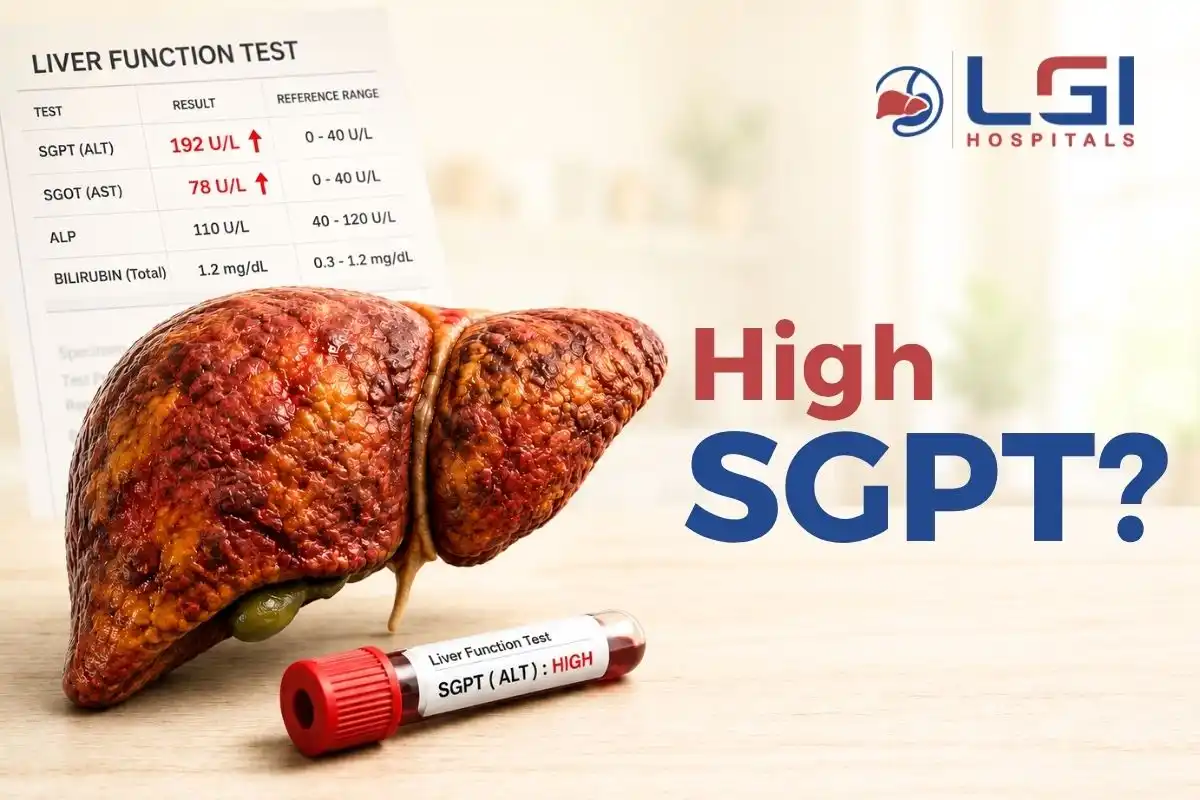
“My SGPT is 85. Should I worry?”
“My report says SGPT is high.”
“My doctor asked me to repeat the test.”
If any of these sound familiar, take a breath. A high SGPT reading is one of the most common findings on a routine blood report, and it does not automatically mean something serious is wrong with your liver. This guide from LGI Hospitals explains in simple terms what SGPT high means, what the normal range looks like, what levels of 80, 100, 200, or above 500 usually indicate, and the exact treatment steps our doctors take next.
What Does SGPT High Mean?
SGPT stands for Serum Glutamic Pyruvic Transaminase, more commonly known as ALT (Alanine Aminotransferase). It is an enzyme that lives mainly inside liver cells, where it helps your body process proteins.
In plain words, SGPT high means your liver cells are irritated, stressed, or damaged, and are leaking extra ALT into your blood. In a healthy liver, only small amounts of SGPT circulate in the bloodstream, but when liver cells become inflamed or injured, they release extra SGPT into the blood, which shows up on your lab report.
Importantly, SGPT high does not always mean liver disease. Fatty liver, certain medicines, alcohol, viral infections, obesity, and even strenuous exercise or a recent muscle injury can push SGPT up temporarily. Mild elevation is common and often reversible once the underlying cause is addressed.
What Is the SGPT Normal Range?
The SGPT normal range typically falls between 7 and 56 U/L, though slight variations exist between laboratories. Some labs also report separate reference ranges for men and women.
| Parameter | Normal Range (Approximate) |
| SGPT (ALT) | 7 to 56 U/L |
| SGOT (AST) | 10 to 40 U/L |
| ALP | 44 to 147 U/L |
| Total Bilirubin | 0.1 to 1.2 mg/dL |
| Albumin | 3.5 to 5.0 g/dL |
Reference ranges also vary slightly by gender. Adult men generally fall between roughly 10 to 40 U/L, while adult women usually have a slightly lower range of 7 to 35 U/L. At LGI Hospitals, our doctors always compare your result with the range printed on your own report rather than a number you found online, because reference ranges differ from lab to lab.
How to prepare for the test: An SGPT test is a simple blood draw, usually part of a full LFT panel, with results in 24 to 48 hours. To avoid false spikes, avoid alcohol and heavy workouts for 24 to 48 hours before the draw, tell your doctor about all medicines and supplements you take, and fast for 10 to 12 hours only if your test is part of a broader lipid or sugar profile.
SGPT Levels and Their Possible Meaning
The table below is a general guide, not a diagnosis. Your doctor will always interpret it alongside your symptoms and history.
| SGPT Level | Possible Meaning | What You Should Do |
| Normal (7 to 56 U/L) | Usually a healthy liver | Routine follow-up |
| Slightly High (57 to 100 U/L) | Mild irritation, early fatty liver, or medicine effect | Consult a doctor if it persists |
| Moderately High (100 to 300 U/L) | Active inflammation, significant fatty liver, or chronic hepatitis | Medical evaluation recommended |
| High (300 to 1000 U/L) | Severe acute inflammation, such as acute viral hepatitis | Consult a gastroenterologist promptly |
| Very High (Above 1000 U/L) | Medical emergency like drug toxicity, paracetamol overdose, or shock | Immediate emergency evaluation |
To put this in perspective, an SGPT of 80 U/L is only mildly elevated and often linked to fatty liver or a temporary factor, while an SGPT of 200 U/L needs prompt medical evaluation. An SGPT above 500 or 1000 U/L is a major red flag for severe liver injury and needs immediate attention. There is no single universal danger number. Doctors at LGI Hospitals also weigh how many times above normal the value is, whether it is a repeated trend, and whether symptoms like jaundice are present.
What Causes High SGPT?
| Cause | How It Affects SGPT |
| Fatty Liver | Fat buildup in liver cells triggers mild, ongoing inflammation |
| Hepatitis (Viral A, B, or C) | Viral infection directly damages liver cells |
| Alcohol-Related Liver Disease | Regular heavy alcohol use is toxic to liver cells |
| Obesity and Diabetes | Insulin resistance increases fat storage in the liver |
| Certain Medicines | Painkillers, antibiotics, statins, and TB medicines can stress the liver |
| Muscle Injury or Intense Exercise | ALT is also present in muscle, so heavy workouts cause a temporary rise |
| Rare Genetic Conditions | Disorders like Wilson disease or hemochromatosis cause copper or iron overload |
Doctors consider rarer causes when high SGPT persists without an obvious lifestyle cause, especially in younger patients.
SGPT vs SGOT: What is the Difference?
The liver contains most of the body’s SGPT (ALT), making it a highly liver-specific marker. When both values rise, doctors are more likely to identify the liver as the source of the problem. Doctors also calculate the AST to ALT ratio, known as the De Ritis ratio, for extra clues:
- Less than 1 (ALT higher than AST): Typically seen in fatty liver or viral hepatitis
- Around 1: Can be seen in some cases of early cirrhosis
- Greater than 2 (AST more than double ALT): Strongly associated with alcohol-related liver injury
This ratio is a useful clue, not a standalone diagnostic tool, and neither enzyme can confirm a diagnosis without further testing.
Can High SGPT Mean Fatty Liver?
Fatty liver is one of the most common reasons for a mildly to moderately high SGPT, especially in people with obesity, diabetes, or a sedentary lifestyle. However, SGPT alone cannot diagnose fatty liver. Many people with fatty liver have completely normal SGPT results in the early stages. If you want to understand what fatty liver actually is and how it develops, read our detailed guide. Doctors usually use an ultrasound or FibroScan to confirm the diagnosis. If your report includes other values, understanding your full Liver Function Test (LFT) helps you see the complete picture.
High SGPT Symptoms
Many people with a high SGPT have no symptoms at all, which is why it is often picked up incidentally during a routine checkup at LGI Hospitals. When symptoms do occur, they tend to be non-specific at first.
| Symptom | What It May Indicate |
| Fatigue | A common, early sign of liver stress |
| Loss of appetite and nausea | Often accompanies liver inflammation |
| Jaundice (yellow eyes or skin) | Suggests bilirubin buildup and needs prompt evaluation |
| Right upper abdominal pain | May indicate liver swelling or inflammation |
| Dark urine | Can indicate elevated bilirubin levels |
If liver stress continues untreated, a smaller number of patients notice advanced signs like persistent itching, unexplained weight loss, easy bruising, or swelling in the abdomen and legs. If you notice any of these alongside a high SGPT, it is best not to wait. Book a consultation rather than interpreting the symptoms yourself.
High SGPT Treatment: How Do Doctors at LGI Hospitals Lower It?
There is no single magic pill to lower SGPT. Treatment always targets the underlying cause, and once the cause is addressed, the enzyme levels usually follow.
| Underlying Cause | Typical Treatment Approach |
| Fatty liver | Weight loss (even 5 to 10 percent helps), diet change, regular exercise |
| Alcohol-related injury | Complete abstinence from alcohol |
| Viral hepatitis (B or C) | Antiviral medicines under a specialist’s care |
| Medicine-induced rise | Reviewing and adjusting the drug with your doctor |
| Diabetes or metabolic causes | Tighter blood sugar and insulin-resistance control |
Alongside cause-specific treatment, the gastroenterology team at LGI Hospitals recommends lifestyle measures that genuinely support liver regeneration:
- Liver-friendly foods: Leafy greens, cruciferous vegetables like broccoli, beetroot, garlic, turmeric, whole grains, amla, citrus fruits, berries, and omega-3-rich fish.
- Coffee: Studies show 2 to 3 cups of black coffee a day can help lower liver enzymes.
- Hydration and sleep: Plenty of water and 7 to 9 hours of sleep for cellular repair.
- Caution on supplements: In select cases of non-diabetic fatty liver, doctors may prescribe Vitamin E, but never start supplements on your own.
For common, mild causes, many patients see SGPT trend back toward normal within 2 to 4 weeks of addressing the cause. Repeat testing is the only reliable way to confirm the downward trend.
How LGI Doctors Investigate High SGPT
When SGPT comes back high, doctors do not jump to conclusions from a single number. The team at LGI Hospitals typically follows a structured pathway: repeat the LFT to rule out a lab error, take a detailed history of medicines, alcohol, and diet, order an ultrasound for fatty liver, check viral markers for Hepatitis B and C, and perform a FibroScan in select cases to assess scarring. This step-by-step approach separates a harmless, temporary rise from something that needs active treatment.
When Should You See a Gastroenterologist?
You should see a gastroenterologist if your SGPT is persistently high on repeat testing, if it is above 200 U/L, or if it is accompanied by warning signs like jaundice, severe abdominal pain, persistent vomiting, leg swelling, or unusual confusion. These symptoms need prompt evaluation rather than a wait-and-watch approach. The most common mistake patients make is ignoring a high report because they feel fine, or trying unverified liver detox remedies instead of getting a proper evaluation. The specialists at LGI Hospitals, Nagpur routinely evaluate patients with abnormal reports and guide them through the right next steps. You can explore our specialized gastroenterology services to find the exact care you need.
FAQs
Not necessarily. A mildly high SGPT is common and often caused by fatty liver, medicines, or recent exercise. However, persistently high values, or high SGPT with symptoms like jaundice, need prompt evaluation. The safest approach is to repeat the test and discuss the result with a doctor.
Treating the underlying cause can improve SGPT levels. Losing excess weight, avoiding alcohol, managing diabetes, and eating leafy greens, amla, and omega-3s will help. Your treatment depends on the cause, so consult LGI Hospitals for an evaluation instead of self-treating.
As a general guide, SGPT above 200 U/L is significant and needs prompt evaluation, while levels above 500 to 1000 U/L are a medical emergency. Doctors also weigh the trend and accompanying symptoms.
Not necessarily. Fatty liver often causes high SGPT, but hepatitis, alcohol, certain medicines, or muscle strain can also raise SGPT levels. Only an ultrasound can confirm fatty liver.
Usually not for an isolated SGPT test. If it is part of a full metabolic panel with sugar or lipids, your doctor may ask for a 10 to 12 hour fast.
Key Takeaways
- SGPT (ALT) is a liver enzyme, and a high level means liver cells are releasing more of it than usual.
- High SGPT does not automatically mean serious disease. Many causes are mild and reversible.
- The normal range is typically 7 to 56 U/L, but always check your own lab’s range.
- SGPT and SGOT, plus the De Ritis ratio, should be interpreted together.
- Fatty liver is a common cause, but only an ultrasound can confirm it.
- Persistent elevation, or SGPT above 200 to 500 U/L, needs prompt evaluation at LGI Hospitals.
To Wrap It Up
A high SGPT result can feel alarming, but in most cases it is a starting point for evaluation rather than a diagnosis in itself. Many causes, including fatty liver, medicines, alcohol, infections, or recent exercise, are common and manageable once identified. What matters most is not panicking over a single number, but getting it properly evaluated. If your SGPT is high and you are unsure what it means for you, the gastroenterology team at LGI Hospitals can help you understand your report, identify the underlying cause, and guide you toward the right next steps.
Medical Disclaimer
This article is intended for educational purposes only and does not constitute medical advice, diagnosis, or treatment. SGPT and SGOT levels must always be interpreted in the context of your complete medical history, symptoms, and other test results. Please consult a qualified gastroenterologist for accurate diagnosis and appropriate care.