
What Causes Right Side Stomach Pain?
Right side stomach pain can occur due to digestive problems, gallstones, appendicitis, kidney stones or conditions affecting other abdominal organs. The cause often depends on the location of the pain, how it begins and whether other symptoms appear.
Pain beneath the right ribs may be associated with gallbladder or liver conditions. Pain in the lower right abdomen can be a sign of appendicitis. Gas, constipation and muscle strain can also cause discomfort, but severe or worsening pain should not automatically be dismissed as a minor digestive problem.
Seek emergency medical care if the pain is sudden, severe or rapidly worsening, particularly if you also experience fever, repeated vomiting, fainting or a rigid abdomen.
Understanding Pain on the Right Side of the Abdomen
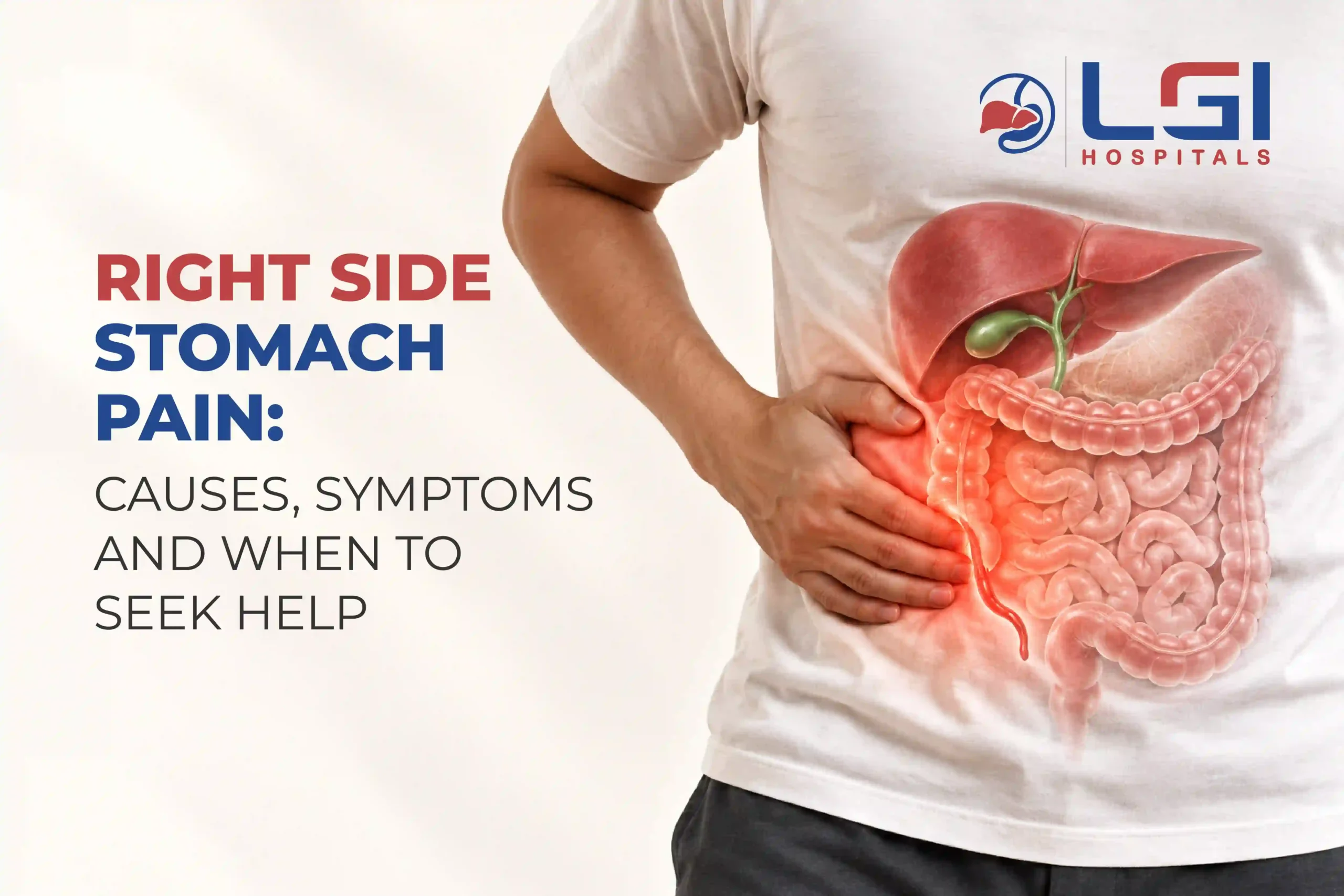
The right side of your abdomen contains several organs, including the liver, gallbladder, appendix, right kidney and parts of the intestine. In women, reproductive organs can also cause pain in this area.
The location of the pain can help a doctor narrow down the possible causes, but it cannot confirm a diagnosis on its own.
| Where you feel the pain | Possible causes | Other symptoms to watch for |
| Upper right abdomen, below the ribs | Gallstones, gallbladder inflammation, some liver conditions | Nausea, vomiting or jaundice |
| Lower right abdomen | Appendicitis, hernia, intestinal conditions | Increasing pain, tenderness or fever |
| Right side or back, spreading towards the groin | Kidney stones | Blood in urine or painful urination |
| Lower right abdomen or pelvis in women | Ovarian cysts, ovarian torsion, ectopic pregnancy | Pelvic pain, vaginal bleeding or dizziness |
These patterns provide clues rather than a diagnosis. Different conditions can cause similar symptoms, and some serious conditions do not follow typical patterns.
Causes of Right Upper Abdominal Pain
Pain in the upper right side of the stomach, particularly below the ribs, may be related to the gallbladder, liver or digestive system.
1. Gallstones and Gallbladder Problems
Gallstones are hardened deposits that form inside the gallbladder. Some people have gallstones without experiencing symptoms. Problems can develop when a stone blocks the flow of bile or causes inflammation.
Gallbladder pain may occur in the upper right or upper middle abdomen and last from around 30 minutes to several hours. It can develop after eating, particularly following a fatty meal, and may spread towards the back or right shoulder.
Other symptoms can include nausea and vomiting. Persistent pain, fever, chills or yellowing of the skin and eyes may indicate a complication that needs urgent medical attention.
Pain after a meal does not automatically mean you have gallstones. A medical examination and, when appropriate, imaging tests can help identify the cause.
2. Liver Conditions
The liver is located beneath the right rib cage. Some liver conditions can cause discomfort in the upper right abdomen, but many produce few or no noticeable symptoms in their early stages.
Fatty liver disease, for example, often develops without obvious symptoms. Some people may experience fatigue or vague abdominal discomfort, but severe or sudden pain should not automatically be attributed to fatty liver.
Other liver conditions may cause symptoms such as nausea, dark urine or jaundice.
Read more about fatty liver disease to understand its causes, symptoms and management.
3. Gas, Indigestion and Constipation
Gas, bloating and constipation can cause abdominal discomfort, including on the right side. The pain may come and go and may occur alongside a feeling of fullness or changes in bowel movements.
However, the presence of gas does not rule out a more serious condition. If the pain is severe, persistent, localised or getting worse, seek medical assessment rather than assuming it is acidity or indigestion.
Causes of Right Lower Abdominal Pain
Pain in the lower right abdomen can have several causes. Appendicitis is particularly important to recognise because it can worsen and lead to serious complications without timely treatment.
1. Appendicitis
Appendicitis occurs when the appendix becomes inflamed. It is an important cause of pain in the lower right abdomen and requires prompt medical evaluation.
The pain may begin around the belly button and gradually move to the lower right side. It can become more intense and worsen with walking, coughing or sudden movements.
Other possible appendicitis symptoms include:
- Loss of appetite
- Nausea or vomiting
- Fever
- Increasing abdominal tenderness
- Abdominal swelling or changes in bowel movements
Not everyone experiences all these symptoms, and the pain may develop differently in some people.
If appendicitis is suspected, seek urgent medical care. An untreated appendix can rupture and cause serious complications. Treatment depends on the diagnosis and the patient’s condition. Surgery is common, although antibiotics may be suitable for selected uncomplicated cases.
For more information, read about appendicitis and appendix surgery or visit the appendix surgery service page in Nagpur.
2. Kidney Stones
Kidney stones can cause intense pain when a stone moves through the urinary tract or obstructs the flow of urine.
The pain may start in the side or back and spread towards the lower abdomen or groin. It can come in waves, with the intensity changing over time.
Other symptoms may include blood in the urine, nausea, vomiting or pain while urinating. Fever or chills alongside suspected kidney stones require urgent medical attention because an infection may be present.
3. Hernia
A hernia occurs when tissue pushes through a weakened area in the surrounding muscle or connective tissue. Depending on its location, it may cause discomfort in the lower abdomen or groin.
A visible bulge may become more noticeable when standing, coughing or lifting something heavy.
Sudden severe pain, vomiting or a bulge that becomes firm and tender requires emergency assessment. These symptoms may indicate that the hernia is trapped or its blood supply is compromised.
4. Reproductive Conditions in Women
Right-side stomach pain in women may be caused by conditions affecting the ovaries, fallopian tubes or other reproductive organs.
Possible causes include ovarian cysts, ovarian torsion and ectopic pregnancy. These conditions can sometimes produce symptoms similar to appendicitis.
Sudden severe pelvic pain needs prompt medical assessment. If pregnancy is possible and abdominal pain occurs with vaginal bleeding, shoulder-tip pain, dizziness or fainting, seek emergency care because these can be warning signs of an ectopic pregnancy.
When Should You Seek Medical Attention?
Not every episode of abdominal discomfort is an emergency. However, certain symptoms can indicate a serious condition that needs immediate assessment.
Seek emergency medical care if you experience:
- Sudden, severe or rapidly worsening abdominal pain.
- Severe abdominal tenderness or an unusually rigid abdomen.
- Persistent vomiting or an inability to keep fluids down.
- Vomiting blood or material that resembles coffee grounds.
- Black, tarry or bloody stools.
- Abdominal swelling with an inability to pass stool or gas.
- Fever or chills accompanied by significant abdominal pain.
- Yellowing of the skin or eyes with abdominal pain, particularly if symptoms are worsening.
- Abdominal or pelvic pain with fainting or possible pregnancy and vaginal bleeding.
Do not repeatedly press on your abdomen to test for tenderness or attempt to diagnose the condition yourself. If the pain is severe or worsening, seek emergency care rather than waiting for a routine appointment or trying home remedies.
How Is Right Side Stomach Pain Diagnosed?
The diagnosis depends on your symptoms, medical history, physical examination and the conditions your doctor suspects. There is no single test that identifies every cause of right-side abdominal pain.
Medical History and Physical Examination
Your doctor may ask when the pain began, where it started, whether it has moved, how severe it is and whether eating, movement or urination affects it.
The physical examination can help identify tenderness and other findings that guide further testing.
Blood and Urine Tests
Blood tests may help identify inflammation, infection or abnormalities associated with liver and gallbladder conditions.
Urine tests can help investigate kidney stones and urinary tract problems. A pregnancy test may also be recommended when relevant.
Ultrasound and CT Scans
Imaging tests help doctors investigate the possible cause of abdominal pain.
- Ultrasound: Often useful for examining the gallbladder and identifying gallstones. It can also help assess several other abdominal and pelvic conditions.
- CT scan: May be recommended when appendicitis, kidney stones or another abdominal condition is suspected.
- Additional investigations: May be necessary when initial results are inconclusive or symptoms suggest a condition requiring further evaluation.
The appropriate test depends on factors such as the patient’s age, symptoms, pregnancy status and examination findings. Your doctor will determine which investigations are suitable.
FAQs
There is no single cause that applies to everyone. Gas, constipation and other digestive problems can cause discomfort, while gallstones, appendicitis and kidney stones are other possible causes. The location, duration and associated symptoms help guide medical assessment.
Yes. Gas and bloating can cause abdominal cramping or discomfort on the right side. However, severe or worsening pain should not automatically be attributed to gas. Passing gas or having a bowel movement does not reliably rule out a serious condition.
Appendicitis may cause pain that begins near the belly button and moves to the lower right abdomen. The pain may worsen over time and occur with loss of appetite, nausea, vomiting or fever. Symptoms vary, so seek urgent medical evaluation if appendicitis is suspected.
Pain after eating may occur with gallbladder problems, indigestion and other digestive conditions. Pain beneath the right ribs may be associated with gallstones, but meal timing alone cannot confirm the cause.
Possible causes include appendicitis, gallstones, kidney stones, ovarian cysts, ovarian torsion and ectopic pregnancy. Sudden severe pelvic pain, fainting or abdominal pain associated with possible pregnancy and vaginal bleeding requires emergency assessment.
The appropriate treatment depends on the cause. Mild discomfort may sometimes improve when a temporary digestive problem resolves, but unexplained severe, persistent or worsening pain needs medical assessment. Do not delay care to try home remedies or take medicines without appropriate guidance.
Get Medical Help for Persistent or Severe Right Side Stomach Pain
Right side stomach pain can range from temporary digestive discomfort to a condition that requires urgent treatment. Pain beneath the right ribs may be associated with gallbladder problems, while pain in the lower right abdomen can be a sign of appendicitis. Kidney stones and reproductive conditions can also cause similar symptoms.
The location of the pain provides useful clues, but it cannot confirm the diagnosis. Seeking timely medical assessment can help identify the cause and determine the appropriate treatment.
At LGI Hospitals, Nagpur, patients can consult the medical team for evaluation of abdominal and gastrointestinal conditions. If you are experiencing severe or worsening pain, seek emergency medical care rather than waiting for a routine consultation.
For non-emergency concerns, visit the LGI Hospitals website to learn more about its services and appointment options.
Medical Disclaimer: This article is for general educational purposes and does not replace professional medical advice, diagnosis or treatment. Seek urgent medical care for severe or worsening abdominal pain or any emergency warning signs.