
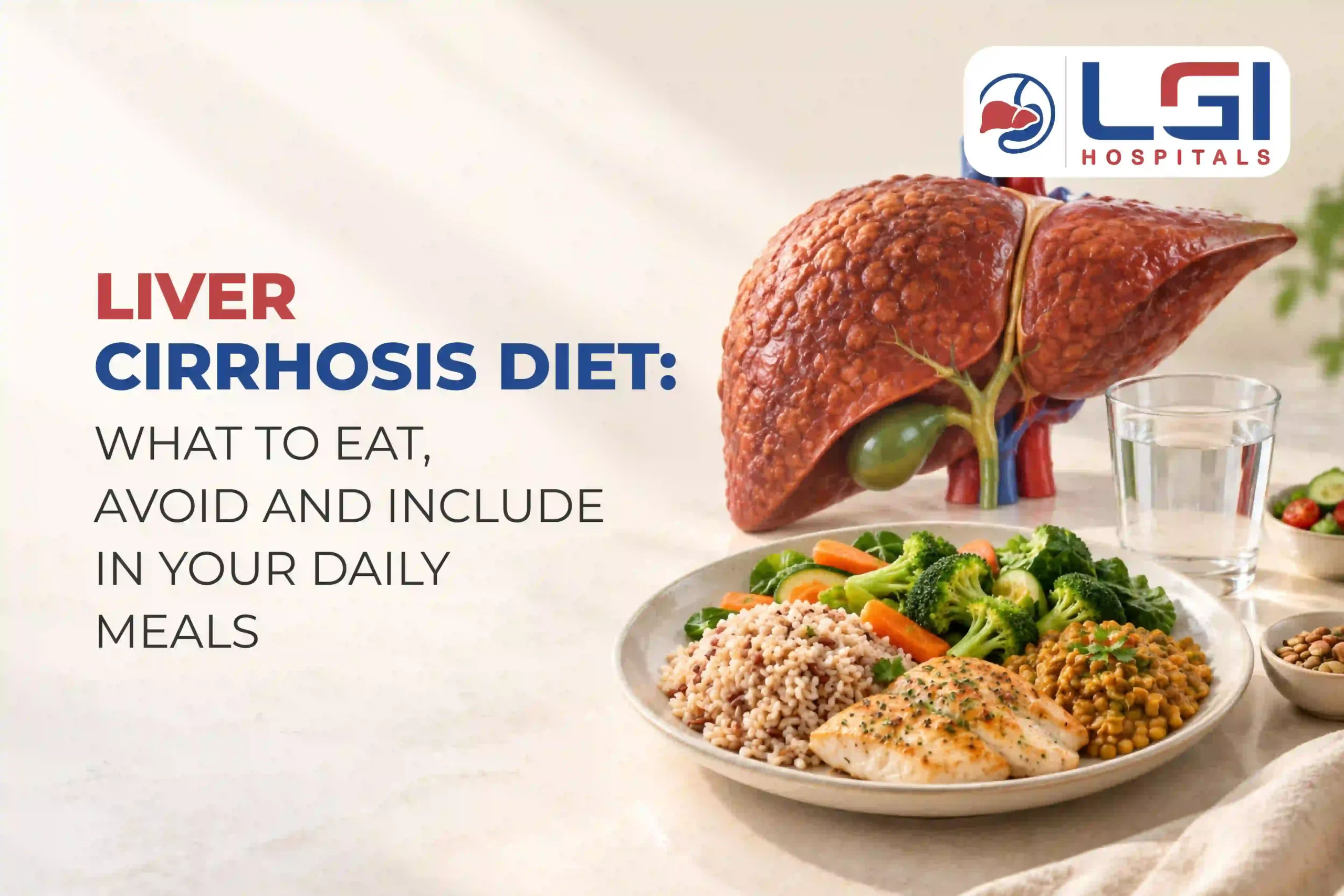
What Is the Best Diet for Liver Cirrhosis?
A liver cirrhosis diet focuses on providing enough calories and protein, managing sodium intake when necessary, avoiding alcohol and reducing the risk of foodborne infections. The right diet depends on the stage of cirrhosis, nutritional status and complications such as ascites or hepatic encephalopathy.
People with cirrhosis may experience poor appetite, muscle loss and difficulty maintaining a healthy nutritional status. Adequate protein, balanced meals and shorter gaps between meals can help support their nutritional needs.
The most important principle is that there is no single diet chart suitable for every person with cirrhosis. A hepatologist or qualified dietitian should tailor the plan to the patient’s condition, especially when fluid retention, diabetes or kidney problems are present.
Why Is Diet Important in Liver Cirrhosis?
Liver cirrhosis is advanced scarring of the liver that develops after long-term liver damage. Possible causes include chronic viral hepatitis, alcohol-related liver disease and fatty liver disease.
As cirrhosis progresses, the liver may become less effective at performing its normal functions. Some people also experience nausea, reduced appetite, early fullness or changes in how their body stores and uses energy.
These problems can contribute to malnutrition and the loss of muscle mass, which may affect strength, recovery and overall health.
A well-planned liver cirrhosis diet can help maintain nutritional intake, preserve muscle and support medical treatment. It cannot reverse established cirrhosis on its own, so nutrition must be combined with treatment of the underlying cause and monitoring for complications.
Three Important Principles of a Liver Cirrhosis Diet
1. Include Adequate Protein
Protein helps maintain muscle mass, support immunity and repair body tissues. People with cirrhosis are at increased risk of muscle wasting, making adequate protein intake particularly important.
Suitable protein sources may include:
- Dal, lentils and beans
- Eggs
- Milk and pasteurized curd
- Tofu and soy products
- Well-cooked fish and chicken
Clinical guidance commonly recommends around 1.2 to 1.5 grams of protein per kilogram of ideal body weight per day for adults with cirrhosis. The appropriate amount should be confirmed by the treating clinician or dietitian based on the patient’s nutritional needs.
Protein should not routinely be restricted in people with hepatic encephalopathy, a complication of liver disease that affects brain function. Restricting protein may worsen muscle loss. A combination of protein sources, including plant and dairy options, may be useful depending on individual tolerance.
2. Manage Sodium Intake When Recommended
Cirrhosis can affect the body’s regulation of sodium and water. Some patients develop ascites, which is fluid accumulation in the abdomen, or swelling in the legs and ankles.
When these complications occur, a doctor may recommend reducing sodium intake to help manage fluid retention. Some treatment plans use a target of approximately 2,000 mg of sodium per day, but the appropriate limit should be individualized.
Common high-sodium foods include:
- Pickles and papad
- Namkeen and salted snacks
- Packaged soups and instant noodles
- Processed meats
- Ready-made sauces and salty condiments
Read nutrition labels when choosing packaged foods. Remember that sodium and salt are not the same measurement: the amount of salt listed in a recipe cannot be directly compared with a sodium target without conversion.
Excessive restriction can make food less appealing and reduce overall food intake. If you are losing weight or struggling to eat enough, ask your healthcare team to review your diet rather than restricting salt further on your own.
3. Avoid Long Gaps Between Meals
People with cirrhosis may use stored energy differently from people without liver disease. Long fasting periods can contribute to the breakdown of muscle for energy.
Eating smaller meals more frequently may help maintain nutritional intake. A late-evening snack or an earlier breakfast can also reduce the overnight fasting period.
Depending on your needs, suitable snacks may include oats, whole-wheat roti with a protein-rich accompaniment, or pasteurized curd with cereal.
The best portion size and ingredients depend on your overall nutritional plan, diabetes status and other medical conditions. A late-evening snack can support nutrition, but it does not replace a balanced diet or medical treatment.
Foods to Eat With Liver Cirrhosis
A balanced cirrhosis diet can include protein-rich foods, whole grains, vegetables and fruits. The suitable portions depend on appetite, nutritional status, food tolerance and any additional medical conditions.
| Food category | Examples | How they may help |
| Protein-rich foods | Dal, lentils, eggs, tofu, well-cooked fish or chicken | Help meet protein needs and maintain muscle |
| Dairy foods | Pasteurized milk and curd | Provide protein and other nutrients |
| Whole grains | Oats, whole-wheat roti and rice | Supply energy and contribute fibre |
| Vegetables | Lauki, carrots, spinach and other suitable vegetables | Provide fibre, vitamins and minerals |
| Fruits | Apples, bananas, papaya and seasonal fruits | Supply fibre, vitamins and minerals |
| Suitable snacks | Oats, curd or a small balanced snack | Help reduce long gaps between meals |
These foods are examples, not a compulsory meal plan. Patients with cirrhosis may need adjustments depending on their appetite, blood sugar, kidney function, fluid retention and nutritional status.
Foods and Drinks to Avoid or Limit
Some foods require particular attention in people with cirrhosis because they can contribute to further liver damage or increase the risk of infection.
1. Alcohol
People with cirrhosis should avoid alcohol because it can cause additional liver damage. If stopping alcohol is difficult, speak to your treating clinician about appropriate support.
2. High-Sodium Foods
Pickles, papad, namkeen, salted nuts, instant foods and many packaged snacks can contain substantial amounts of sodium.
If your doctor has recommended sodium restriction, reducing these foods and checking nutrition labels can help you manage your intake. You do not need to follow a more restrictive diet than your clinician recommends.
3. Raw or Undercooked Seafood and Meat
People with cirrhosis are more vulnerable to certain foodborne infections, which can become serious.
Avoid raw or undercooked shellfish, fish and meat. Choose pasteurized dairy products and follow safe food handling, cooking and storage practices.
4. Excessive Added Sugar
Sugary drinks, sweets and foods high in added sugar can make it harder to maintain a balanced diet, particularly in people who also have diabetes or fatty liver disease.
The appropriate amount depends on your overall nutritional needs. Rather than following an unnecessarily restrictive diet, discuss suitable food choices with your healthcare professional.
Diet for Liver Cirrhosis With Ascites
Ascites occurs when fluid builds up in the abdomen. It may cause abdominal swelling, discomfort, reduced appetite and difficulty eating full meals.
Treatment may include medication, procedures to remove fluid and dietary adjustments.
If you have ascites, your doctor may recommend:
- Reducing sodium intake according to your treatment plan.
- Choosing lower-sodium alternatives to packaged and salted foods.
- Eating smaller meals if abdominal fullness makes eating difficult.
- Monitoring weight and symptoms as instructed by your healthcare team.
Fluid restriction is not routinely necessary for everyone with cirrhosis or ascites. Your doctor should decide whether you need it based on your condition and test results.
Ask your doctor before using salt substitutes. Some contain potassium, which may be unsuitable for people taking certain medicines or those with kidney or electrolyte problems.
Diet for Hepatic Encephalopathy
Hepatic encephalopathy is a complication of advanced liver disease that affects brain function. Symptoms may include confusion, changes in behaviour, sleep disturbances and difficulty concentrating.
Protein should not routinely be reduced in people with hepatic encephalopathy. Inadequate protein can contribute to muscle loss and malnutrition.
A clinician may recommend a balanced intake of protein from foods such as dal, beans, tofu and dairy, alongside other suitable foods. Treatment may also include medication and management of factors that trigger or worsen the condition.
New or worsening confusion, unusual drowsiness or altered behaviour in someone with cirrhosis requires prompt medical assessment.
If your doctor is evaluating liver stiffness or fat measurements, learn about the FibroScan CAP score and its role in liver assessment. A CAP score alone does not determine a person’s diet or establish the stage of cirrhosis.
Sample Daily Eating Pattern for Liver Cirrhosis
The following is an illustrative eating pattern, not a prescribed diet chart. Portions and food choices should be adjusted to individual nutritional needs and medical advice.
| Meal | Example |
| Breakfast | Oats with pasteurized milk or another suitable protein-rich breakfast |
| Mid-morning snack | A serving of fruit |
| Lunch | Roti or rice, dal and cooked vegetables |
| Evening snack | Curd or another suitable protein-containing snack |
| Dinner | Roti or rice with dal, tofu or well-cooked lean protein and vegetables |
| Late-evening snack | A small snack such as oats or another suitable carbohydrate and protein combination |
If you have ascites, diabetes, kidney disease or other complications, your clinician may need to adjust this pattern. Do not use a sample chart as a replacement for a personalized nutrition plan.
Frequently Asked Questions
What should you not eat with liver cirrhosis?
Alcohol should be avoided. Raw or undercooked seafood and meat should also be avoided because of infection risks. If sodium restriction has been recommended, limit high-sodium foods such as pickles, papad, namkeen and many packaged meals. Other dietary changes depend on your medical condition.
Can people with liver cirrhosis eat curd?
Pasteurized curd can be a useful source of protein and other nutrients for many people with cirrhosis. However, the suitable portion and type depend on individual dietary requirements, food tolerance and any additional medical conditions.
Should protein be avoided in liver cirrhosis?
No. Protein should not routinely be restricted in people with cirrhosis, including those with hepatic encephalopathy. Adequate protein helps reduce the risk of muscle loss. A healthcare professional can recommend an appropriate daily intake.
Is a low-salt diet necessary for every person with cirrhosis?
Not everyone needs the same degree of sodium restriction. Reducing sodium is often recommended for managing ascites and fluid retention, but the plan should be individualized to avoid compromising food intake and nutritional status.
Is there a special diet for liver cirrhosis with ascites?
Dietary management commonly includes an individualized sodium target alongside medical treatment. Fluid restriction is not routinely necessary for everyone. Your treating clinician should determine the appropriate diet and fluid plan.
Can diet cure liver cirrhosis?
Diet cannot reverse established cirrhosis on its own. Appropriate nutrition can help maintain muscle mass, prevent or address malnutrition and support overall care. Treatment of the underlying cause and monitoring for complications are also important.
Key Takeaways
- A liver cirrhosis diet should provide adequate calories and protein to help prevent muscle loss.
- Protein should not routinely be restricted, including in people with hepatic encephalopathy.
- Sodium reduction may help manage ascites when recommended by a clinician.
- Avoid alcohol and raw or undercooked seafood and meat.
- Smaller, more frequent meals and a late-evening snack may help reduce long fasting periods.
- Fluid restriction and other dietary changes should be based on individual medical needs.
For further reading, see our guides to fatty liver disease and liver disease symptoms.
Get Personalised Guidance for Liver Cirrhosis
Managing liver cirrhosis involves more than avoiding certain foods. Nutritional needs can change with the stage of the disease, appetite, muscle mass and complications such as ascites or hepatic encephalopathy.
At LGI Hospitals, Nagpur, patients can consult the medical team for evaluation and guidance on managing liver conditions. A healthcare professional can help determine an appropriate nutrition plan alongside medical treatment.
Book an appointment with LGI Hospitals.
Medical Disclaimer: This article is for educational purposes only and does not replace professional medical advice, diagnosis or treatment. Dietary needs vary among people with cirrhosis. Consult your treating hepatologist or a qualified dietitian before making significant dietary changes.