
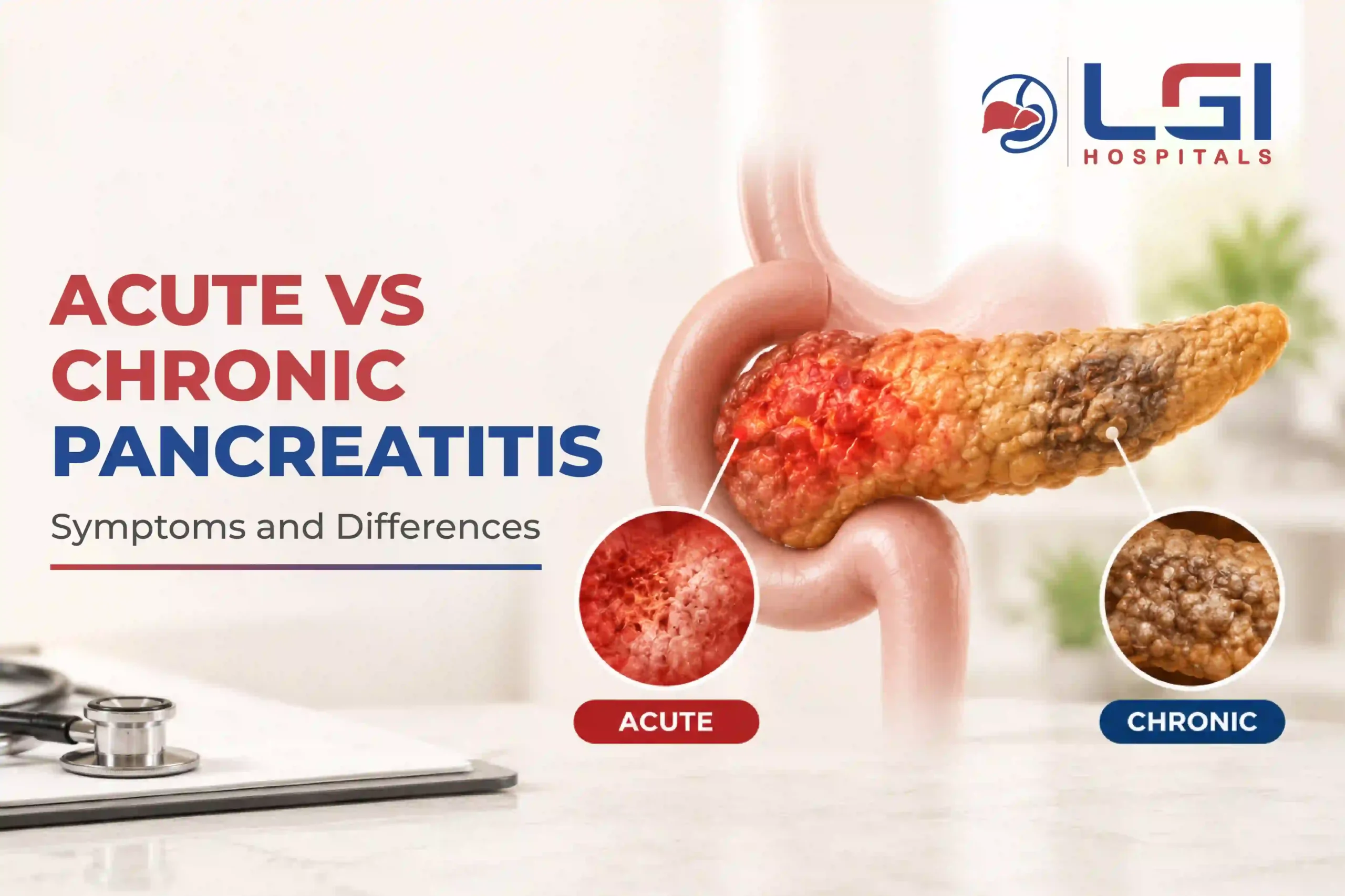
Quick Answer: Acute pancreatitis is a sudden, short-term inflammation of the pancreas that typically resolves with treatment, while chronic pancreatitis is long-term, progressive damage that develops over years and can permanently affect digestion and blood sugar control. Both require prompt medical evaluation, but the treatment approach and long-term outlook differ significantly.
Understanding the Pancreas and Pancreatitis
The pancreas is a vital organ located behind the stomach that performs two essential functions: producing digestive enzymes that break down food, and producing insulin that regulates blood sugar. When the pancreas becomes inflamed, these functions can be disrupted, leading to a range of serious symptoms.
At LGI Hospitals, we see many patients who are confused about whether their pancreatitis is acute or chronic. Understanding the difference is crucial because the treatment approach, recovery timeline, and long-term outlook vary significantly between the two conditions.
What is Acute Pancreatitis?
Acute pancreatitis comes on suddenly, most commonly triggered by gallstones blocking the pancreatic duct or heavy alcohol use. Less common causes include certain medications, high triglyceride levels, or complications following ERCP procedures.
| Symptom | Description |
| Sudden, severe upper abdominal pain | Often radiates to the back, can be debilitating |
| Nausea and vomiting | Frequently accompanies the pain |
| Fever | Indicates inflammation or possible infection |
| Rapid pulse | Body’s response to pain and inflammation |
| Abdominal tenderness and swelling | The pancreas is inflamed and swollen |
Most cases resolve with hospital-based treatment including fasting to rest the pancreas, IV fluids, and pain management. However, severe cases can involve complications like infected pancreatic tissue or fluid collections requiring further intervention.
Doctor’s Tip: If you experience sudden, severe upper abdominal pain that radiates to your back, especially after a heavy meal or alcohol consumption, seek medical attention immediately. Early treatment of acute pancreatitis significantly improves outcomes and reduces the risk of complications.
What is Chronic Pancreatitis?
Chronic pancreatitis develops gradually, usually from repeated episodes of acute inflammation or long-term alcohol use, causing permanent scarring of pancreatic tissue over time. This scarring progressively affects the pancreas’s two main jobs: producing digestive enzymes and producing insulin.
| Symptom | Description |
| Persistent or recurring abdominal pain | Can become constant in advanced stages |
| Unintentional weight loss | Due to poor nutrient absorption |
| Oily, foul-smelling stools (steatorrhea) | Sign of poor fat digestion due to enzyme deficiency |
| Diabetes | Pancreatic damage progressively affects insulin-producing cells |
| Nutritional deficiencies | Particularly fat-soluble vitamins A, D, E, and K |
Did You Know?
Chronic pancreatitis increases the risk of pancreatic cancer. Studies show that patients with chronic pancreatitis have a 2 to 3 times higher risk of developing pancreatic cancer compared to the general population. This is why long-term monitoring by a specialist is essential.
Key Differences at a Glance
| Feature | Acute Pancreatitis | Chronic Pancreatitis |
| Onset | Sudden | Gradual, over years |
| Duration | Days to weeks | Lifelong, progressive |
| Reversibility | Often fully recoverable | Permanent tissue damage |
| Common cause | Gallstones, alcohol | Repeated acute episodes, long-term alcohol use |
| Long-term effects | Usually none if resolved fully | Diabetes, malnutrition, chronic pain |
| Cancer risk | Not increased | Increased risk, requires monitoring |
| Treatment focus | Resolve inflammation, address cause | Manage symptoms, slow progression |
What Causes Pancreatitis?
| Cause | How It Triggers Pancreatitis |
| Gallstones | Block the pancreatic duct, preventing enzyme drainage (leading cause of acute) |
| Alcohol use | Directly toxic to pancreatic cells (leading cause of both acute and chronic) |
| High triglyceride levels | Very high levels (above 1000 mg/dL) can trigger acute inflammation |
| Certain medications | Some antibiotics, diuretics, and immunosuppressants can cause inflammation |
| ERCP complications | A recognized but relatively uncommon procedural risk |
| Genetic causes | Mutations in genes like PRSS1, SPINK1, or CFTR |
| Autoimmune pancreatitis | Immune system attacks pancreatic tissue |
| Trauma or surgery | Direct injury to the pancreas |
At LGI Hospitals, our specialists conduct a thorough evaluation to identify the exact cause of your pancreatitis, which is essential for preventing recurrence and guiding long-term management.
Is Pancreatitis Curable?
Acute pancreatitis is often fully treatable, especially when the underlying cause is identified and addressed. For example, if gallstones are the cause, gallbladder removal after recovery prevents recurrence in most cases.
Chronic pancreatitis, however, involves permanent structural damage that is not reversible.
Treatment instead focuses on:
- Slowing further progression
- Managing pain effectively
- Addressing complications like diabetes or malnutrition as they arise
- Monitoring for potential complications including pancreatic cancer
For patients concerned about the relationship between pancreatitis and pancreatic cancer, our specialists can explain the actual risk factors and recommend appropriate monitoring protocols.
Treatment Approaches
| Treatment Aspect | Acute Pancreatitis | Chronic Pancreatitis |
| Initial management | Hospitalization, fasting, IV fluids, pain control | Outpatient management with medications |
| Pain control | Short-term analgesics during acute episode | Long-term pain management strategy |
| Nutrition | Temporary fasting, then gradual reintroduction | Pancreatic enzyme replacement therapy |
| Diabetes management | Usually not needed unless severe | Often required as disease progresses |
| Surgical intervention | Only for complications or gallstone removal | For blocked ducts or severely damaged tissue |
| Lifestyle changes | Alcohol cessation, dietary modifications | Lifelong alcohol avoidance, low-fat diet, enzyme supplements |
The specialists at LGI Hospitals offer comprehensive pancreatitis treatment in Nagpur, combining medical management, interventional endoscopy, and surgical expertise under one roof for optimal patient outcomes.
Meet the Specialists at LGI Hospitals
Pancreatitis, especially complex or chronic cases, benefits from combined surgical and medical gastroenterology expertise working together.
Dr. Yogesh A. Bang (MS General Surgery, DNB Surgical Gastroenterology, FMAS) specializes in Pancreato-Biliary Surgery and has performed over 60 pancreatic resections. He trained at the Asian Institute of Gastroenterology, Hyderabad, and brings extensive experience in complex pancreatic procedures.
Dr. Manoj A. Vyawahare (MBBS, MD Medicine, DNB Medical Gastroenterology) specializes in Pancreatico-Biliary diseases and interventional digestive endoscopy for medical management. His expertise includes ERCP procedures for pancreatic duct interventions.
Therefore, getting the right pancreatitis specialist involved early can significantly improve long-term outcomes. If you or a family member are experiencing symptoms of pancreatitis, book an appointment at LGI Hospitals for prompt evaluation and personalized treatment planning.
FAQs
Yes. Repeated episodes of acute pancreatitis, especially if the underlying cause like continued alcohol use is not addressed, can lead to chronic pancreatitis over time. This is why identifying and treating the root cause after the first episode is so important.
Doctors generally reserve surgery for complications, persistent blocked ducts, or symptoms that other treatments fail to control. They manage many cases, especially acute ones, with medical treatment alone. Most acute pancreatitis cases resolve with conservative medical management.
Mild cases often resolve within a week with hospital treatment, while more severe cases can take considerably longer and may involve a longer hospital stay. Complete recovery of pancreatic function typically occurs within a few weeks to months in uncomplicated cases.
It is a serious, progressive condition, but with proper long-term management, most patients can control symptoms and complications effectively over many years. The main risks include malnutrition, diabetes complications, and a slightly increased risk of pancreatic cancer, which specialists can monitor and manage with regular care.
Both acute and chronic pancreatitis require avoiding alcohol completely and limiting high-fat foods. During acute episodes, you may need to fast temporarily. For chronic pancreatitis, a low-fat diet with small, frequent meals and pancreatic enzyme supplements helps manage symptoms and improve nutrient absorption.
Doctors strongly recommend complete alcohol abstinence after any episode of pancreatitis, regardless of the original cause. Alcohol can trigger recurrence and accelerate progression to chronic pancreatitis. Your specialist at LGI Hospitals can provide personalized guidance based on your specific situation.
Pancreatitis pancreas ki sujan hai. Acute pancreatitis achanak hoti hai aur usually gallstones ya alcohol ki wajah se hoti hai, jo hospital treatment se theek ho sakti hai. Chronic pancreatitis lambe samay mein develop hoti hai aur permanent damage karti hai, jiske liye lifelong management zaroori hai. Dono conditions mein alcohol band karna aur specialist se milna bahut zaroori hai. (पैंक्रियाटाइटिस अग्न्याशय की सूजन है। एक्यूट पैंक्रियाटाइटिस अचानक होती है और आमतौर पर पित्त की पथरी या शराब की वजह से होती है। क्रोनिक पैंक्रियाटाइटिस लंबे समय में विकसित होती है और स्थायी क्षति करती है।)
Key Takeaways
- Acute pancreatitis is sudden inflammation that often resolves with treatment, while chronic pancreatitis involves permanent, progressive damage.
- Gallstones and alcohol are the leading causes of acute pancreatitis, while repeated episodes and long-term alcohol use cause chronic pancreatitis.
- Acute pancreatitis is often fully curable, but chronic pancreatitis requires lifelong management.
- Chronic pancreatitis increases the risk of diabetes, malnutrition, and pancreatic cancer.
- Treatment ranges from conservative medical management to surgical intervention depending on severity and type.
- Complete alcohol abstinence is essential for both acute and chronic pancreatitis.
- LGI Hospitals in Nagpur offers comprehensive pancreatitis care with combined medical and surgical gastroenterology expertise.
Conclusion
Understanding whether you are dealing with acute or chronic pancreatitis is the first step toward effective treatment and long-term management. While acute pancreatitis often resolves completely with proper care, chronic pancreatitis requires ongoing specialist management to control symptoms, prevent complications, and maintain quality of life. If you are experiencing symptoms of pancreatitis or have been diagnosed with either form, the combined expertise of our medical and surgical gastroenterology team at LGI Hospitals, Nagpur can help you navigate the right treatment path.
Book Your Pancreatitis Consultation at LGI Hospitals →
Medical Disclaimer: This article is intended for educational purposes only and does not constitute medical advice, diagnosis, or treatment. Always consult a qualified gastroenterologist or pancreatic surgeon for accurate diagnosis and appropriate care.