
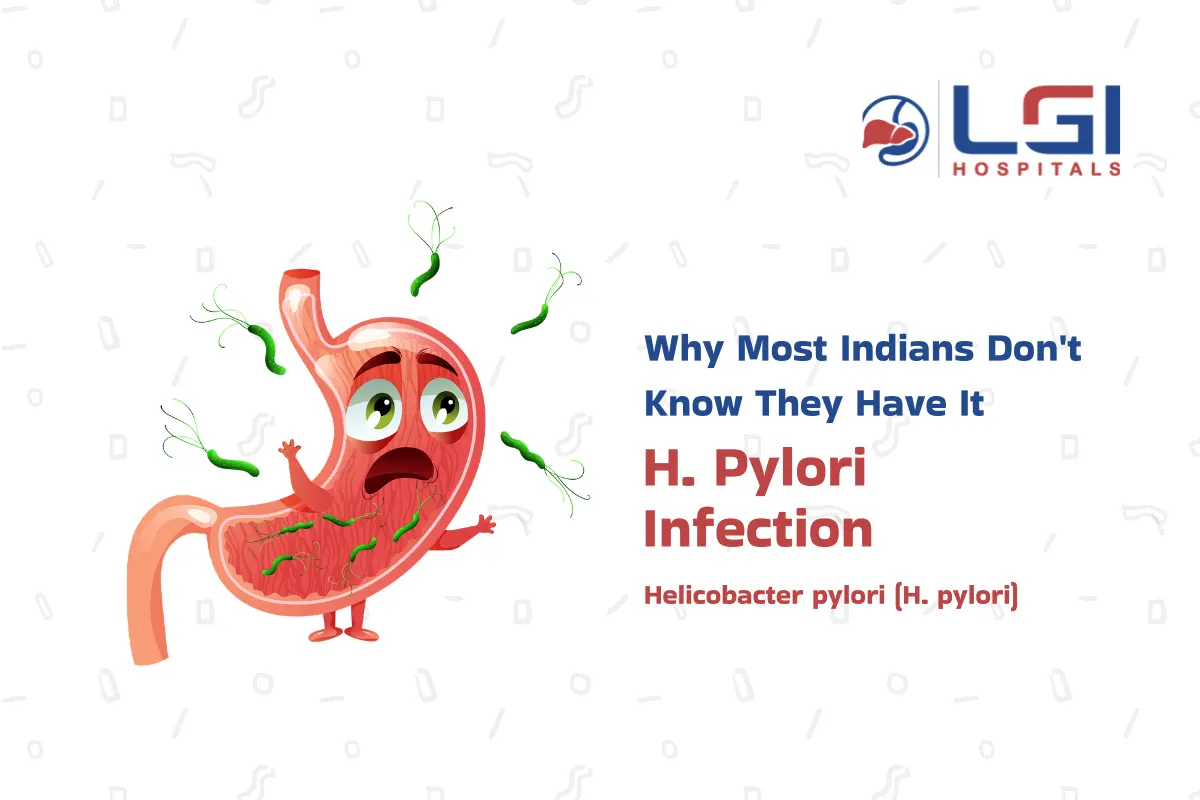
| Key Fact: More than 50% of Indians carry H. pylori bacteria in their stomach — and the majority have no symptoms until damage has already begun. This article explains what it is, how to detect it, and what to do next. |
What Is H. Pylori?
Helicobacter pylori (H. pylori) is a spiral-shaped bacterium that lives in the lining of the stomach. It is one of the most common bacterial infections in the world — and in India, it is particularly widespread. Studies estimate that between 50% and 80% of the Indian population carries this bacteria, often acquired in childhood through contaminated water or food.
What makes H. pylori dangerous is how quietly it operates. Most people carry it for years — sometimes decades — without knowing. The bacteria slowly erodes the stomach lining, creating conditions that lead to gastritis, peptic ulcers, and in some cases, stomach cancer.
If you have been experiencing recurring acidity, bloating, or a dull upper abdominal pain that does not go away with antacids, H. pylori could be the cause. It is not a lifestyle problem — it is a bacterial infection that needs diagnosis and treatment.
How Do You Get H. Pylori?
H. pylori spreads primarily through:
- Contaminated water: Drinking or cooking with water that contains the bacteria — extremely common in semi-urban and rural India.
- Contaminated food: Uncooked vegetables, street food, or food handled by an infected person without proper hygiene.
- Person-to-person contact: Sharing utensils, kissing, or close contact with an infected individual.
- Childhood exposure: Most H. pylori infections are acquired in childhood in India, when immune defences are still developing.
Once the bacteria enter the stomach, they can survive indefinitely — the acidic environment that kills most microorganisms does not affect H. pylori. It uses enzymes to neutralise stomach acid around itself and burrows into the mucosal lining, where it causes slow, progressive damage.
H. Pylori Symptoms: What to Watch For
This is where H. pylori becomes tricky. Most people have no symptoms at all in the early stages. When symptoms do appear, they are easily confused with simple acidity or indigestion — which is why so many people in India treat themselves with antacids for years without getting the real diagnosis.
Common symptoms of H. pylori infection include:
- A burning or gnawing pain in the upper abdomen — particularly between meals or at night
- Persistent bloating and a feeling of fullness even after small meals
- Frequent burping or belching
- Nausea, especially in the morning or after eating
- Loss of appetite or unintentional weight loss
- Dark or tarry stools — a sign that the ulcer may be bleeding (requires immediate medical attention)
| Warning: If you notice dark/tarry stools, vomit that looks like coffee grounds, or sudden severe abdominal pain — these could indicate a bleeding ulcer. Do not wait. Seek emergency care at LGI Hospitals immediately: 0712-2435177 |
If you have been managing what you think is “chronic acidity” with over-the-counter antacids for more than 4 weeks, and symptoms keep coming back — get evaluated by a gastroenterologist at LGI Hospitals, Nagpur. H. pylori, not lifestyle, may be the reason.
How Is H. Pylori Diagnosed?
There are several ways to test for H. pylori. Your gastroenterologist will recommend the most appropriate one based on your symptoms and medical history.
1. Urea Breath Test (UBT) — The Gold Standard
The Urea Breath Test is the most accurate, non-invasive method to confirm an active H. pylori infection. Here is exactly how it works:
- You swallow a capsule or liquid containing labelled urea
- If H. pylori is present in your stomach, its urease enzyme breaks down the urea into carbon dioxide
- You breathe into a collection bag 15–30 minutes later
- The collected breath is analysed — if labelled CO₂ is detected, the test is positive
The UBT is safe, painless, and gives results within an hour. It is available at LGI Hospitals, Nagpur — you can book a breath test here.
2. Stool Antigen Test
A stool sample is tested for H. pylori proteins (antigens). This is another non-invasive option, particularly useful for confirming that treatment has been successful after completing a course of antibiotics.
3. Endoscopy with Biopsy
If your gastroenterologist needs to assess the extent of damage to your stomach lining — or if there is concern about ulcers or early cancer — an upper GI endoscopy at LGI Hospitals will be recommended. During the procedure, a tiny tissue sample (biopsy) is taken from the stomach lining and tested for H. pylori directly.
Endoscopy is especially important if you are over 45, have a family history of stomach cancer, or have been experiencing symptoms for more than a few weeks.
4. Blood Antibody Test
A blood test can detect antibodies to H. pylori. However, it is less commonly used for diagnosis because antibodies can remain in the blood for months or years after a successfully treated infection — making it difficult to distinguish a past infection from a current one.
H. Pylori Treatment: What Happens in India?
The good news: H. pylori is completely treatable. The standard treatment is a combination of antibiotics and acid-reducing medication, typically taken for 10–14 days.
Standard treatment (Triple Therapy) includes:
- A proton pump inhibitor (PPI) such as pantoprazole or omeprazole — reduces stomach acid
- Clarithromycin — antibiotic
- Amoxicillin or metronidazole — antibiotic
| Important for Indian Patients: Antibiotic resistance is a growing challenge in India. Some patients do not respond to standard triple therapy. If your treatment has failed once, your gastroenterologist at LGI may recommend Bismuth Quadruple Therapy or a culture-guided approach — where the bacteria are tested to find which antibiotics they respond to best. Do NOT self-medicate or buy antibiotics without a prescription. |
After completing treatment, always confirm eradication with a Urea Breath Test or stool antigen test — at least 4 weeks after finishing antibiotics. Many patients skip this step, and the bacteria returns because the infection was not fully cleared.
Conditions Caused by Untreated H. Pylori
Leaving H. pylori untreated is not a safe option. Over months and years, the bacteria progressively damages your stomach lining, leading to:
- Gastritis: Chronic inflammation of the stomach lining — causes persistent bloating, nausea, and discomfort
- Peptic Ulcers: Open sores in the stomach or small intestine — can cause severe pain and bleeding. Learn about ulcer treatment at LGI Hospitals.
- GERD (Acid Reflux): Chronic acid reflux that does not respond to antacids often has H. pylori as a contributing factor
- Stomach Cancer: H. pylori is classified as a Group 1 carcinogen by the World Health Organization — meaning it is a definite cause of cancer with long-term, untreated infection
If you or a family member has been diagnosed with peptic ulcer disease or has had unexplained upper abdominal symptoms for months, ask your doctor specifically whether you have been tested for H. pylori.
H. Pylori and Your Gut Health: The Bigger Picture
H. pylori is not just a stomach issue — it affects your entire gut microbiome. Research increasingly shows that H. pylori infection disrupts the balance of healthy bacteria in your digestive system, contributing to bloating, irregular bowel movements, and reduced nutrient absorption.
If you have been reading about how gut health affects your overall wellbeing and wondering why your symptoms keep returning despite diet changes — getting tested for H. pylori may be the missing piece.
Similarly, if you experience nausea that comes and goes without a clear cause, H. pylori-related gastritis is one of the most commonly overlooked triggers.
FAQs
| ❓ Can I have H. pylori without any symptoms? |
| Yes — the majority of people infected with H. pylori have no symptoms at all. The infection can be present for years before causing gastritis, an ulcer, or detectable discomfort. This is why screening is important if you have a family history of peptic ulcers or stomach cancer. |
| ❓ Is H. pylori infection contagious? |
| Yes — it can spread through contaminated food, water, saliva, and close contact. If one member of a household is diagnosed, other family members — especially children — should also consider getting tested. |
| ❓ How long does H. pylori treatment take? |
| The standard antibiotic course is 10–14 days. After completing the course, wait 4 weeks before doing a confirmatory test (Urea Breath Test or stool antigen test) to verify the infection has been cleared. |
| ❓ Can H. pylori come back after treatment? |
| Yes — reinfection is possible, especially in environments with contaminated water or poor sanitation. Using clean drinking water, practising proper handwashing, and avoiding sharing utensils reduces the risk of reinfection. |
| ❓ Do I need an endoscopy to test for H. pylori? |
| Not always. The Urea Breath Test and stool antigen test are accurate non-invasive options. Endoscopy with biopsy is recommended when the gastroenterologist needs to assess stomach lining damage, rule out ulcers, or investigate other concerns. |
When to See a Doctor
See a gastroenterologist at LGI Hospitals if you have:
- Upper abdominal pain or burning that persists for more than 2–3 weeks
- Symptoms that return every time you stop taking antacids
- Unintentional weight loss alongside digestive symptoms
- Family history of peptic ulcers or stomach cancer
- Dark, tarry stools or blood in vomit — seek emergency care immediately
| Concerned about H. pylori? LGI Hospitals, Nagpur offers Urea Breath Tests and expert gastroenterology consultations. Call +91 9168274488 or Book an Appointment: lgihospitals.in/book-appointment/ |
MEDICAL DISCLAIMER
The information provided in this article is intended for general educational and informational purposes only. It is not a substitute for professional medical advice, diagnosis, or treatment. Always seek the guidance of a qualified and licensed medical professional — such as a gastroenterologist or hepatologist — with any questions you may have regarding a medical condition, symptom, or treatment.
Never disregard professional medical advice or delay seeking it because of something you have read in this article. If you are experiencing a medical emergency, call your doctor or emergency services immediately. LGI Hospitals, Nagpur does not endorse any specific test, product, procedure, or treatment mentioned in this content.
LGI Hospitals, Nagpur | lgihospitals.in | For appointments: +91 9168274488