
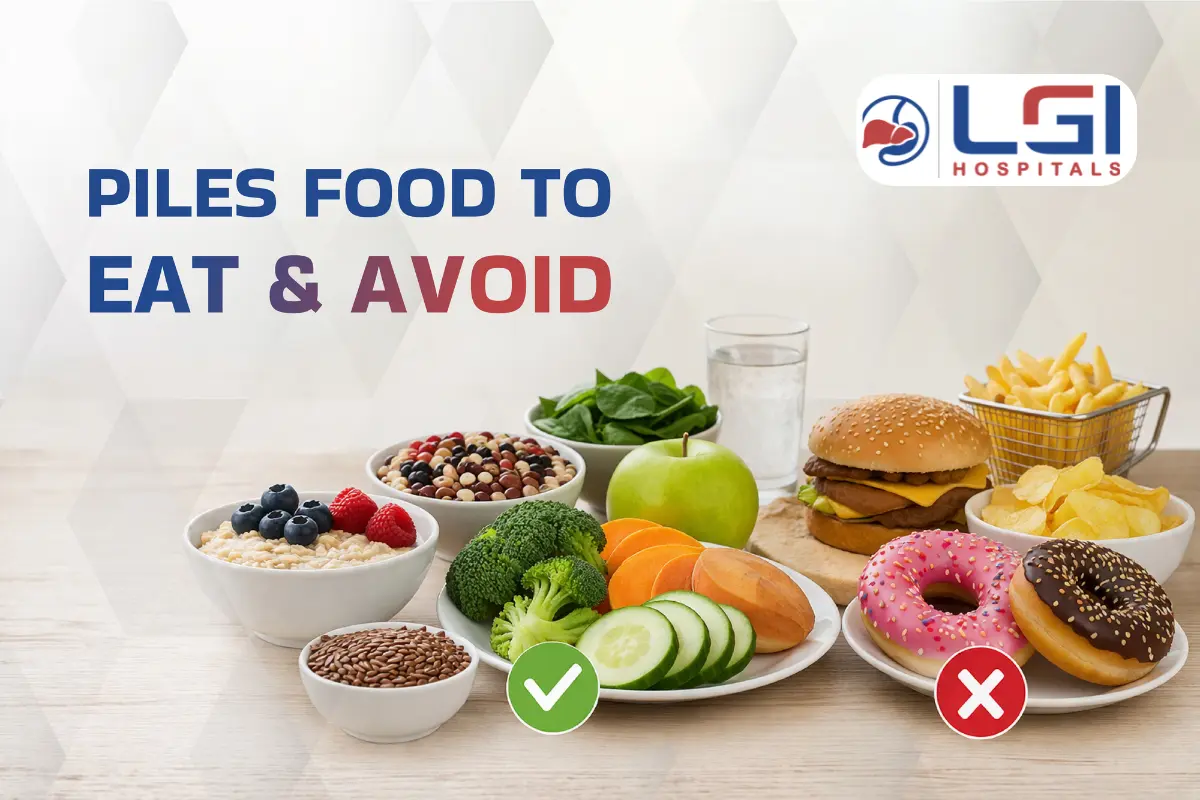
You are eating home-cooked food, you are avoiding outside food most of the time, yet the pain, itching and discomfort from piles just does not go away. Sound familiar? You are not alone. Thousands of people across India are in the same situation, not because they are careless, but because nobody told them exactly which foods help and which ones silently make things worse.
Piles, also called haemorrhoids, are swollen veins in the lower rectum and anus. They are worsened by straining during bowel movements, which is mostly caused by constipation. And constipation, more often than not, is directly linked to what is on your plate every day.
The right food to eat in piles is not exotic or expensive. It is largely what Indian kitchens already have: fruits, dals, whole grains, curd and water. The problem is most people do not know the right combination, the right quantities or the foods that seem harmless but are actually making things worse.
This blog gives you a complete piles diet chart, a clear list of high fiber foods for piles, a practical Indian diet plan, and lifestyle habits that support faster recovery. And if your symptoms are not improving despite dietary changes, the gastroenterologists at LGI Hospitals in Nagpur are just a consultation away.
How Food Affects Piles and Constipation
Here is the simple chain reaction that most people are not aware of: low-fibre food leads to hard stools, hard stools lead to straining, straining puts pressure on the rectal veins, and that pressure causes or worsens piles. Break this chain at the first step, which means improving your diet, and everything else follows.
If you want to understand the full picture of what causes piles, how it is graded and what treatments exist beyond diet, read our detailed guide on piles causes and treatment on the LGI Hospitals website. That article covers everything from internal and external piles to Grade 1 through Grade 4 classifications and treatment options.
For now, what you need to know is this: fibre softens your stool, water keeps it moving, and consistent meal timings train your gut to work on a schedule. Together, these three things form the foundation of any piles diet plan that actually works.
High Fiber Foods for Piles: What to Eat
Think of dietary fibre as the natural cleaner for your intestine. Soluble fibre dissolves in water and forms a soft gel that makes stool easier to pass. Insoluble fibre adds bulk and pushes things along. You need both, and the good news is that Indian cooking naturally provides both if you make the right choices.
Fruits
- Guava eaten with seeds is one of the highest-fibre fruits you can find in any Indian market
- Apple with the skin on contains pectin, which is a soluble fibre that softens stool gently
- Papaya contains enzymes that actively aid digestion and prevent stools from hardening
- Ripe banana is gentle on the gut, adds bulk and is easy to include in any meal
- Pear with the skin provides a strong mix of both soluble and insoluble fibre
- Soaked figs and prunes are natural, mild laxatives that work especially well when consumed first thing in the morning
Vegetables
- Leafy greens such as palak, methi and sarson are rich in both fibre and magnesium, which relaxes the bowel muscles
- Raw carrot and beetroot add insoluble fibre that sweeps the intestine clean
- Bottle gourd (lauki) and bhindi (okra) are light on the stomach and reliably high in fibre
- Broccoli and cabbage provide fibre and also help reduce gut inflammation
- Sweet potato is filling, satisfying and packed with soluble fibre
Whole Grains
- Oats are among the richest sources of soluble fibre and are ideal as a morning meal
- Dalia (broken wheat) is easy to digest and sustains energy without spiking blood sugar
- Brown rice retains its bran layer, unlike polished white rice which is stripped of fibre
- Whole wheat roti is the single easiest swap you can make from your current diet
- Jowar, bajra and ragi are traditional Indian millets that are naturally loaded with fibre and have been supporting gut health for generations
Pulses and Legumes
- Moong dal is the most gut-friendly dal, easy to digest and rich in both protein and fibre
- Chana, rajma and chole are excellent fibre sources and keep you full for longer
- Masoor dal and toor dal are everyday staples that do more for your gut than most people realise
- Sprouted legumes are even more nutritious than their cooked versions and easier to digest
Nuts and Seeds (Small Quantities Daily)
- Flaxseeds soaked overnight and consumed in the morning are one of the most effective natural remedies for constipation
- Chia seeds swell in water and form a natural gel that lubricates the intestine
- Almonds and walnuts provide fibre along with healthy fats that support gut function
LGI Hospitals already shares a high fiber food chart for constipation and piles that covers these categories in visual form. This blog builds on that guidance with a complete daily plan.
Piles Food to Avoid: What Makes Symptoms Worse
You are eating well at mealtimes, but what about the in-between moments? A packet of biscuits here, a cup of strong tea there, a spicy snack in the evening. These are the choices that quietly undo everything good you did at lunch. It is not about perfection. It is about understanding which foods consistently irritate your gut or harden your stool.
- Very spicy, oily and deep-fried foods such as samosas, pakoras and heavily spiced curries irritate the rectal lining and can cause a burning sensation that lasts for hours after a bowel movement
- Processed and fast foods such as burgers, pizza, instant noodles and packaged snacks are almost entirely lacking in fibre, and their high salt and fat content slows down your entire digestive process
- Refined flour items such as white bread, pav, bakery biscuits, naan and most pastries are stripped of all fibre and tend to create a sluggish, sticky transit through the intestine
- Excessive tea and coffee act as diuretics, meaning they pull water out of your body, which directly leads to harder stools
- Sugary soft drinks and packaged juices replace water without providing any fibre, and their sugar content disrupts the gut environment over time
- Red meat consumed regularly is harder to digest and slows down the speed at which food moves through your intestine
- Alcohol dehydrates the body significantly and also disrupts the healthy balance of bacteria in your gut
Occasional consumption of any of these is unlikely to cause a crisis. But when these foods are daily habits, they create the exact conditions that keep piles from healing.
Sample Piles Diet Plan: Full-Day Indian Menu
Here is a realistic, easy-to-follow one-day piles diet plan. Everything on this list is available in any Indian home or market. Adapt it to your region, your season and your preferences.
Early Morning (6 to 7 AM)
- 2 to 3 glasses of warm water immediately after waking up
- 4 to 5 soaked almonds, 2 soaked figs, or 3 soaked prunes
- One teaspoon of soaked flaxseeds if constipation is a regular problem
Breakfast (7:30 to 8:30 AM)
- Option A: Vegetable poha with peas and carrots, served with a small bowl of curd
- Option B: Oats or dalia cooked with vegetables and mild spices
- Option C: 2 to 3 idlis with sambar and coconut chutney
- One glass of water or fresh lime water alongside your meal
Mid-Morning Snack (10:30 to 11 AM)
- One medium fruit such as papaya, apple, pear or guava
- One glass of coconut water if available
Lunch (1 to 1:30 PM)
- 2 whole wheat rotis or one small bowl of brown rice
- One bowl of dal such as moong, masoor or toor
- One sabzi made with fibre-rich vegetables such as lauki, bhindi or palak
- A small fresh salad with cucumber, carrot and tomato
- One small bowl of curd or a glass of chaas
Evening Snack (4 to 5 PM)
- A small bowl of roasted chana or fresh moong sprouts
- A glass of buttermilk with jeera as an alternative
- Strictly avoid biscuits, namkeen or anything fried at this time of day
Dinner (7 to 8 PM, keep it light and early)
- 1 to 2 whole wheat rotis
- One light dal or a simple vegetable soup
- One bowl of sabzi with minimal spicing
- No heavy gravies, no large portions, no eating right before bed
Throughout the Day
- 8 to 10 glasses of water spread evenly through the day
- One cup of tea or coffee maximum, not on an empty stomach
- Coconut water, buttermilk and lime water all count toward fluid intake
Diet Chart: Foods to Eat and Avoid in Piles
| Food Group | Eat These | Limit or Avoid These | Why It Matters |
| Fruits | Guava, papaya, apple with skin, banana, pear, soaked figs and prunes | Canned fruits in syrup, packaged juices without pulp | Fresh fruits give fibre; syrups and juices give sugar with no fibre |
| Vegetables | Palak, methi, carrot, beetroot, lauki, bhindi, broccoli, sweet potato | Deep-fried vegetables, chips, excess pickles | Whole vegetables add stool bulk; fried forms irritate the gut |
| Grains | Oats, dalia, brown rice, whole wheat roti, jowar, bajra, ragi | White bread, maida rotis, naan, puri, refined pasta | Whole grains retain bran for fibre; refined grains are completely stripped |
| Pulses | Moong dal, chana, rajma, chole, masoor dal, sprouts | No restriction if consumed moderately | High in fibre and protein; excellent for gut health |
| Nuts and Seeds | Flaxseeds, chia seeds, almonds, walnuts in small daily amounts | Salted packaged snacks, maida-based namkeen | Seeds add soluble fibre; packaged snacks are high in salt and low in fibre |
| Dairy | Curd, chaas, low-fat milk in moderation | Heavy cream, excess full-fat paneer, processed cheese | Curd has probiotics for gut health; heavy dairy slows digestion |
| Beverages | Water, coconut water, lime water, herbal teas, buttermilk | Alcohol, cola drinks, strong coffee, sweet packaged drinks | Water softens stool; alcohol and caffeine dehydrate the bowel |
| Spices | Jeera, ajwain, haldi, ginger, mild spices in moderation | Excess red chilli, very spicy gravies, hot sauces | Excess spice irritates the rectal lining and worsens pain |
Lifestyle Habits That Support a Piles Diet
Diet works best when paired with the right daily habits. These are not complicated changes. They are small behavioural shifts that protect everything your diet is working to achieve.
- Respond to the urge to pass stool immediately. Holding it in causes the stool to lose moisture in the intestine, making it harder to pass later.
- Limit time spent on the toilet. Prolonged sitting increases pressure on the rectal veins and makes piles worse. Keep it to 5 to 10 minutes and leave your phone outside.
- Walk for at least 20 to 30 minutes daily. Physical movement stimulates the bowel and reduces the risk of constipation more effectively than most people realise.
- Maintain a healthy body weight. Extra abdominal weight increases pressure on the rectum consistently. A high-fibre diet naturally supports gradual, sustainable weight management.
- Never strain during a bowel movement. If it is difficult, the answer is more water and more fibre, not more force.
- Eat at the same times every day. A regular meal schedule trains your gut to move predictably, which significantly reduces constipation.
To understand how all of this connects to the types and grades of piles explained in full clinical detail, visit our complete piles guide on the LGI Hospitals website.
When Diet Is Not Enough: When to See a Doctor at LGI Hospitals
Here is something important to understand: diet is powerful, but it is not a cure for every case of piles. If your symptoms have been going on for weeks, or if they are getting worse despite your best dietary efforts, that is your body telling you it needs more than a diet change.
Please see a doctor without delay if you notice any of the following:
- Rectal bleeding that continues beyond a few days
- Severe pain that does not ease after a bowel movement
- A lump near the anus that is growing larger, cannot be pushed back in, or is very painful to touch
- Unintentional weight loss alongside changes in your bowel habits
- Very dark or tarry stools, which may signal bleeding higher up in the digestive tract
- A noticeable and unexplained change in your usual bowel pattern
LGI Hospitals, Nagpur, located in Dhantoli near Yashwant Stadium, is a dedicated gastroenterology and liver hospital. Our team of expert gastroenterologists and colorectal specialists can evaluate your condition, determine the grade and type of your piles, and recommend the right course of treatment, from dietary counselling to minimally invasive procedures to surgery when required. Getting a proper evaluation early at our gastroenterology hospital in Nagpur means less suffering, faster recovery and lower risk of complications.
FAQs
Q: Which food is best for piles?
Guava, papaya, oats, whole wheat roti, moong dal, palak and curd are among the best foods for piles. They are rich in fibre and probiotics, which help soften stool and reduce straining. Starting your day with warm water and soaked figs or flaxseeds also supports smoother bowel movements.
Q: How can I reduce piles fast?
Begin with simple changes: drink 2–3 glasses of warm water in the morning, switch to whole wheat instead of maida, and add one fibre-rich fruit daily. These habits improve digestion within days. Avoiding spicy and fried foods further speeds up relief.
Q: What food should I avoid with piles?
Limit spicy, fried foods, refined flour items, sugary drinks, and alcohol or excess caffeine. These can worsen constipation, dehydrate the body, or irritate the rectal area. Reducing them during flare-ups helps ease symptoms faster.
Q: How much water should I drink if I have piles?
Drink 8-10 glasses (about 2-2.5 litres) of water daily, starting with warm water in the morning. Spread intake evenly throughout the day for better digestion. You can also include coconut water, buttermilk, or herbal teas.
Q: Are bananas good for piles?
Yes, ripe bananas are helpful as they contain soluble fibre that supports smooth bowel movements. They add bulk to the stool without irritation. Avoid unripe bananas, as they may worsen constipation.
Start Simple, Stay Consistent
Managing piles does not require complicated diets or expensive foods. Simple habits like eating whole grains, vegetables, fruits, curd, and staying well-hydrated can make a real difference. Small daily changes, done consistently, help reduce strain, support healing, and prevent flare-ups.
If symptoms persist despite dietary changes, consult the experts at LGI Hospitals in Nagpur for personalised care and treatment. For a deeper understanding, explore our guides on piles causes, treatment, and types available on the LGI Hospitals website.
Disclaimer:
This blog is intended for informational and educational purposes only and should not be considered medical advice. While dietary changes can help manage piles by improving digestion and reducing constipation, they may not be sufficient for all cases. Always consult a qualified gastroenterologist or healthcare professional for accurate diagnosis and personalised treatment, especially if symptoms persist or worsen.