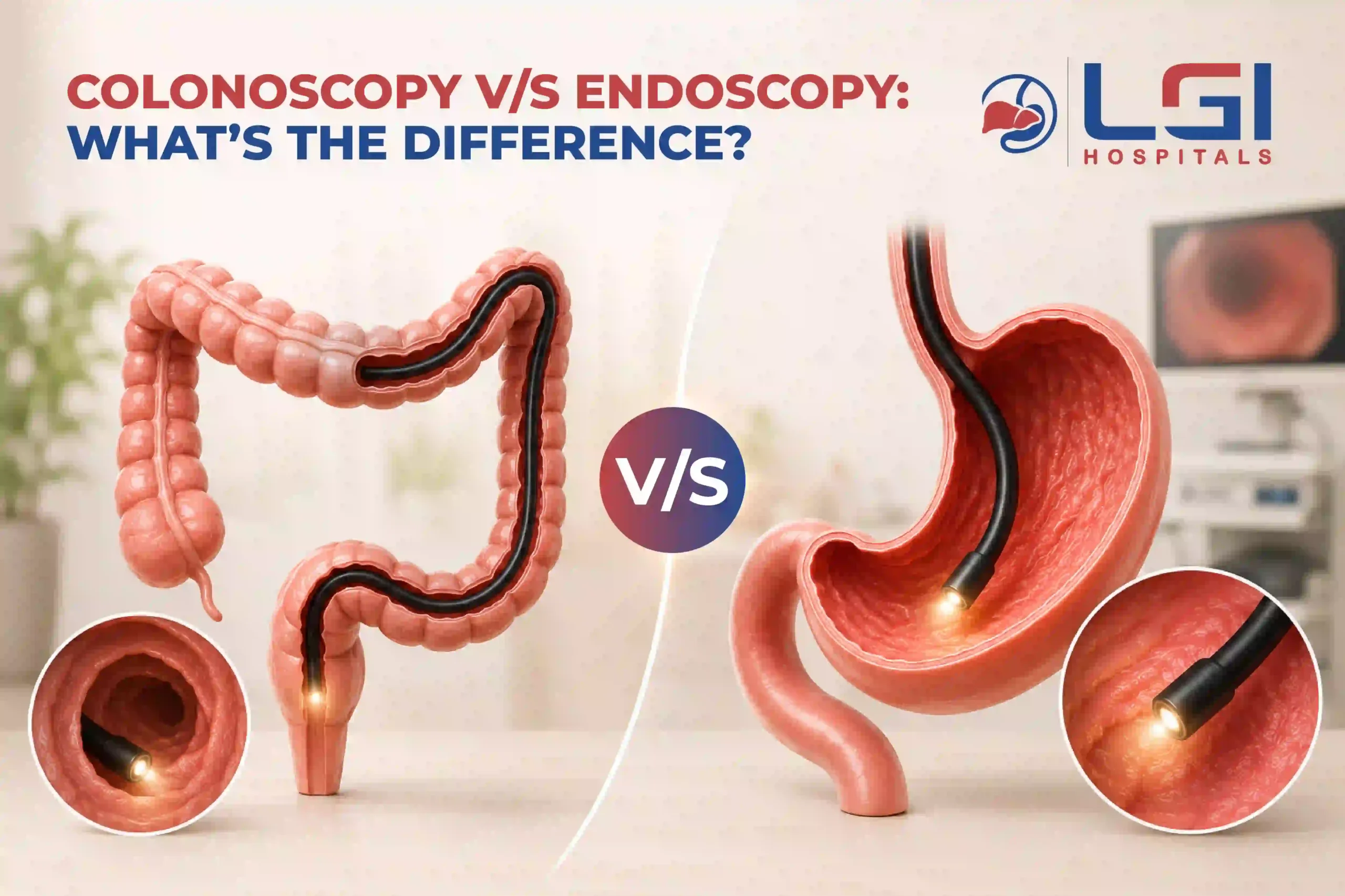
Quick Answer: A colonoscopy examines the large intestine (colon) using a flexible scope inserted through the rectum, while an upper GI endoscopy examines the esophagus, stomach, and upper small intestine using a scope inserted through the mouth. They investigate completely different symptoms. If you have acidity or swallowing issues, you need an endoscopy. If you have rectal bleeding or bowel changes, you need a colonoscopy. Sometimes, both are done together in one sedation session.
Understanding the Two Procedures
Patients often use the word “endoscopy” as a catch-all term for any scope-based procedure, which causes a lot of confusion. Technically, “endoscopy” refers to any procedure that uses a camera to look inside the body. In that sense, a colonoscopy is actually a type of endoscopy.
However, in everyday clinical practice, the terms mean two very different things:
- “Endoscopy” almost always refers to an Upper GI Endoscopy (medically known as EGD or Esophagogastroduodenoscopy). It examines the upper digestive tract.
- “Colonoscopy” refers to the examination of the lower digestive tract.
At LGI Hospitals, our gastroenterologists see many patients who are unsure which procedure they actually need. This guide breaks down the exact differences, the preparation involved, and the specific symptoms that point to each test.
What is a Colonoscopy?
A colonoscopy uses a flexible, camera-equipped scope inserted through the rectum to examine the entire large intestine (colon) and the very end of the small intestine.
It is primarily used to:
- Screen for colorectal cancer and precancerous polyps.
- Investigate rectal bleeding or blood in the stool.
- Diagnose or monitor inflammatory bowel disease (like Crohn’s disease or Ulcerative Colitis).
- Investigate unexplained abdominal pain localized to the lower abdomen.
- Evaluate persistent changes in bowel habits, such as chronic constipation or diarrhea.
What is an Upper GI Endoscopy?
An upper GI endoscopy uses a flexible scope inserted through the mouth to examine the esophagus (food pipe), the stomach, and the first part of the small intestine (duodenum).
It is primarily used to:
- Investigate persistent heartburn, acid reflux, or GERD.
- Diagnose stomach ulcers or gastritis.
- Evaluate difficulty or pain when swallowing food.
- Investigate unexplained vomiting or vomiting blood.
- Take biopsies to check for H. pylori bacterial infection or celiac disease.
Did You Know? In India, chronic acidity and gastritis are extremely common due to spicy diets, irregular meal times, and high stress levels. This makes upper GI endoscopy one of the most frequently performed procedures at our Nagpur center to rule out ulcers or H. pylori infections.
Key Differences at a Glance
| Feature | Colonoscopy | Upper GI Endoscopy |
| Area Examined | Colon, rectum, end of small intestine | Esophagus, stomach, upper small intestine |
| Insertion Point | Rectum | Mouth |
| Common Reasons | Cancer screening, rectal bleeding, bowel changes | Reflux, ulcers, swallowing difficulty |
| Preparation | Extensive bowel prep (1 to 3 days) | Usually just fasting (6 to 8 hours) |
| Typical Duration | 20 to 40 minutes | 10 to 20 minutes |
| Sedation | Usually required | Usually required or local throat spray |
Which Procedure is Right for Your Symptoms?
If you are confused about which test you need, this simple symptom guide can help point you in the right direction:
- If your main symptom is heartburn, acidity, or difficulty swallowing: You likely need an Upper GI Endoscopy.
- If your main symptom is rectal bleeding, chronic constipation, or diarrhea: You likely need a Colonoscopy.
- If you have unexplained weight loss with digestive issues: Your doctor may recommend both to get a complete picture.
- If you are over 45 and need routine cancer screening: You need a Colonoscopy.
Signs You May Need a Colonoscopy
Do not ignore lower digestive warning signs. You should consult a specialist if you experience:
- Rectal bleeding or visible blood in your stool.
- A persistent change in bowel habits (constipation, diarrhea, or narrower stools) lasting more than a few weeks.
- Unexplained weight loss.
- Iron-deficiency anemia without an obvious cause.
- A family history of colorectal cancer or polyps.
Doctor’s Tip: Colorectal cancer screening is crucial. We are increasingly seeing colorectal issues in younger Indian patients due to sedentary lifestyles and processed foods. Routine screening is generally recommended starting around age 45, or earlier if you have risk factors.
Signs You May Need an Upper GI Endoscopy
You should consider an upper GI endoscopy if you experience:
- Persistent heartburn despite taking over-the-counter antacids.
- Difficulty or pain when swallowing food.
- Unexplained upper abdominal pain or burning.
- Vomiting blood or passing black, tarry stools.
- Unintentional weight loss combined with digestive symptoms.
Can Both Procedures Be Done Together?
Yes. In select cases, when a patient has symptoms affecting both the upper and lower digestive tract, both procedures can be performed in the same sedation session. This is often called a “bidirectional endoscopy.”
Doing both at the same time reduces the need for two separate appointments, two separate sedation sessions, and two recovery periods. The advanced endoscopy suite at LGI Hospitals is fully equipped to handle combined procedures safely and efficiently.
If you are experiencing digestive symptoms and are not sure which procedure applies to you, a consultation with an experienced gastroenterologist in Nagpur is the right starting point. Self-diagnosing which test you need based on symptoms alone often leads to delays in getting the right evaluation.
FAQs
Both procedures are done under sedation, so most patients report minimal discomfort during the exam. Mild bloating or a sore throat afterward is more common with an endoscopy, while mild cramping is more common after a colonoscopy.
No. Fasting for 6 to 8 hours beforehand is generally all that is required. This is very different from the multi-day bowel preparation needed for a colonoscopy.
Initial findings are often discussed with you right after the procedure once the sedation wears off. However, if a biopsy was taken to check for infections or abnormalities, those results typically take several days to return from the lab.
Yes. Routine screening colonoscopies are recommended starting at a certain age (or earlier with risk factors) specifically because colorectal cancer often develops without any early symptoms. Screening catches polyps before they turn into cancer.
Yes. If your doctor determines that you need both an upper GI endoscopy and a colonoscopy, they can often be performed back-to-back in a single sedation session at our Nagpur facility, saving you time and reducing overall discomfort.
Key Takeaways
- Endoscopy looks at the upper digestive tract (mouth to stomach), while colonoscopy looks at the lower tract (colon and rectum).
- Endoscopy requires fasting, while colonoscopy requires a multi-day bowel prep.
- Both procedures are safe, routine, and performed under sedation at LGI Hospitals.
- Never guess which test you need. A specialist evaluation ensures you get the right diagnostic tool for your specific symptoms.
Conclusion
Understanding the difference between a colonoscopy and an endoscopy removes the fear and confusion surrounding these vital diagnostic tools. Whether you are dealing with chronic acidity, bowel changes, or simply need routine screening, getting the right test at the right time is the first step toward better digestive health. The specialists at LGI Hospitals are here to guide you through the entire process, from consultation to diagnosis and treatment.
Book Your Consultation at LGI Hospitals →
Medical Disclaimer : This article is intended for educational purposes only and does not constitute medical advice. Diagnostic procedures must be tailored to your specific symptoms and medical history. Please consult a qualified gastroenterologist for accurate diagnosis and appropriate care.