
| Quick AnswerColonoscopy preparation involves a low-fiber diet for 2 to 3 days beforehand, a strict clear-liquid diet the day before, and a prescribed bowel-cleansing solution taken in split doses. The single biggest reason procedures are cancelled or need to be repeated is incomplete bowel prep. Following the exact timeline provided by your gastroenterologist at LGI Hospitals is the most critical step for accurate results. |
A colonoscopy is a powerful tool for preventing colon cancer and diagnosing digestive issues, but its success depends entirely on how well you prepare for it. If your colon is not completely clean, the doctor cannot see the lining clearly, small polyps can be missed, and you may have to repeat the entire procedure.
At LGI Hospitals, we see many patients who are anxious about the “cleaning” process (bowel prep). This guide explains what to eat and what to avoid. It also covers the colonoscopy preparation timeline for a safe and successful procedure.
Why Preparation Quality Directly Affects Your Results
A colonoscopy is only as good as the view it provides. If stool residue remains in the colon, the camera cannot detect flat polyps or early signs of inflammation. Studies consistently show that inadequate bowel prep is one of the leading reasons for missed findings. This is why our specialists spend so much time explaining the preparation instructions rather than just focusing on the procedure itself. A good prep means a faster, safer, and more accurate exam.
Our gastroenterology specialists at LGI Hospitals perform colonoscopies and related endoscopic procedures routinely, and can tailor your preparation plan to your health history, medications, and any special risk factors.
| Did You Know? Incomplete bowel preparation is one of the most common reasons a colonoscopy has to be stopped early or repeated, sometimes requiring patients to redo the entire prep process just weeks later. |
The Full Colonoscopy Preparation Timeline
The following timeline is a general guide. Always follow the specific sheet provided by your doctor, as protocols may vary based on your health history.
5 to 7 Days Before:
•Stop Iron Supplements: Iron can darken the stool and make it difficult for the camera to see. Ask your doctor if you should pause them.
•Check Blood Thinners: If you take blood thinners (like Warfarin, Clopidogrel, or Aspirin) or diabetes medications, consult your doctor immediately about dosage adjustments. Never stop these on your own.
3 Days Before (Start Low-Fiber Diet):
Shift to a low-residue diet to reduce the bulk in your colon.
•Avoid: Nuts, seeds (including saunf, jeera, and til in curries), popcorn, raw vegetables, whole grains, and the skins of fruits and vegetables.
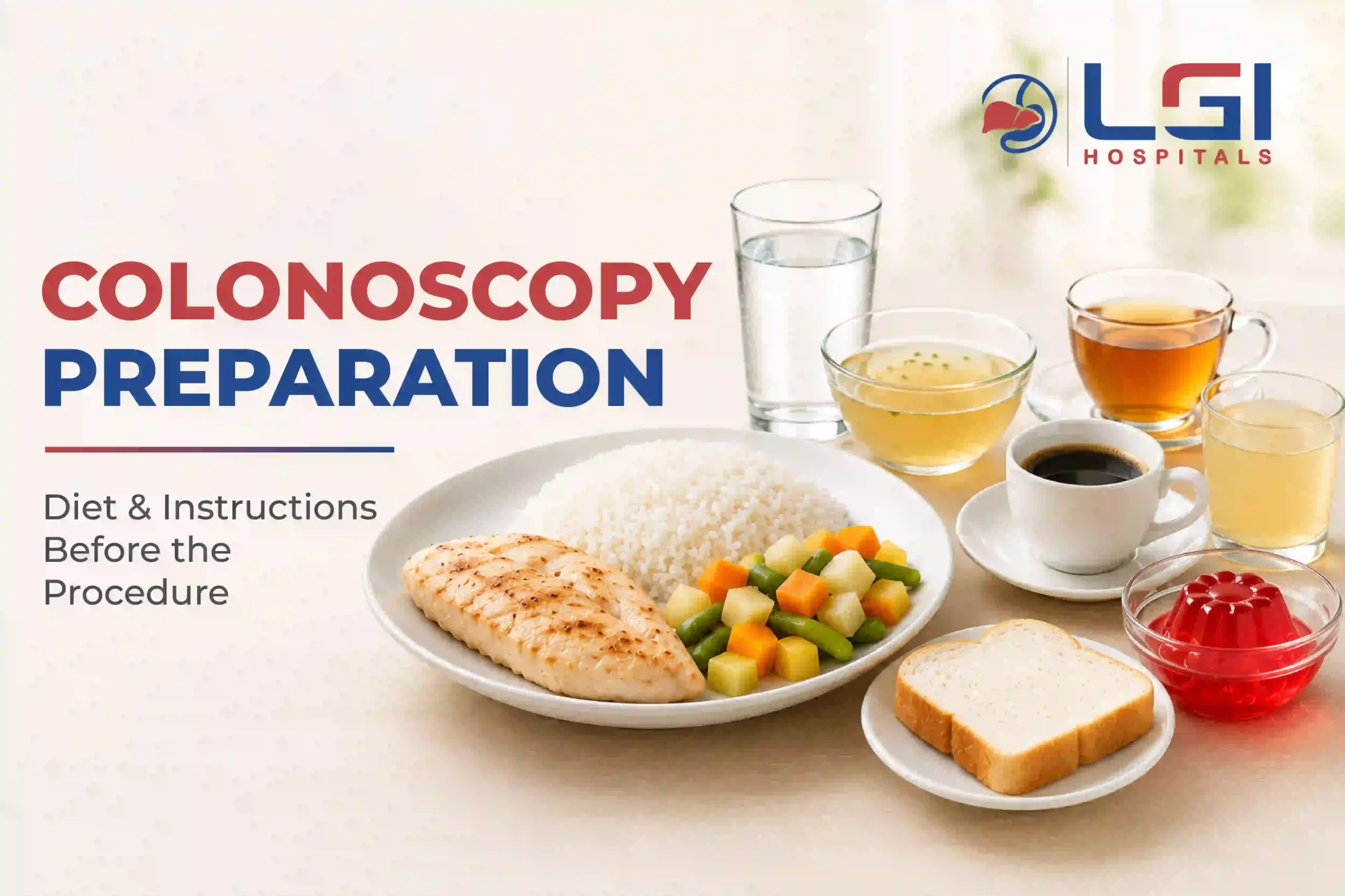
•Eat: White rice, plain curd, white bread, lean meat, fish, eggs, and well-cooked vegetables without skins (like peeled potatoes or lauki).
1 Day Before (The Critical Clear-Liquid Day):
Switch entirely to a clear-liquid diet. No solid food is allowed.
•Allowed: Water, clear vegetable broth (strained dal ka pani without solids), black tea or coffee (no milk), clear fruit juices without pulp (like apple or white grape), and plain jelly.
•Avoid: Milk, solid food, alcohol, and any red or purple liquids (like sherbet, rooh afza, or grape juice) because they can look like blood during the exam.
•Start Bowel Prep: Begin drinking your prescribed laxative solution at the time specified by your doctor. Most modern protocols use a “split-dose” regimen (half the night before, half the morning of), which is proven to be more effective.
Day of Procedure:
• Finish Prep: Complete the final dose of the solution within the window your doctor specifies (usually stopping all liquids 2 to 3 hours before arrival).
• Arrive Prepared: Wear loose, comfortable clothing. You must bring a companion to drive you home because sedation prevents you from driving or taking a cab alone.
| Doctor’s Tip Split-dose bowel prep, taking half your solution the night before and half the morning of your procedure, consistently produces a cleaner colon than drinking it all the night before. Sipping it cold through a straw also makes it easier to finish. Always confirm your exact timing with your doctor. |
Colonoscopy Diet: What to Eat and Avoid (Indian Diet Reference)
A quick reference for planning meals during your low-fiber and clear-liquid days.
| Stage | Allowed Foods (Yes) | Foods to Avoid (No) |
| 3 Days Before | White rice, plain curd, maida bread, eggs, fish, chicken (no skin), peeled potatoes, lauki, tori. | Multigrain atta/roti, brown rice, whole moong dal, raw salads (kachumber), nuts, seeds, popcorn, fruit skins. |
| 1 Day Before | Water, strained clear soup, black tea/coffee, apple juice, coconut water, plain jelly. | Milk, chai with milk, solid food, red/purple drinks, alcohol, pulp-heavy juices. |
Common Mistakes That Ruin a Colonoscopy Prep
•Cheating on the Low-Fiber Diet: Eating “just a little bit” of seeds or whole grains 2 days before can leave residue that blocks the camera view.
•Drinking the Prep Too Fast: Gulping the solution often causes nausea and vomiting. Sip it slowly over the recommended time, perhaps chilling it or drinking it through a straw to bypass taste buds.
•Not Finishing the Solution: This is the most common reason for incomplete cleansing. If you struggle with the taste, ask your doctor about flavored options or mixing it with clear sports drinks (if permitted).
•Ignoring Hydration: The prep works by flushing water into your bowel. You must drink plenty of clear fluids to avoid dehydration, dizziness, and kidney stress.
Special Considerations for High-Risk Patients
•Diabetics: Fasting and strong laxatives can cause dangerous blood sugar swings. Your doctor at LGI Hospitals will usually adjust your insulin or oral medication timing. Monitor your glucose more frequently during the prep day.
•Elderly Patients: Older adults are more prone to dehydration and electrolyte imbalances. Sipping clear fluids consistently between prep doses is vital.
•Kidney or Heart Conditions: Certain prep solutions contain salts that can affect fluid balance. Ensure your gastroenterologist knows your full medical history before prescribing the prep.
| Doctor’s Advice: When to Call During PrepContact the hospital immediately if you experience: •Persistent vomiting that prevents you from keeping the prep solution down. •Signs of severe dehydration (extreme dizziness, confusion, very dark urine). •Severe abdominal pain that is different from normal cramping. |
Consulting LGI Hospitals’ colonoscopy specialists for a prep plan tailored to your health history, rather than following a generic checklist, is especially important if you have diabetes, are on blood thinners, or have had prep difficulties before.
FAQs
Most blood pressure and thyroid medications can be taken with a small sip of water. However, blood thinners, diabetes medicines, and iron supplements often need adjustment. Always confirm with your doctor rather than stopping anything on your own.
If your colon is not clean, the doctor may not be able to see the entire lining or remove polyps safely. The procedure may need to be stopped and rescheduled, meaning you would have to repeat the prep and the test.
No. Milk is a solid food in the digestive tract. You must stick to black tea or black coffee. Milk residues can coat the colon lining and hide small polyps.
No. The specific solution (powder vs. liquid) and the timing (split-dose vs. single dose) depend on your age, kidney function, and previous history. This is why a personalized prescription from a specialist at LGI Hospitals is safer than following a generic online protocol.
Colonoscopy costs in Nagpur vary depending on factors such as the type of sedation used, whether polyp removal or biopsy is required, and your individual health needs. Because pricing is personalized, the most reliable way to get an accurate estimate is to contact LGI Hospitals directly for a consultation.
Your output should look like pale yellow liquid or urine, with no solid particles. If it is still brown or cloudy near the time of your procedure, call the hospital for advice.
| Key Takeaways •Start a low-fiber diet 3 days before your colonoscopy and switch to clear liquids only the day before. •Finish your entire bowel prep dose. A split-dose regimen (half at night, half in the morning) works best. •Drink plenty of clear fluids throughout the prep to avoid dehydration. •Diabetics, elderly patients, and those with kidney or heart conditions should discuss prep adjustments with their doctor in advance. •Call LGI Hospitals right away if you have persistent vomiting, signs of dehydration, or severe abdominal pain. |
Conclusion
A successful colonoscopy starts days before you arrive at the hospital. While the preparation requires discipline, it is the only way to ensure your doctor gets a clear view of your colon health. If you have concerns about the diet or the prep solution, the team at LGI Hospitals is here to guide you through every step.
Medical Disclaimer: This article is intended for educational purposes only and does not constitute medical advice. Colonoscopy preparation protocols must be tailored to your specific medical history. Please follow the exact instructions provided by your treating gastroenterologist at LGI Hospitals.