
SERVICES OFFERED
ENDOSCOPY
- Diagnostic & Therapeutic Upper GI Endoscopy
- Diagnostic & Therapeutic Colonoscopy
- Capsule Endoscopy
- ERCP & Cholangio-pancreatoscopy
- Endoscopic Ultrasound [EUS]
GI MOTILITY LAB
- 24 Hrs Esophageal pH-Impedance study
- Esophageal & Anorectal Manometry
BREATH TESTS
- Hydrogen Breath Test for small intestinal bacterial overgrowth
- Urea Breath Test for H. pylori infection
SURGERY
- Esophageal & Gastric Surgery
- Hepatectomy & Liver Surgery
- Pancreato – Billiary Surgery
- Colorectal Surgery
- Hernia Surgery – Laparoscopic & Open
- Minimally Invasive & Laparoscopia Surgery
- Gl Oncology Surgery
- Surgery for Piles, Fistula & Fissure
RADIOLOGY
- Digital X-Ray
- Ultrasound with Colour Doppler
- Liver Elastography [Fibroscan] for liver fibrosis and steatosis.
PATHOLOGY
CRITICAL CARE TAIL
- State of Art Intensive Care Unit & Expert Team for management of GI and hepato-pancreato-biliary diseases
ADVANCED SERVICES OFFERED
ERCP & CHOLANGIO-PANCREATOSCOPY
- Complex Pancreato-biliary Procedures
[Multiple biliary stent placement for hilar strictures;
mechanical lithotripsy for CBO stones] - Laser Lithotripsy Treatment for CBD / pancreatic stones
- CBD Stricture evaluation
- Ampullectomy
THIRD SPACE ENDOSCOPY
- Endoscopic Mucosal Resection [EMR] & Endoscopic Submucosal Dissection [ESD] for early gastrointestinal cancers
- Peroral Endoscopic Myotomy [POEM] for Zenker’s Diverticulum,
Achalasia Cardia, Gastroparesis, Hirschsprung’s disease - Submucuosal Tunneling & Endoscopic Resection [STER]
& Endoscopic Full-Thickness Resecton (EFTR] for subepithlial tumors
ANTIREFLUX TREATMENT [FOR GERD]
- Antireflux Mucosal Ablation [ARMA]
- Endoscopic Funcoplication
ENDOBARIATRICS [FOR WEIGHT LOSS]
- Gastric Balloon placement
- Endoscopic Sleeve Gastroplasty
ENDOSCOPIC ULTRASOUND [EUS]
- EUS & EUS – guided FNAC / Biopsy for diagnosis
- EUS – guided Pancreatic Cysto-gastrostomy / Choledocho-jejunostomy / Hepatico-gastrostomy
- EUS – guided Gastric Variceal Glue & Coil treatment
What Is Piles Surgery?

When Is Piles Surgery Recommended?
- Grade 3 piles that prolapse and require manual reduction
- Grade 4 piles that remain prolapsed and cannot be reduced
- Persistent or recurrent bleeding that does not respond to medication
- Large external piles causing significant discomfort or hygiene concerns
- Piles associated with other anorectal conditions requiring surgical correction
- Non surgical procedures that have failed to provide lasting relief
- Significant impact on quality of life due to pain, bleeding or prolapse
Types of Piles Surgery Available in Nagpur
| Surgical Procedure | Suitable For |
|---|---|
| Laser piles surgery | Grade 2 and Grade 3 piles, minimally invasive |
| Stapler haemorrhoidopexy | Grade 3 piles, reduced pain and faster recovery |
| Conventional haemorrhoidectomy | Grade 3 and Grade 4 complex piles |
| Rubber band ligation | Grade 1 and Grade 2 internal piles |
| Sclerotherapy | Early grade internal piles |
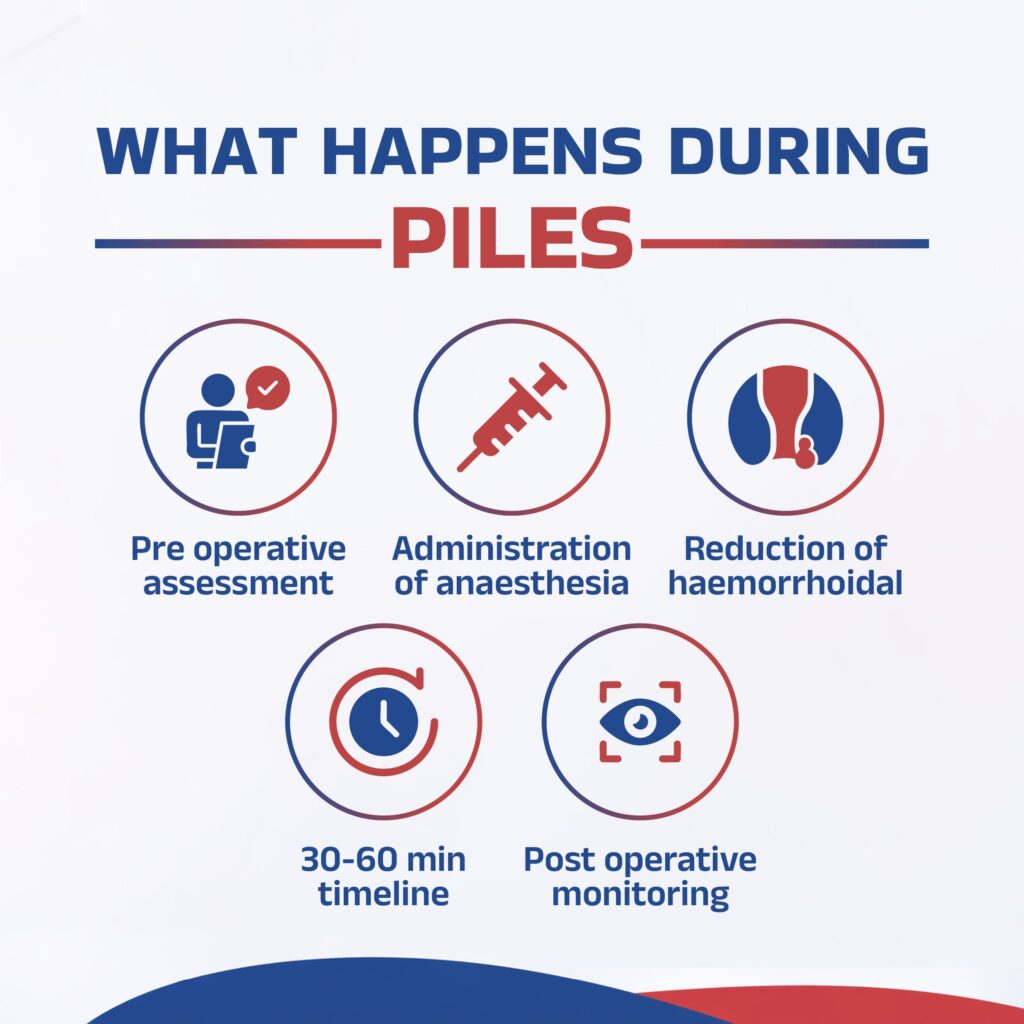
What Happens During Piles Surgery?
- A pre operative assessment including blood tests and a clinical evaluation
- Administration of anaesthesia, which may be local, regional or general depending on the procedure
- Removal or reduction of haemorrhoidal tissue using the selected surgical technique
- The procedure is typically completed within thirty to sixty minutes depending on complexity
- Post operative monitoring before discharge or a short hospital stay
Recovery After Piles Surgery
- Mild discomfort or soreness in the operated area for a few days after surgery
- Dietary modifications including a high fibre diet and adequate fluid intake to ensure soft stools
- Avoiding straining during bowel movements during the recovery period
- Follow up appointments with the surgical team to monitor healing
- Gradual return to normal activities as advised by the surgeon
- Avoiding heavy lifting or strenuous activity for a recommended period
Why Choose LGI Hospital for Piles Surgery in Nagpur?
- Experienced Surgical Gastroenterologists: LGI Hospital in Nagpur has a dedicated team of skilled surgical gastroenterologists with extensive experience in performing all types of piles surgery including advanced laser piles surgery and stapler haemorrhoidopexy.
- Minimally Invasive Surgical Techniques: The surgical team at LGI Hospital prioritises minimally invasive approaches wherever appropriate, ensuring reduced post operative discomfort, minimal hospital stay and faster recovery for patients.
- Advanced Surgical Infrastructure: LGI Hospital in Dhantoli, Nagpur is equipped with a modern operation theatre and surgical facilities to support safe and precise piles surgery with excellent outcomes.
- Comprehensive Pre and Post Operative Care: From initial surgical consultation and pre operative assessment through to post operative monitoring and follow up, LGI Hospital provides complete care throughout the entire surgical journey.
FAQ
Q1. Is piles surgery painful?
Modern piles surgery, particularly minimally invasive procedures such as laser surgery and stapler haemorrhoidopexy, is associated with significantly less pain compared to conventional surgical methods. Anaesthesia is administered during the procedure to ensure patient comfort. Post operative discomfort is generally mild and manageable with appropriate pain relief as advised by the surgical team.
Q2. How long does piles surgery take?
The duration of piles surgery depends on the type of procedure and complexity of the case. Most piles surgery procedures are completed within thirty to sixty minutes. Minimally invasive procedures such as laser surgery are often quicker and allow for same day discharge in suitable cases.
Q3. What happens after piles surgery?
After piles surgery, patients are monitored for a period before discharge. The surgical team provides detailed post operative instructions including dietary guidelines, activity restrictions and wound care. Follow up appointments are scheduled to monitor healing and ensure a smooth recovery.
Q4. Recovery after piles surgery in Nagpur — what to expect?
Recovery after piles surgery varies by procedure. Minimally invasive procedures generally allow a faster return to normal activities within a few days to a week. Conventional surgery may require a longer recovery period. A high fibre diet, adequate fluid intake and avoiding straining are important during recovery to support healing and prevent recurrence.
Q5. Which hospital is best for piles surgery in Nagpur?
LGI Hospital in Dhantoli, Nagpur is a dedicated single speciality gastroenterology hospital with experienced surgical gastroenterologists who perform all types of piles surgery including minimally invasive laser and stapler procedures. The hospital provides comprehensive pre and post operative care under one roof.