SERVICES OFFERED
ENDOSCOPY
- Diagnostic & Therapeutic Upper GI Endoscopy
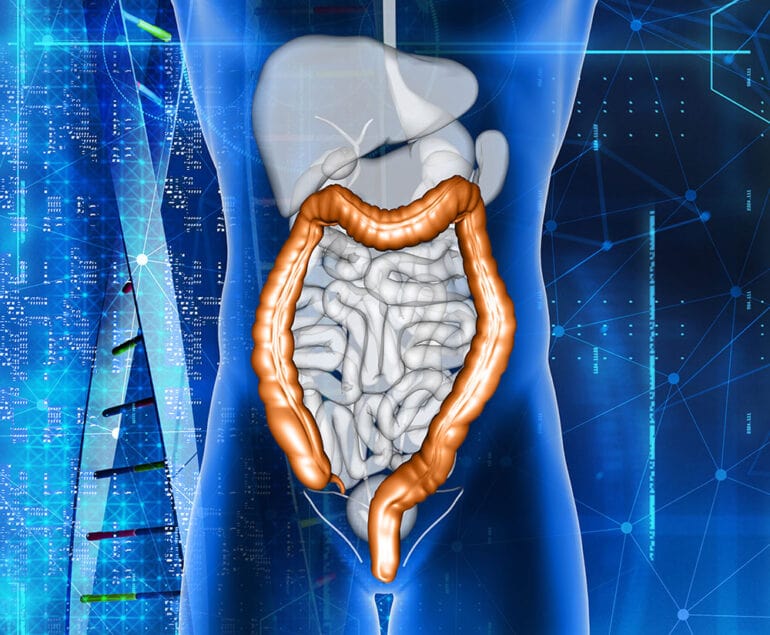
- Diagnostic & Therapeutic Colonoscopy
- Capsule Endoscopy
- ERCP & Cholangio-pancreatoscopy
- Endoscopic Ultrasound [EUS]
GI MOTILITY LAB
- 24 Hrs Esophageal pH-Impedance study
- Esophageal & Anorectal Manometry
BREATH TESTS
- Hydrogen Breath Test for small intestinal bacterial overgrowth
- Urea Breath Test for H. pylori infection
SURGERY
- Esophageal & Gastric Surgery
- Hepatectomy & Liver Surgery
- Pancreato – Billiary Surgery
- Colorectal Surgery
- Hernia Surgery – Laparoscopic & Open
- Minimally Invasive & Laparoscopia Surgery
- Gl Oncology Surgery
- Surgery for Piles, Fistula & Fissure
RADIOLOGY
- Digital X-Ray
- Ultrasound with Colour Doppler
- Liver Elastography [Fibroscan] for liver fibrosis and steatosis.
PATHOLOGY
CRITICAL CARE TAIL
- State of Art Intensive Care Unit & Expert Team for management of GI and hepato-pancreato-biliary diseases
ADVANCED SERVICES OFFERED
ERCP & CHOLANGIO-PANCREATOSCOPY
- Complex Pancreato-biliary Procedures
[Multiple biliary stent placement for hilar strictures;
mechanical lithotripsy for CBO stones] - Laser Lithotripsy Treatment for CBD / pancreatic stones
- CBD Stricture evaluation
- Ampullectomy
THIRD SPACE ENDOSCOPY
- Endoscopic Mucosal Resection [EMR] & Endoscopic Submucosal Dissection [ESD] for early gastrointestinal cancers
- Peroral Endoscopic Myotomy [POEM] for Zenker’s Diverticulum,
Achalasia Cardia, Gastroparesis, Hirschsprung’s disease - Submucuosal Tunneling & Endoscopic Resection [STER]
& Endoscopic Full-Thickness Resecton (EFTR] for subepithlial tumors
ANTIREFLUX TREATMENT [FOR GERD]
- Antireflux Mucosal Ablation [ARMA]
- Endoscopic Funcoplication
ENDOBARIATRICS [FOR WEIGHT LOSS]
- Gastric Balloon placement
- Endoscopic Sleeve Gastroplasty
ENDOSCOPIC ULTRASOUND [EUS]
- EUS & EUS – guided FNAC / Biopsy for diagnosis
- EUS – guided Pancreatic Cysto-gastrostomy / Choledocho-jejunostomy / Hepatico-gastrostomy
- EUS – guided Gastric Variceal Glue & Coil treatment
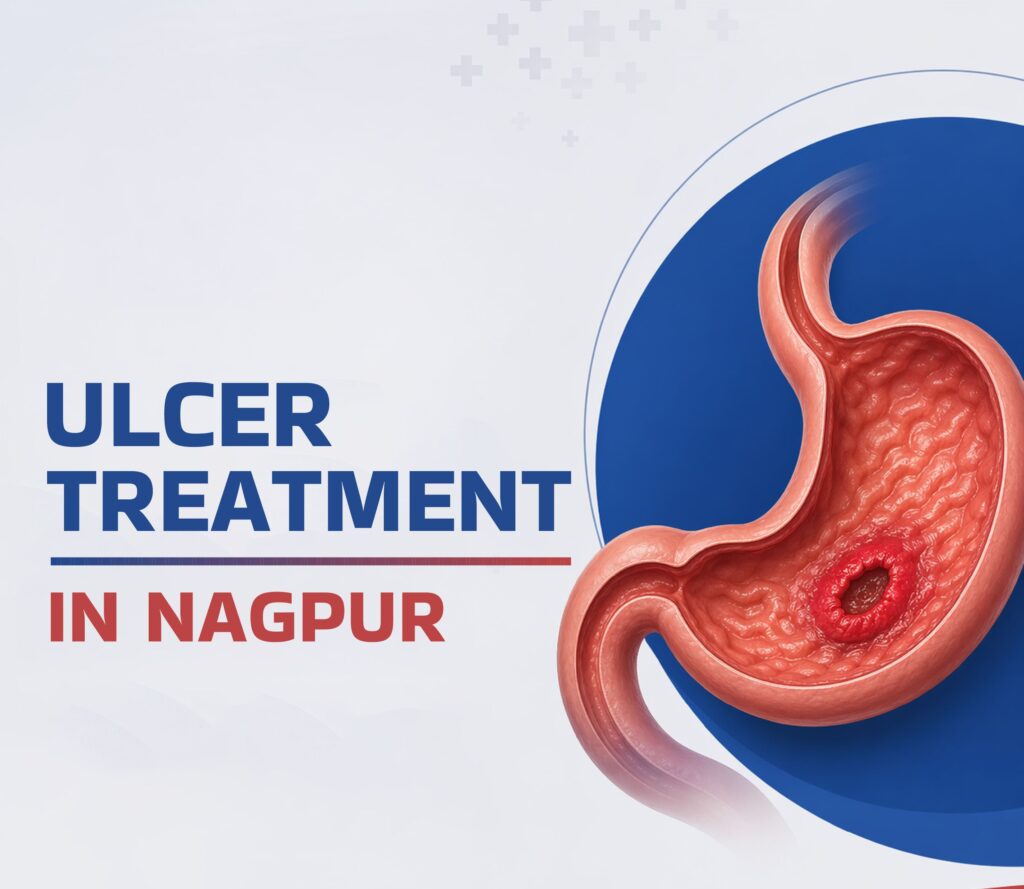
What Is a Stomach Ulcer?

Common Symptoms of Stomach Ulcer
- A burning or gnawing pain in the middle or upper abdomen
- Pain that is often worse on an empty stomach or at night
- Nausea and vomiting
- Bloating and a feeling of fullness
- Frequent burping or belching
- Loss of appetite and unintentional weight loss
- Dark or tarry stools indicating internal bleeding
- Vomiting blood in severe cases
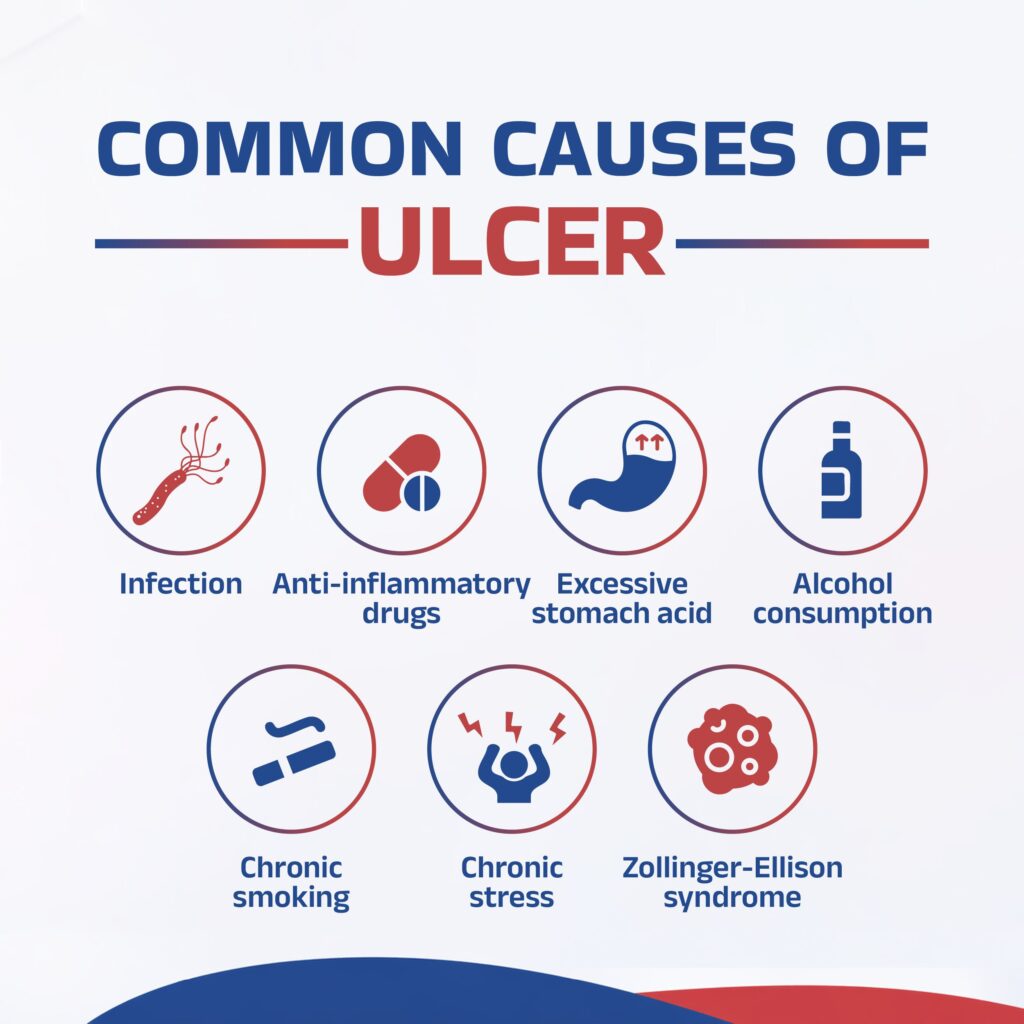
Common Causes of Stomach Ulcer
- Infection with Helicobacter pylori bacteria, which damages the stomach lining
- Prolonged use of non steroidal anti-inflammatory drugs such as aspirin or ibuprofen
- Excessive stomach acid production
- Heavy alcohol consumption
- Chronic smoking
- Chronic stress, which can worsen existing ulcers
- Rare conditions such as Zollinger-Ellison syndrome that cause excessive acid production
When Should You See a Doctor for an Ulcer?
- Persistent or worsening abdominal pain that does not resolve with antacids
- Blood in vomit or dark tarry stools
- Sudden severe abdominal pain that comes on quickly
- Unexplained weight loss along with digestive symptoms
- Persistent nausea or vomiting
- Loss of appetite that continues for more than a few days
- Symptoms that keep recurring despite dietary or lifestyle changes
Ulcer Treatment Options in Nagpur
| Treatment Type | Suitable For |
|---|---|
| Antibiotic therapy | H. pylori related ulcers |
| Proton pump inhibitors | Reducing acid production and promoting healing |
| H2 receptor blockers | Managing acid levels effectively |
| Antacids | Providing short term symptom relief |
| Stopping trigger medications | NSAID induced ulcers |
| Dietary and lifestyle modifications | All types of ulcers as supportive care |
| Endoscopic treatment | Bleeding ulcers requiring immediate intervention |
| Surgical intervention | Perforated or non healing complex ulcers |
Why Choose LGI Hospital for Ulcer Treatment in Nagpur?
- Expert Gastroenterology Team: LGI Hospital in Nagpur has a dedicated team of experienced medical gastroenterologists who specialise in diagnosing and treating all types of peptic ulcers including gastric ulcers, duodenal ulcers and bleeding ulcers.
- Accurate Diagnosis with Advanced Endoscopy: LGI Hospital is equipped with advanced endoscopy facilities that allow precise visualisation and evaluation of ulcers, ensuring an accurate diagnosis before treatment begins.
- Root Cause Focused Treatment: The specialist team at LGI Hospital focuses on identifying and treating the underlying cause of ulcers rather than simply managing symptoms, ensuring long term relief and prevention of recurrence.
- Comprehensive GI Care Under One Roof: As a dedicated single speciality gastroenterology hospital in Dhantoli, Nagpur, LGI Hospital provides complete ulcer care from diagnosis through to treatment and follow up in one convenient location.
FAQ
Q1. Can stomach ulcers be cured permanently?
Yes, stomach ulcers can be cured permanently in most cases. H. pylori related ulcers have very high cure rates with appropriate antibiotic and acid suppression therapy. NSAID induced ulcers can also heal completely when the causative medication is stopped and appropriate treatment is administered under specialist guidance.
Q2. What are the symptoms of a stomach ulcer?
Common symptoms include a burning or gnawing pain in the upper or middle abdomen, nausea, bloating, loss of appetite and dark or tarry stools in cases of bleeding. The pain is often worse on an empty stomach or during the night. A gastroenterologist should be consulted for an accurate diagnosis.
Q3. Which doctor is best for ulcer treatment in Nagpur?
A gastroenterologist is the most appropriate specialist for diagnosing and treating stomach and peptic ulcers. LGI Hospital in Nagpur has experienced medical gastroenterologists who provide comprehensive ulcer care with advanced diagnostic and treatment support.
Q4. How long does ulcer treatment take?
The duration of ulcer treatment depends on the type and cause. Most uncomplicated ulcers heal within four to eight weeks with appropriate medication. H. pylori related ulcers require a course of antibiotics along with acid suppression therapy. Follow up evaluation is important to confirm complete healing.
Q5. Can stomach ulcers be treated without surgery?
Yes, the majority of stomach ulcers can be treated successfully without surgery through medication, dietary changes and lifestyle modifications. Surgical intervention is generally considered only for complicated ulcers such as those that are perforated, bleeding severely or not responding to medical treatment.
- Diagnostic Precision: Endoscopy allows for direct visualization of internal organs. This enables accurate diagnosis of various conditions such as ulcers, inflammation, tumors, and other abnormalities.
- List Item #2
- List Item #3
- Diagnostic & Therapeutic Upper GI Endoscopy
- Diagnostic & Therapeutic Colonoscopy
- Capsule Endoscopy
- ERCP & Cholangio-pancreatoscopy
- Endoscopic Ultrasound [EUS]