
SERVICES OFFERED
ENDOSCOPY
- Diagnostic & Therapeutic Upper GI Endoscopy
- Diagnostic & Therapeutic Colonoscopy
- Capsule Endoscopy
- ERCP & Cholangio-pancreatoscopy
- Endoscopic Ultrasound [EUS]
GI MOTILITY LAB
- 24 Hrs Esophageal pH-Impedance study
- Esophageal & Anorectal Manometry
BREATH TESTS
- Hydrogen Breath Test for small intestinal bacterial overgrowth
- Urea Breath Test for H. pylori infection
SURGERY
- Esophageal & Gastric Surgery
- Hepatectomy & Liver Surgery
- Pancreato – Billiary Surgery
- Colorectal Surgery
- Hernia Surgery – Laparoscopic & Open
- Minimally Invasive & Laparoscopia Surgery
- Gl Oncology Surgery
- Surgery for Piles, Fistula & Fissure
RADIOLOGY
- Digital X-Ray
- Ultrasound with Colour Doppler
- Liver Elastography [Fibroscan] for liver fibrosis and steatosis.
PATHOLOGY
CRITICAL CARE TAIL
- State of Art Intensive Care Unit & Expert Team for management of GI and hepato-pancreato-biliary diseases
ADVANCED SERVICES OFFERED
ERCP & CHOLANGIO-PANCREATOSCOPY
- Complex Pancreato-biliary Procedures
[Multiple biliary stent placement for hilar strictures;
mechanical lithotripsy for CBO stones] - Laser Lithotripsy Treatment for CBD / pancreatic stones
- CBD Stricture evaluation
- Ampullectomy
THIRD SPACE ENDOSCOPY
- Endoscopic Mucosal Resection [EMR] & Endoscopic Submucosal Dissection [ESD] for early gastrointestinal cancers
- Peroral Endoscopic Myotomy [POEM] for Zenker’s Diverticulum,
Achalasia Cardia, Gastroparesis, Hirschsprung’s disease - Submucuosal Tunneling & Endoscopic Resection [STER]
& Endoscopic Full-Thickness Resecton (EFTR] for subepithlial tumors
ANTIREFLUX TREATMENT [FOR GERD]
- Antireflux Mucosal Ablation [ARMA]
- Endoscopic Funcoplication
ENDOBARIATRICS [FOR WEIGHT LOSS]
- Gastric Balloon placement
- Endoscopic Sleeve Gastroplasty
ENDOSCOPIC ULTRASOUND [EUS]
- EUS & EUS – guided FNAC / Biopsy for diagnosis
- EUS – guided Pancreatic Cysto-gastrostomy / Choledocho-jejunostomy / Hepatico-gastrostomy
- EUS – guided Gastric Variceal Glue & Coil treatment
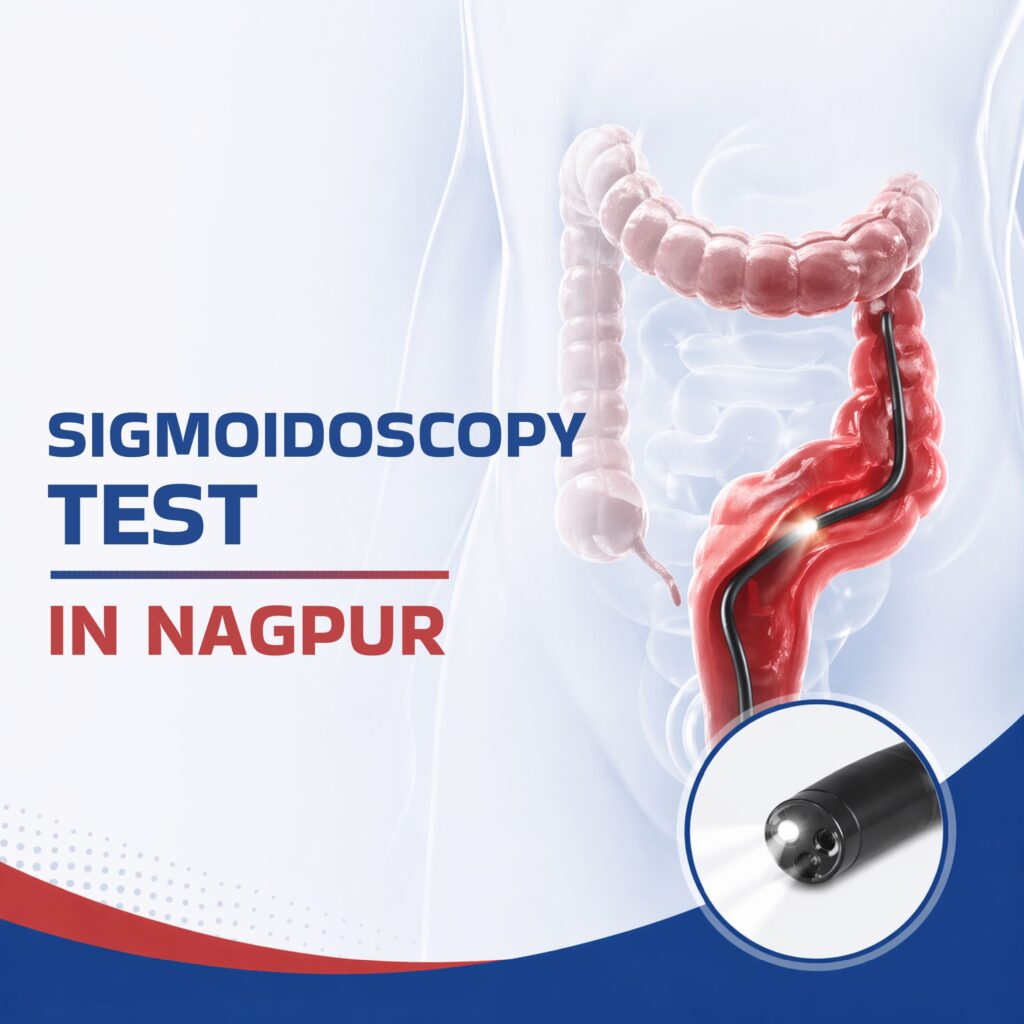
What Is a Sigmoidoscopy Test?

Why Is a Sigmoidoscopy Test Done?
- Investigating rectal bleeding or blood in the stool
- Evaluating persistent rectal pain or discomfort
- Diagnosing haemorrhoids and assessing their severity
- Investigating changes in bowel habits including diarrhea or constipation
- Evaluating suspected inflammatory conditions of the rectum and sigmoid colon
- Detecting polyps in the sigmoid colon and rectum
- Investigating symptoms of IBS related to the lower bowel
- Evaluating rectal prolapse or other structural rectal conditions
- Screening for lower colorectal abnormalities in selected patients
- Monitoring known lower bowel conditions and assessing treatment response
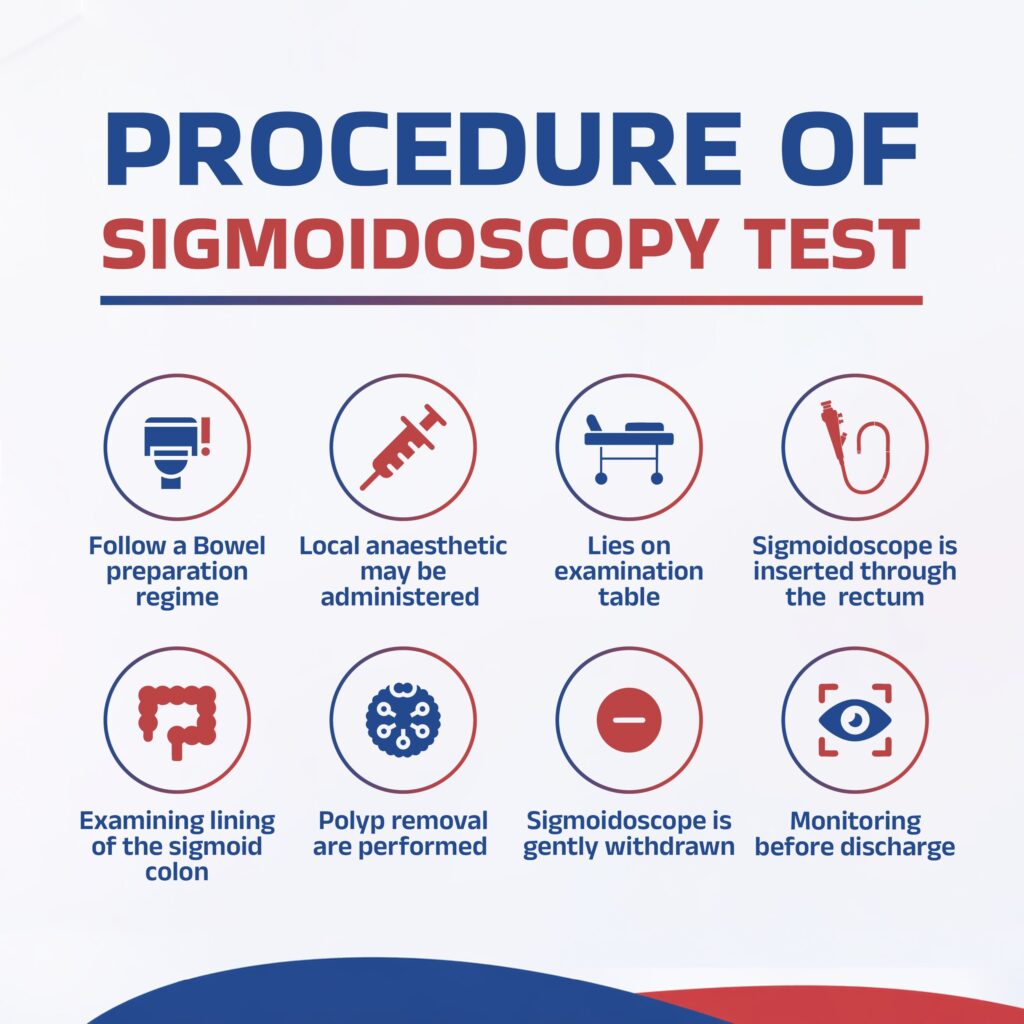
How Is a Sigmoidoscopy Test Performed?
- The patient is advised to follow a bowel preparation regimen before the procedure to cleanse the lower bowel
- Sedation or a local anaesthetic may be administered depending on the patient's comfort and clinical requirements
- The patient lies on their side on the examination table
- The sigmoidoscope is gently inserted through the rectum and carefully advanced into the sigmoid colon
- The gastroenterologist examines the lining of the sigmoid colon and rectum carefully on a high definition monitor
- Any required interventions such as biopsy of suspicious tissue or polyp removal may be performed during the same session
- The sigmoidoscope is gently withdrawn after the examination is complete
- The patient is monitored briefly before discharge
Is Sigmoidoscopy Painful?
What to Expect Before and After a Sigmoidoscopy Test
Before the procedure:
- Following the bowel preparation regimen as instructed by the gastroenterologist
- Fasting or dietary restrictions as advised before the procedure
- Informing the doctor of all current medications, allergies and medical conditions
- Arranging for someone to accompany you home if sedation is administered
After the procedure:
- A brief period of monitoring before discharge
- Mild bloating or abdominal cramping due to air introduced during the procedure, which typically resolves quickly
- Avoiding driving for the remainder of the day if sedation was administered
- A light diet is generally recommended for the remainder of the day following the procedure
- Biopsy results are typically available within a few days if tissue samples were taken
- The gastroenterologist will discuss findings and recommendations before or after discharge
Sigmoidoscopy Versus Colonoscopy — Which Is More Appropriate?
| Aspect | Sigmoidoscopy | Colonoscopy |
|---|---|---|
| Area Examined | Sigmoid colon and rectum only | Entire large intestine |
| Preparation Required | Lower bowel preparation | Full bowel preparation |
| Duration | Fifteen to thirty minutes | Thirty to sixty minutes |
| Sedation | May or may not be required | Generally administered |
| Best Suited For | Lower bowel and rectal symptoms | Comprehensive colon evaluation and cancer screening |
Why Choose LGI Hospital for Sigmoidoscopy Test in Nagpur?
- Expert Gastroenterologists with Advanced Endoscopy Skills: LGI Hospital in Nagpur has a team of highly experienced gastroenterologists with specialised expertise in diagnostic and therapeutic lower GI endoscopy including flexible sigmoidoscopy, ensuring accurate and thorough examination of the lower bowel and rectum.
- Advanced High Definition Endoscopy Equipment: LGI Hospital in Dhantoli, Nagpur is equipped with high definition endoscopy systems providing excellent image clarity for precise detection of lower bowel abnormalities including small polyps and subtle mucosal changes.
- Comprehensive Lower GI Diagnostic Services: From sigmoidoscopy and colonoscopy to biopsy and polyp removal, LGI Hospital offers a complete range of lower GI diagnostic and therapeutic services under one roof for comprehensive lower bowel evaluation.
- Patient Comfort and Safety as the Priority: The endoscopy team at LGI Hospital is committed to ensuring a comfortable, safe and reassuring sigmoidoscopy experience for every patient, with careful attention to bowel preparation guidance, procedure comfort and post procedure monitoring.
FAQ
Q1. Is sigmoidoscopy test painful?
Most patients tolerate flexible sigmoidoscopy well with minimal discomfort. Some patients may experience mild cramping or a feeling of pressure during the examination, however significant pain is uncommon. Sedation may be administered if required for patient comfort. The experienced team at LGI Hospital takes every measure to ensure a calm and comfortable sigmoidoscopy experience for every patient.
Q2. How long does a sigmoidoscopy test take?
A standard flexible sigmoidoscopy typically takes between fifteen and thirty minutes. Procedures involving biopsy or polyp removal may take slightly longer depending on the findings and the nature of the intervention required.
Q3. What happens during a sigmoidoscopy test?
During a sigmoidoscopy test, a thin flexible tube with a high definition camera is gently inserted through the rectum and advanced into the sigmoid colon. The gastroenterologist examines the lining of the sigmoid colon and rectum on a monitor. Biopsy or polyp removal may be performed during the same session if required. The procedure typically takes fifteen to thirty minutes.
Q4. Why is a sigmoidoscopy test done?
Sigmoidoscopy is performed to investigate and diagnose conditions affecting the sigmoid colon and rectum including rectal bleeding, changes in bowel habits, haemorrhoids, polyps, inflammatory conditions and rectal abnormalities. It is a targeted and effective diagnostic tool for evaluating lower bowel symptoms that originate in the sigmoid colon and rectum.
Q5. Which hospital is best for sigmoidoscopy test in Nagpur?
LGI Hospital in Dhantoli, Nagpur is a dedicated single speciality gastroenterology hospital with specialist gastroenterologists who have advanced expertise in flexible sigmoidoscopy and lower GI endoscopy. The hospital is equipped with high definition endoscopy systems and provides comprehensive lower GI diagnostic services in a patient focused and comfortable environment.