SERVICES OFFERED
ENDOSCOPY
- Diagnostic & Therapeutic Upper GI Endoscopy
- Diagnostic & Therapeutic Colonoscopy
- Capsule Endoscopy
- ERCP & Cholangio-pancreatoscopy
- Endoscopic Ultrasound [EUS]
GI MOTILITY LAB
- 24 Hrs Esophageal pH-Impedance study
- Esophageal & Anorectal Manometry
BREATH TESTS
- Hydrogen Breath Test for small intestinal bacterial overgrowth
- Urea Breath Test for H. pylori infection
SURGERY
- Esophageal & Gastric Surgery
- Hepatectomy & Liver Surgery
- Pancreato – Billiary Surgery
- Colorectal Surgery
- Hernia Surgery – Laparoscopic & Open
- Minimally Invasive & Laparoscopia Surgery
- Gl Oncology Surgery
- Surgery for Piles, Fistula & Fissure
RADIOLOGY
- Digital X-Ray
- Ultrasound with Colour Doppler
- Liver Elastography [Fibroscan] for liver fibrosis and steatosis.
PATHOLOGY
CRITICAL CARE TAIL
- State of Art Intensive Care Unit & Expert Team for management of GI and hepato-pancreato-biliary diseases
ADVANCED SERVICES OFFERED
ERCP & CHOLANGIO-PANCREATOSCOPY
- Complex Pancreato-biliary Procedures
[Multiple biliary stent placement for hilar strictures;
mechanical lithotripsy for CBO stones] - Laser Lithotripsy Treatment for CBD / pancreatic stones
- CBD Stricture evaluation
- Ampullectomy
THIRD SPACE ENDOSCOPY
- Endoscopic Mucosal Resection [EMR] & Endoscopic Submucosal Dissection [ESD] for early gastrointestinal cancers
- Peroral Endoscopic Myotomy [POEM] for Zenker’s Diverticulum,
Achalasia Cardia, Gastroparesis, Hirschsprung’s disease - Submucuosal Tunneling & Endoscopic Resection [STER]
& Endoscopic Full-Thickness Resecton (EFTR] for subepithlial tumors
ANTIREFLUX TREATMENT [FOR GERD]
- Antireflux Mucosal Ablation [ARMA]
- Endoscopic Funcoplication
ENDOBARIATRICS [FOR WEIGHT LOSS]
- Gastric Balloon placement
- Endoscopic Sleeve Gastroplasty
ENDOSCOPIC ULTRASOUND [EUS]
- EUS & EUS – guided FNAC / Biopsy for diagnosis
- EUS – guided Pancreatic Cysto-gastrostomy / Choledocho-jejunostomy / Hepatico-gastrostomy
- EUS – guided Gastric Variceal Glue & Coil treatment
What Is Jaundice?

Common Symptoms of Jaundice
- Yellowing of the skin, whites of the eyes and mucous membranes
- Dark brown or tea coloured urine
- Pale or clay coloured stools
- Persistent itching of the skin
- Fatigue and weakness
- Abdominal pain or discomfort, particularly in the upper right side
- Nausea and vomiting
- Fever in cases where infection is the underlying cause
- Unexplained weight loss in chronic cases
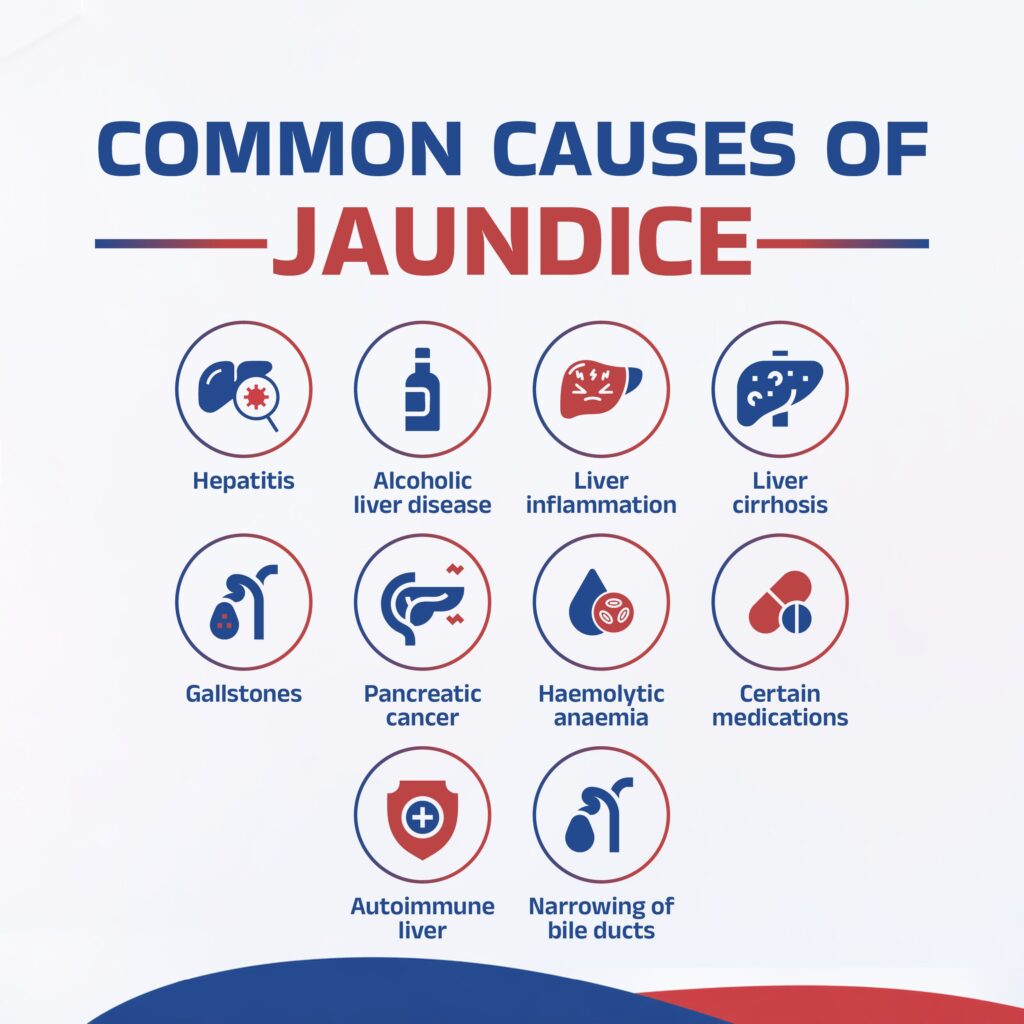
Common Causes of Jaundice
- Viral hepatitis including Hepatitis A, B and C
- Alcoholic liver disease
- Non alcoholic fatty liver disease progressing to liver inflammation
- Liver cirrhosis
- Gallstones blocking the bile ducts
- Pancreatic or bile duct cancer causing obstruction
- Haemolytic anaemia leading to excessive red blood cell breakdown
- Certain medications that affect liver function
- Autoimmune liver conditions
- Biliary strictures or narrowing of the bile ducts
When Should You See a Doctor for Jaundice?
- Sudden onset of yellowing of the skin or eyes
- Yellowing accompanied by severe abdominal pain
- High fever along with jaundice symptoms
- Dark urine and pale stools appearing together
- Jaundice that is worsening progressively
- Confusion or altered mental state along with jaundice
- Jaundice appearing in a newborn or young child
Jaundice Treatment Options in Nagpur
| Treatment Type | Suitable For |
|---|---|
| Antiviral medications | Viral hepatitis related jaundice |
| Alcohol cessation and liver support | Alcoholic liver disease related jaundice |
| Medications and supportive care | Mild hepatic jaundice |
| Endoscopic bile duct clearance | Gallstone related obstructive jaundice |
| Surgical intervention | Tumour or stricture related bile duct obstruction |
| Blood transfusion or haematological treatment | Haemolytic anaemia related jaundice |
| Dietary and lifestyle modifications | Supportive care for all types of jaundice |
| Regular liver function monitoring | Ongoing assessment during recovery |
Why Choose LGI Hospital for Jaundice Treatment in Nagpur?
- Specialised Hepatology and Gastroenterology Team: LGI Hospital in Nagpur has a dedicated team of hepatologists and gastroenterologists with extensive expertise in diagnosing and treating all types of jaundice and the underlying liver and biliary conditions that cause it.
- Comprehensive Diagnostic Capabilities: From liver function tests and hepatitis serology to advanced imaging, endoscopic evaluation and liver biopsy, LGI Hospital in Dhantoli, Nagpur provides the full range of diagnostic tools needed for accurate jaundice evaluation.
- Root Cause Focused Treatment: The specialist team at LGI Hospital focuses on identifying and treating the precise underlying cause of jaundice rather than managing symptoms alone, ensuring effective recovery and prevention of recurrence.
- Complete Liver and GI Care Under One Roof: As a dedicated single speciality gastroenterology and liver hospital, LGI Hospital provides all aspects of jaundice care including medical management, endoscopic procedures and surgical intervention when required, all under one roof.
FAQ
Q1. Can jaundice be cured completely?
Yes, jaundice can be cured completely in most cases when the underlying cause is accurately identified and treated. The outcome depends on the specific cause and how early treatment is initiated. Most cases of jaundice caused by viral hepatitis, gallstones or medication respond well to appropriate treatment under specialist guidance.
Q2. What are the symptoms of jaundice?
The most characteristic symptom of jaundice is yellowing of the skin and whites of the eyes. Other symptoms include dark urine, pale stools, persistent itching, fatigue, abdominal discomfort, nausea and fever in cases where infection is involved. A hepatologist or gastroenterologist should be consulted for accurate diagnosis.
Q3. What causes jaundice in adults?
Jaundice in adults can be caused by viral hepatitis, alcoholic liver disease, fatty liver disease, liver cirrhosis, gallstones, bile duct obstruction, certain medications or haemolytic conditions. Accurate diagnosis through blood tests and imaging is essential to determine the specific cause.
Q4. How long does jaundice treatment take?
The duration of jaundice treatment depends entirely on the underlying cause. Mild jaundice related to acute viral hepatitis may resolve within a few weeks with appropriate rest and supportive care. Jaundice caused by bile duct obstruction or chronic liver disease may require more intensive treatment with a longer recovery period.
Q5. Is jaundice related to liver disease?
Yes, jaundice is closely related to liver function. The liver plays a central role in processing bilirubin and any condition that impairs liver function can lead to jaundice. However, jaundice can also occur due to bile duct obstruction or excessive red blood cell breakdown unrelated to the liver itself. A proper medical evaluation is essential to determine the exact cause.
- Diagnostic Precision: Endoscopy allows for direct visualization of internal organs. This enables accurate diagnosis of various conditions such as ulcers, inflammation, tumors, and other abnormalities.
- List Item #2
- List Item #3
- Diagnostic & Therapeutic Upper GI Endoscopy
- Diagnostic & Therapeutic Colonoscopy
- Capsule Endoscopy
- ERCP & Cholangio-pancreatoscopy
- Endoscopic Ultrasound [EUS]