
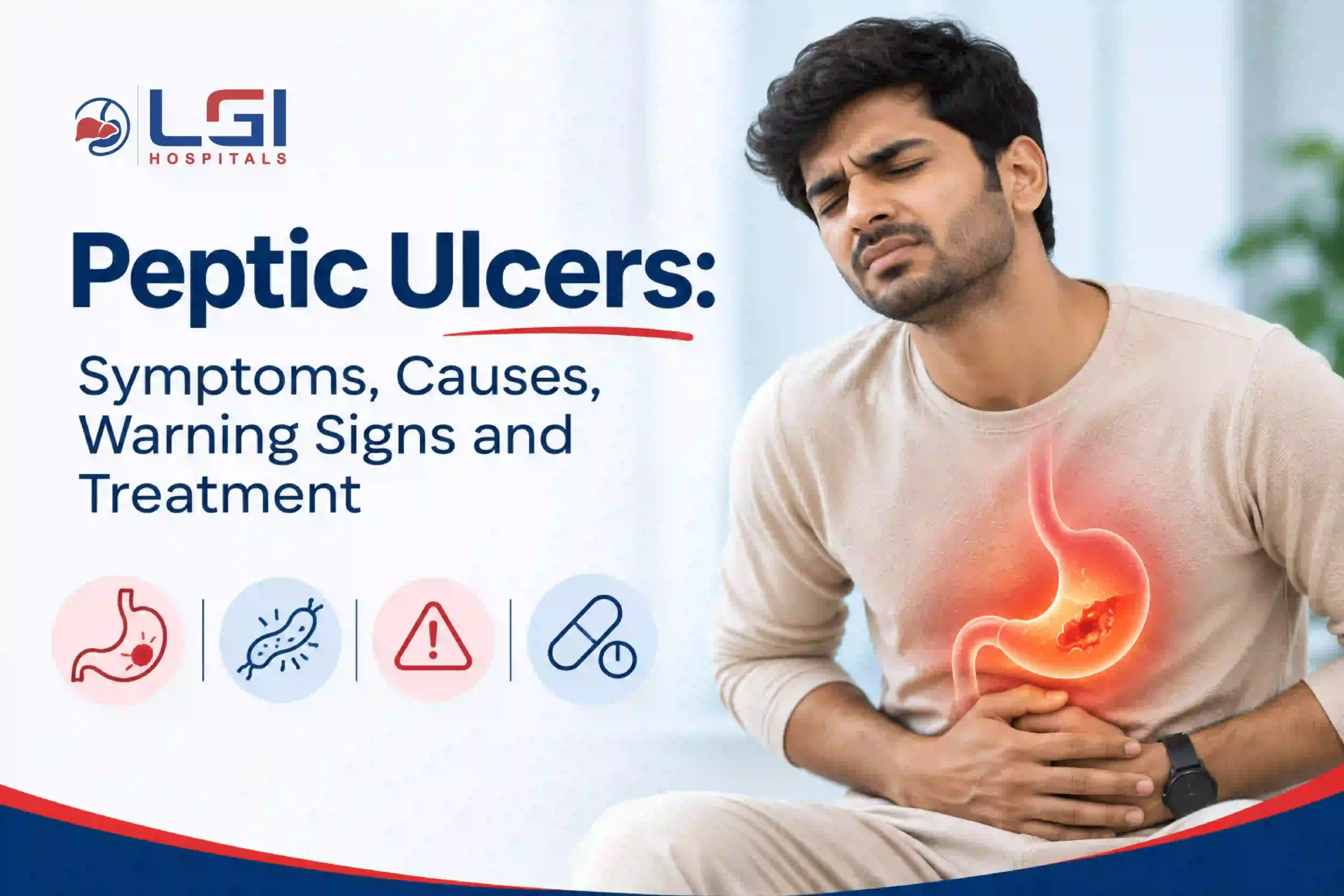
Persistent stomach pain, burning sensations in the upper abdomen or discomfort that returns between meals may sometimes indicate a peptic ulcer. Peptic ulcers are open sores that develop in the lining of the stomach or the first part of the small intestine, known as the duodenum. An ulcer in the stomach is called a gastric ulcer, while one in the duodenum is known as a duodenal ulcer.
The most common symptom is a burning or gnawing pain in the upper abdomen, although some people may not experience noticeable symptoms. Most peptic ulcers can heal with appropriate treatment. However, identifying the underlying cause is important to reduce the risk of recurrence and complications.
At LGI Hospitals, understanding the cause of recurring digestive symptoms is an important part of guiding patients towards appropriate evaluation and treatment. Knowing the warning signs of peptic ulcers can help patients recognise when medical attention may be needed.
What Are Peptic Ulcers?
The stomach produces acid to help digest food. Normally, a protective mucus layer shields the lining of the stomach and duodenum from this acid. When this protective barrier is damaged, stomach acid can affect the underlying tissue and create an open sore. This is called a peptic ulcer.
Stomach Ulcer vs Duodenal Ulcer
| Gastric (stomach) ulcer | Duodenal ulcer | |
| Where it forms | Lining of the stomach | First part of the small intestine |
| Pain and meals | Pain may come on soon after eating | Pain may ease after eating, then return 2 to 3 hours later |
These pain patterns are typical but not reliable for identifying the type of ulcer. A medical assessment and appropriate tests are needed to determine where an ulcer is located.
What Are the Common Symptoms of Peptic Ulcers?
The most common peptic ulcer symptom is a burning or gnawing pain in the upper abdomen, between the navel and the breastbone.
The pain may occur when the stomach is empty, such as between meals or at night, and can sometimes wake a person from sleep. Eating food or taking an antacid may provide temporary relief for some people, while others may notice that their discomfort becomes worse after meals.
Other possible symptoms include:
- Bloating or a feeling of fullness in the abdomen.
- Feeling full quickly, even after eating a small meal.
- Nausea.
- Frequent belching.
- Discomfort that keeps returning after temporary relief.
Some people have no noticeable symptoms until a complication, such as bleeding, develops.
These symptoms can also occur with indigestion, gallbladder problems and gastritis. Gastritis refers to inflammation of the stomach lining, whereas a peptic ulcer is an actual sore. Therefore, symptoms alone cannot confirm the presence or type of ulcer.
If upper abdominal pain keeps returning or antacids provide only temporary relief, consulting a doctor can help identify the underlying cause.
What Causes Peptic Ulcers?
Most peptic ulcers develop due to two main causes: Helicobacter pylori infection and regular use of certain painkillers.
H. pylori Infection
Helicobacter pylori (H. pylori) is a bacterium that can live in the stomach for years, sometimes without causing noticeable symptoms. Unlike many other bacteria, it can survive the acidic stomach environment by sheltering within the protective mucus layer and reducing the acidity around itself.
Over time, the infection can cause inflammation and weaken the stomach’s protective lining, allowing acid to damage the underlying tissue. Although many people carry H. pylori without developing an ulcer, it remains one of the most common causes of peptic ulcer disease.
Identifying and treating the infection is important because clearing H. pylori can reduce the likelihood of an ulcer returning. Patients can also read more about how H. pylori infection is detected with a urea breath test.
Painkillers (NSAIDs)
Regular use of non-steroidal anti-inflammatory drugs (NSAIDs), such as aspirin, ibuprofen, naproxen and diclofenac, can increase the risk of peptic ulcers.
These medicines reduce natural substances that help protect the stomach lining. As a result, the lining becomes more vulnerable to damage from stomach acid.
The risk may increase with regular or high-dose use, taking multiple NSAIDs together, or combining them with steroids, blood thinners or certain other medicines.
People who regularly take painkillers for joint pain, headaches or heart-related conditions should discuss their medication with a doctor. Prescribed medicines, especially aspirin used for heart protection, should never be stopped without medical advice.
Other Risk Factors
Certain factors may increase the likelihood of developing ulcers or experiencing complications. These include:
- Smoking.
- Heavy alcohol consumption.
- Being over 60 years of age.
- A previous history of peptic ulcers.
- Rare conditions such as Zollinger-Ellison syndrome, which causes excessive stomach acid production.
What About Spicy Food and Stress?
Spicy food and everyday stress do not cause most peptic ulcers. However, they may aggravate digestive discomfort in people who already have an ulcer.
It is important to distinguish between factors that cause an ulcer and those that simply trigger or worsen its symptoms.
What Are the Warning Signs and Complications of Peptic Ulcers?
Most peptic ulcers can be treated successfully, but complications may develop if an ulcer damages the surrounding tissue or affects blood vessels.
Possible Complications
- Bleeding ulcer: An ulcer may damage a blood vessel and cause bleeding into the stomach or intestine. Slow bleeding may go unnoticed initially and lead to tiredness, weakness or anaemia over time. Sudden or significant bleeding may cause vomiting blood, coffee-ground-like vomit, black stools, dizziness or fainting. Read more about when vomiting blood is an emergency.
- Perforation: This occurs when an ulcer creates a hole through the wall of the stomach or duodenum. It can cause a serious abdominal infection and requires emergency medical treatment.
- Gastric outlet obstruction: Swelling or scarring caused by an ulcer may block food from leaving the stomach. This can lead to early fullness, repeated vomiting and weight loss.
Emergency Warning Signs: Go to Hospital Immediately
Seek emergency medical care if you experience:
- Vomiting blood or vomit that resembles coffee grounds.
- Black, tarry or sticky stools.
- Sudden, severe abdominal pain that does not go away.
- Fainting, dizziness, a fast heartbeat or extreme weakness.
These symptoms may indicate significant bleeding or perforation. Do not wait for them to settle or attempt to manage them with home remedies.
How Are Peptic Ulcers Diagnosed?
A doctor will usually ask about your symptoms, medical history and the medicines you take. Based on your condition, one or more investigations may be recommended to identify an ulcer and determine its underlying cause.
Common diagnostic methods include:
- Upper GI endoscopy: A thin, flexible tube with a camera is passed through the mouth to examine the lining of the stomach and duodenum. It helps identify whether an ulcer is present and where it is located. Find out what happens during an endoscopy.
- Biopsy: A small tissue sample may be collected during endoscopy to test for H. pylori. Depending on the findings, a biopsy or repeat endoscopy may also be recommended for a stomach ulcer to assess healing and rule out other conditions.
- Urea breath test or stool antigen test: These tests help detect H. pylori without requiring an endoscopy. Certain medicines, including PPIs and antibiotics, can affect test results, so inform your doctor about any medication you are taking.
- Other investigations: Blood tests may be recommended to check for anaemia, while imaging tests may be needed if a complication is suspected.
Not every patient requires all these tests. The doctor selects investigations based on symptoms, age, medical history and warning signs.
At LGI Hospitals, appropriate medical evaluation is important for understanding recurring digestive symptoms and identifying whether further investigations may be necessary. The choice of diagnostic test should always depend on the patient’s clinical condition.
What Are the Treatment Options for Peptic Ulcers?
Peptic ulcer treatment depends on the underlying cause, the location of the ulcer and its severity. Most ulcers heal with appropriate medicines and management of the factors responsible for their development.
Acid-Reducing Medicines
Proton pump inhibitors (PPIs) reduce the amount of acid produced by the stomach, giving the ulcer time to heal. H2 blockers may also be used in certain cases.
Antacids can provide temporary relief from discomfort, but they do not treat the underlying cause or heal an ulcer on their own.
Treatment for H. pylori
If H. pylori infection is confirmed, the doctor may prescribe a combination of medicines, usually antibiotics along with an acid-reducing medicine.
The exact treatment combination depends on the patient’s clinical assessment and factors such as antibiotic resistance. Patients should complete the entire prescribed course, even if symptoms improve earlier. Stopping treatment too soon may allow the infection to remain.
Follow-Up Testing
When appropriate, a doctor may recommend a urea breath test or stool antigen test after treatment to confirm that the H. pylori infection has cleared.
This follow-up is important because successful treatment of the infection helps reduce the risk of ulcer recurrence.
Reviewing Painkillers
If NSAIDs are responsible for an ulcer, the doctor may recommend stopping, changing or reducing the medicine, or adding a stomach-protecting treatment.
Any change to prescribed medication should be made only under medical supervision.
Treating Complications
Bleeding ulcers can often be managed through endoscopic procedures. Surgery may be required in selected cases, such as perforation or bleeding that cannot be controlled through endoscopy.
Avoiding smoking and heavy alcohol consumption may also support recovery.
When Should You Consult a Gastroenterologist?
Recurring upper abdominal pain is often dismissed as acidity or indigestion. However, persistent discomfort may require medical evaluation to identify whether an ulcer or another digestive condition is responsible.
Consult a doctor if you experience:
- Upper abdominal pain that keeps returning.
- Pain that returns after the temporary effect of antacids wears off.
- Ongoing bloating, nausea or early fullness.
- Unexplained weight loss or loss of appetite.
- A history of ulcers or regular use of painkillers.
If you experience vomiting blood, black stools or sudden severe abdominal pain, seek emergency medical attention immediately.
For patients looking for a gastroenterologist in Nagpur, LGI Hospitals offers a point of consultation for recurring digestive concerns, including symptoms that may be associated with peptic ulcers. Medical evaluation can help identify the possible cause, determine which investigations are appropriate and guide the next steps in treatment.
Understanding the difference between occasional acidity and recurring digestive symptoms can help patients seek timely medical advice instead of relying on repeated self-medication.
FAQs
Most peptic ulcers are caused by H. pylori infection or regular use of NSAID painkillers such as aspirin and ibuprofen. Both can weaken the protective lining of the stomach, allowing acid to damage the underlying tissue.
Yes, most peptic ulcers heal with appropriate treatment. Identifying and treating the underlying cause, such as clearing H. pylori infection or reviewing NSAID use, helps reduce the likelihood of recurrence.
Vomiting blood, black or tarry stools, sudden severe abdominal pain, dizziness and fainting may indicate an ulcer complication. These symptoms require emergency medical attention.
A stomach ulcer generally heals with medicines prescribed after diagnosis. Treatment may include acid-reducing medicines and antibiotics if H. pylori infection is present. Antacids and home remedies alone are not sufficient to heal an ulcer.
Yes, a peptic ulcer can return, particularly if H. pylori infection is not completely cleared or NSAID use continues without appropriate protection. Completing the prescribed treatment and undergoing follow-up testing when recommended can help reduce this risk.
Disclaimer
This article is for general information only and is not medical advice. Please consult a qualified doctor for the diagnosis and treatment of any symptoms. In a medical emergency, contact emergency services immediately.