
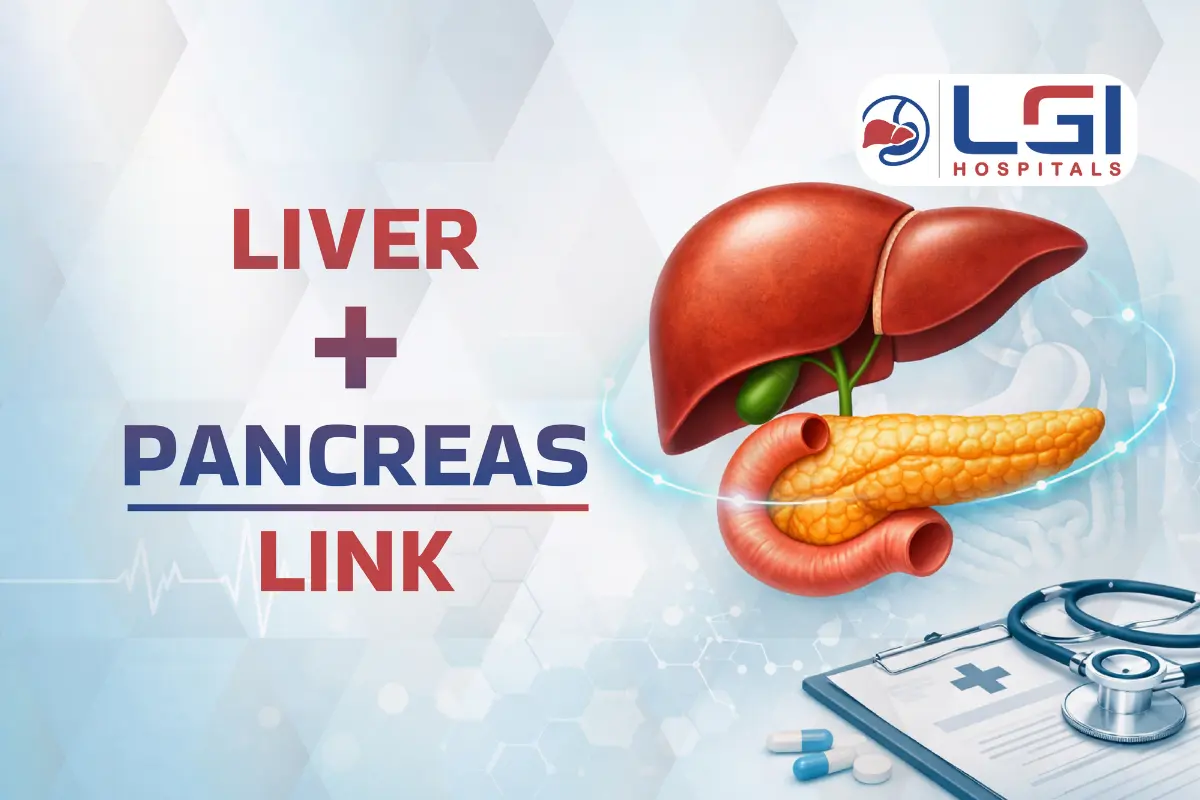
The liver and pancreas are two of the most metabolically active organs in the human body, and they are far more interconnected than most people realize. They share a common drainage pathway into the small intestine, they work together to regulate digestion and blood sugar, and disease in one organ frequently triggers or worsens disease in the other. Yet patients are often told they have a liver problem or a pancreas problem without being given a clear picture of how these two organs function as a coordinated system.
In this blog, you will learn how the liver and pancreas work together, what happens when either or both fail, and why understanding this connection matters for anyone managing a digestive or metabolic condition. This anatomical and functional relationship has real clinical implications for diagnosis, treatment, and long-term monitoring.
Gastroenterologists and hepatologists at specialized centers like LGI Hospitals in Nagpur regularly manage conditions that involve both organs simultaneously, which is why a clear understanding of this connection is valuable for patients navigating these diagnoses.
Quick Overview
- Shared pathway: Both the liver and pancreas drain into the duodenum through the common bile duct and pancreatic duct, which merge at the ampulla of Vater
- Shared function: Together they regulate digestion of fats, proteins, and carbohydrates, and play central roles in blood sugar and cholesterol metabolism
- Key connection: Gallstones from the liver-gallbladder system are the leading cause of acute pancreatitis
- When to be concerned: Jaundice, combined abdominal pain, elevated liver and pancreatic enzymes, or fatty changes in both organs on imaging
Anatomy: Where the Liver and Pancreas Meet
The liver produces bile, a digestive fluid that is stored in the gallbladder and released into the small intestine to help digest fats. The pancreas produces digestive enzymes that are also released into the small intestine. Both fluids travel through their respective ducts and merge at a structure called the ampulla of Vater before entering the first part of the small intestine, the duodenum.
This shared entry point is clinically significant. A gallstone that passes from the gallbladder into the common bile duct can become lodged at the ampulla of Vater, blocking the flow of both bile and pancreatic enzymes simultaneously. This is the most common cause of acute pancreatitis in India and explains why a problem that begins in the liver-gallbladder system can cause severe pancreatic inflammation.
How the Liver and Pancreas Work Together
In Digestion
After a meal, the gallbladder contracts and releases bile into the small intestine. At nearly the same time, the pancreas releases its digestive enzymes. Together, bile and pancreatic enzymes break down fats, proteins, and carbohydrates from food into absorbable nutrients.
Bile specifically emulsifies fats, breaking large fat globules into smaller droplets that pancreatic lipase (the fat-digesting enzyme) can act on more efficiently. Without adequate bile, pancreatic lipase cannot work effectively. Without adequate pancreatic enzymes, even well-emulsified fat cannot be fully absorbed.
In Blood Sugar Regulation
The liver plays a central role in glucose metabolism. It stores glucose as glycogen after meals and releases it back into the bloodstream during fasting. The pancreas regulates this process through insulin and glucagon. Insulin signals the liver to store glucose. Glucagon signals the liver to release it.
When either the liver or the pancreas is diseased, this glucose regulation system breaks down. Liver cirrhosis can cause a form of diabetes called hepatogenous diabetes. Pancreatic disease can cause pancreatogenic diabetes (type 3c diabetes). Both involve impaired blood sugar control but through different mechanisms.
In Cholesterol and Fat Metabolism
The liver produces cholesterol and processes dietary fats. The pancreas produces lipase to digest dietary fat. High dietary fat intake increases the workload on both organs. Conditions like high triglycerides and NAFLD affect both organs simultaneously, which is why fatty liver and fatty pancreas are frequently found together on imaging.
Explore: Fatty Pancreas causes and natural reversal
How Liver Disease Affects the Pancreas
Gallstones and Acute Pancreatitis
The most direct way liver disease affects the pancreas is through gallstones. The liver produces bile which can form stones in the gallbladder. When a gallstone migrates into the common bile duct and obstructs the ampulla of Vater, it blocks pancreatic drainage, causing pancreatic enzymes to back up and autodigest the pancreatic tissue. This is called gallstone pancreatitis and is the leading cause of acute pancreatitis in India.
Liver Cirrhosis and Pancreatic Changes
Advanced liver cirrhosis changes the anatomy and pressure within the portal venous system. This can affect blood flow to the pancreas and alter its hormonal environment. Patients with liver cirrhosis have higher rates of pancreatic exocrine insufficiency and glucose regulation abnormalities.
NAFLD and Fatty Pancreas
Non-alcoholic fatty liver disease and fatty pancreas share identical metabolic risk factors and frequently coexist. Research consistently shows that patients with moderate to severe NAFLD have a significantly higher prevalence of fatty pancreas on imaging compared to those without liver steatosis.
Visit: Complete guide to pancreas diseases and disorders
How Pancreatic Disease Affects the Liver
Pancreatic Cancer and Bile Duct Obstruction
Pancreatic cancer arising in the head of the pancreas, the part closest to the bile duct, frequently compresses or invades the common bile duct. This causes obstructive jaundice, a condition where bile cannot drain into the intestine and backs up into the liver and bloodstream. Prolonged bile duct obstruction can cause secondary liver damage if not relieved.
Chronic Pancreatitis and Bile Duct Stricture
Inflammation and scarring from chronic pancreatitis can gradually narrow the bile duct as it passes through the head of the pancreas. This causes chronic bile duct obstruction, which can lead to cholestatic liver disease over time if untreated.
Alcohol and Both Organs
Heavy alcohol use is directly toxic to both the liver and the pancreas. It is one of the leading causes of both liver cirrhosis and chronic pancreatitis, and it frequently damages both organs simultaneously in the same patient.
Conditions That Affect Both Organs Together
| Condition | Liver Involvement | Pancreas Involvement |
| Alcoholic disease | Alcoholic hepatitis, cirrhosis | Alcoholic pancreatitis |
| Metabolic syndrome | NAFLD, steatohepatitis | Fatty pancreas, insulin resistance |
| Gallstone disease | Cholecystitis, cholangitis | Gallstone pancreatitis |
| Hemochromatosis | Iron overload hepatopathy | Pancreatic iron deposition, diabetes |
| Autoimmune conditions | Autoimmune hepatitis | Autoimmune pancreatitis |
| Cystic fibrosis | Hepatic steatosis, cirrhosis | Exocrine insufficiency, diabetes |
Diagnosis When Both Organs Are Involved
When both the liver and pancreas are suspected, the diagnostic workup typically includes:
- Liver function tests (bilirubin, ALT, AST, ALP, GGT)
- Pancreatic enzyme levels (amylase, lipase)
- Blood glucose and HbA1c
- Ultrasound abdomen as first-line imaging
- MRCP (Magnetic Resonance Cholangiopancreatography) for detailed ductal anatomy
- CT scan for tumor or mass evaluation
- Endoscopic Ultrasound (EUS) for fine evaluation of the pancreatic head and bile duct
Discover: 7 warning symptoms of pancreas problems
Key Takeaways
The liver and pancreas are not isolated organs. They share anatomy, function, and disease risk in ways that have direct implications for how conditions in each organ are diagnosed, treated, and monitored.
To summarize:
- The liver and pancreas share a common drainage pathway into the small intestine, making disease in one frequently relevant to the other
- Gallstones from the biliary system are the leading cause of acute pancreatitis
- NAFLD and fatty pancreas are metabolically linked and frequently coexist
- Chronic pancreatitis and pancreatic cancer can both cause secondary liver problems through bile duct involvement
- Alcohol damages both organs simultaneously and is a major risk factor for disease in each
If you have been diagnosed with a liver condition or a pancreatic condition, it is worth discussing with your gastroenterologist whether the other organ needs evaluation as well. At LGI Hospitals in Dhantoli, Nagpur, medical gastroenterology and hepatology are practiced under one roof, making coordinated evaluation of both organs straightforward.
Medical Disclaimer: This article is intended for general educational purposes and does not constitute medical advice. The liver and pancreas are complex organs and conditions affecting them require professional medical diagnosis and management. If you have been diagnosed with a liver or pancreatic condition, or if you are experiencing symptoms suggesting involvement of either organ, consult a qualified gastroenterologist or hepatologist. Do not attempt to interpret imaging reports, liver function tests, or pancreatic enzyme results without medical guidance.
FAQ Section
Q1. What is the connection between the liver and pancreas in digestion? The liver produces bile and the pancreas produces digestive enzymes. Both are released into the small intestine through a shared drainage point called the ampulla of Vater. Together, bile and pancreatic enzymes are responsible for breaking down fats, proteins, and carbohydrates from food into absorbable nutrients.
Q2. Can gallstones cause pancreatitis? Yes. Gallstones that migrate from the gallbladder into the common bile duct can block the shared drainage point of the bile duct and pancreatic duct. This prevents pancreatic enzymes from draining normally and causes them to back up and inflame the pancreatic tissue, resulting in gallstone pancreatitis.
Q3. Can you have both fatty liver and fatty pancreas at the same time? Yes, and it is quite common. Both conditions share the same metabolic risk factors including obesity, type 2 diabetes, high triglycerides, and metabolic syndrome. Research consistently shows a higher prevalence of fatty pancreas in patients with non-alcoholic fatty liver disease.
Q4. How does alcohol affect both the liver and pancreas? Alcohol is directly toxic to both organs. In the liver, chronic alcohol use causes alcoholic hepatitis and cirrhosis. In the pancreas, it causes acute and chronic pancreatitis. Many long-term heavy drinkers develop significant damage to both organs simultaneously.
Q5. Which doctor treats conditions involving both the liver and pancreas? A gastroenterologist with hepatology expertise manages conditions involving both organs. Specialized GI hospitals like LGI Hospitals in Nagpur provide combined gastroenterology and hepatology care, allowing evaluation of both organs in a single consultation.
Q6. Does jaundice always mean liver disease? Not always. Jaundice can result from liver disease but it can also be caused by bile duct obstruction from a pancreatic tumor or from gallstones in the common bile duct. Determining the cause of jaundice requires blood tests and imaging to identify whether the problem is in the liver, bile duct, or pancreas.