
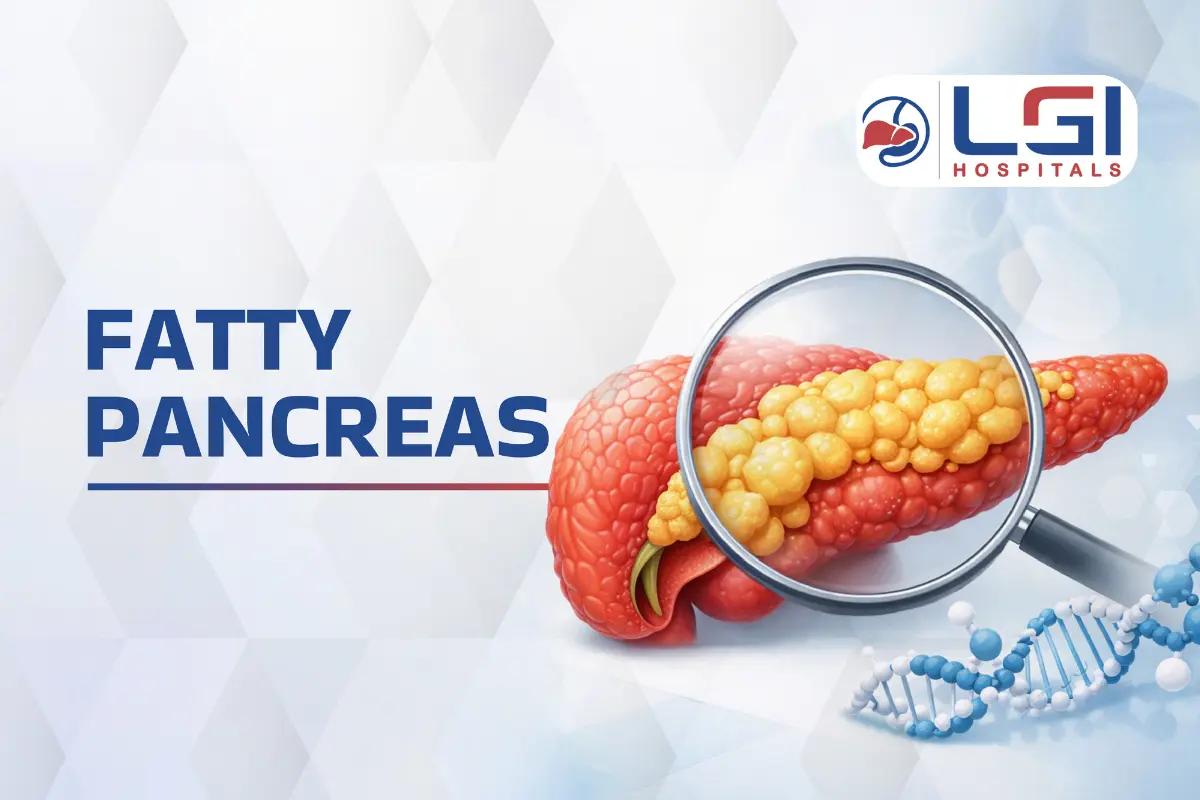
Most people have heard of fatty liver. Far fewer know that the pancreas can accumulate excess fat in exactly the same way, and that this condition carries its own set of health risks that are only now being fully understood. Fatty pancreas, also called pancreatic steatosis or pancreatic lipomatosis, is increasingly being detected in India as rates of obesity, metabolic syndrome, and type 2 diabetes continue to rise. The condition is often found incidentally on an ultrasound done for unrelated reasons, leaving patients with little guidance on what it means or what to do next.
In this blog, you will learn exactly what fatty pancreas is, what causes fat to accumulate in pancreatic tissue, what risks it carries, and what dietary and lifestyle changes have shown the strongest evidence for reversing or managing the condition. This is a practical guide grounded in current gastroenterological understanding of the condition.
Fatty pancreas is not a condition to be dismissed because it is currently asymptomatic. Understanding it now, before complications develop, is the most effective approach to long-term pancreatic health.
Quick Overview
- Definition: Fatty pancreas is the abnormal infiltration of fat into pancreatic tissue, reducing its functional capacity over time
- Key concern: Associated with increased risk of pancreatitis, type 2 diabetes, and potentially pancreatic cancer
- Who is most affected: People with obesity, metabolic syndrome, non-alcoholic fatty liver disease, high triglycerides, or type 2 diabetes
- Good news: Fatty pancreas can often be improved significantly through targeted dietary changes and lifestyle modification
What is Fatty Pancreas?
Fatty pancreas refers to the replacement of normal pancreatic tissue with fat cells. This can be diffuse, affecting the entire pancreas, or focal, affecting only one part of it. Unlike other organs such as the liver, the pancreas has relatively limited regenerative capacity, which makes the preservation of remaining healthy tissue important.
The condition is detected on imaging, typically abdominal ultrasound or CT scan, which shows increased echogenicity (brightness) in the pancreas compared to normal tissue. It is not detectable through standard blood tests alone.
Fatty pancreas sits within a broader cluster of metabolic conditions. It frequently coexists with non-alcoholic fatty liver disease (NAFLD), obesity, type 2 diabetes, and high triglycerides, and shares many of the same root causes.
Know types of Pancreas diseases and disorders
What Causes Fatty Pancreas?
Obesity and Excess Visceral Fat
The strongest and most consistent association with fatty pancreas is obesity, particularly the accumulation of visceral fat around the abdominal organs. When the body stores excess fat, it deposits it not just under the skin but around and within organs including the pancreas. Body mass index (BMI) above 25, and particularly above 30, correlates significantly with fatty pancreas on imaging studies.
Metabolic Syndrome
Metabolic syndrome is a cluster of conditions including central obesity, high blood pressure, high blood sugar, high triglycerides, and low HDL cholesterol. Each component of metabolic syndrome independently increases the risk of fatty pancreas, and the combination creates a compounding effect.
Type 2 Diabetes and Insulin Resistance
Insulin resistance, the hallmark of type 2 diabetes, drives fat deposition in multiple organs. The pancreas is not exempt. Fat accumulation in pancreatic tissue further impairs insulin secretion, creating a cycle where diabetes worsens fatty pancreas and fatty pancreas worsens diabetes.
High Triglycerides (Hypertriglyceridemia)
Elevated blood triglyceride levels are both a cause and a consequence of fatty pancreas. Very high triglycerides (above 1000 mg/dL) can also trigger acute pancreatitis, making this one of the more dangerous associations of the condition.
Non-Alcoholic Fatty Liver Disease (NAFLD)
Fatty pancreas and NAFLD share the same metabolic risk factors and frequently occur together. Studies have shown that patients with NAFLD have a significantly higher prevalence of fatty pancreas compared to those without liver fat accumulation.
Alcohol Use
Chronic alcohol use contributes to fat deposition in the pancreas in addition to its direct toxic effects on pancreatic tissue. Alcohol-related fatty pancreas carries additional risk because it can progress more rapidly to chronic pancreatitis.
Age
The prevalence of fatty pancreas increases with age, independent of other risk factors, though the mechanism is not fully understood.
Discover: warning symptoms of pancreas problems
Do Fatty Pancreas Cause Symptoms?
In most cases, fatty pancreas itself does not cause specific symptoms in its early stages. This is why it is so often discovered incidentally. However, as the condition progresses or when complications develop, patients may experience:
- Vague upper abdominal discomfort
- Bloating or digestive irregularity
- Unexplained weight changes
- Features of metabolic syndrome becoming more pronounced
The more significant concern is not the direct symptoms of fatty pancreas but the conditions it predisposes to, including pancreatitis, diabetes progression, and potentially increased cancer risk with long-term fat accumulation.
Health Risks Associated with Fatty Pancreas
| Risk | How Fatty Pancreas Contributes |
| Acute pancreatitis | Fat infiltration makes pancreatic tissue more vulnerable to inflammation |
| Type 2 diabetes | Fat in islet cells impairs insulin secretion |
| Chronic pancreatitis | Repeated inflammation in fatty tissue leads to scarring |
| Pancreatic cancer | Emerging evidence suggests association with long-term steatosis |
| Exocrine insufficiency | Fat replacing enzyme-producing tissue reduces digestive capacity |
How to Reverse Fatty Pancreas Naturally
The central good news about fatty pancreas is that it is one of the more modifiable pancreatic conditions. The same lifestyle interventions that improve metabolic health broadly also reduce pancreatic fat accumulation specifically.
1. Weight Loss
The most effective single intervention for fatty pancreas is sustained, moderate weight loss. Studies have shown that losing 7 to 10 percent of body weight can lead to measurable reduction in pancreatic fat on imaging. Crash dieting is counterproductive. Gradual, sustained loss of 0.5 to 1 kg per week through caloric reduction and increased physical activity is the evidence-based approach.
2. Low-Fat, Anti-Inflammatory Diet
Diet modification is the cornerstone of natural management. Key principles include:
- Reduce saturated fats from fried foods, processed meats, and full-fat dairy
- Increase omega-3 rich foods such as fish, walnuts, and flaxseed
- Prioritize high-fiber foods including vegetables, legumes, and whole grains
- Limit refined carbohydrates and added sugars which drive triglyceride production
- Avoid alcohol completely
Read: Complete nutrition guide for pancreas health
3. Control Blood Sugar and Triglycerides
Managing diabetes and high triglycerides through diet, physical activity, and prescribed medication where needed directly reduces the metabolic drivers of fatty pancreas. Keeping HbA1c below 7 percent and triglycerides below 150 mg/dL are reasonable targets in consultation with a treating doctor.
4. Regular Physical Activity
Exercise reduces visceral fat, improves insulin sensitivity, and lowers triglycerides, all of which directly benefit fatty pancreas. A minimum of 150 minutes of moderate-intensity aerobic activity per week (such as brisk walking, cycling, or swimming) is the standard recommendation. Resistance training adds additional metabolic benefit.
5. Avoid Alcohol
Alcohol is a direct pancreatic toxin and a driver of triglyceride elevation. For anyone with fatty pancreas, alcohol avoidance is not optional. Even moderate regular alcohol consumption can accelerate fat accumulation and increase inflammation risk in already-compromised pancreatic tissue.
6. Treat Underlying Metabolic Conditions
Fatty pancreas does not exist in isolation. Managing the full metabolic picture including blood pressure, cholesterol, blood sugar, and body weight holistically produces better outcomes than targeting any single parameter in isolation.
Foods to Focus On and Avoid
| Eat More | Eat Less or Avoid |
| Vegetables, especially leafy greens | Fried and deep-fried foods |
| Whole grains (oats, brown rice, millets) | White bread, maida-based foods |
| Legumes and lentils | Sugary drinks and packaged juices |
| Fish rich in omega-3 (sardines, mackerel) | Red meat and processed meats |
| Nuts and seeds in moderation | Full-fat dairy in excess |
| Fruits with low glycemic index | Alcohol in any quantity |
| Olive oil and plant-based fats | Butter, ghee in large amounts |
When Medical Evaluation Is Needed
While lifestyle changes are the primary management for fatty pancreas, medical evaluation is important to:
- Confirm the diagnosis and rule out other pancreatic conditions
- Assess the degree of fat infiltration on imaging
- Monitor for early signs of exocrine insufficiency or diabetes
- Identify and treat coexisting conditions like NAFLD or hypertriglyceridemia
- Schedule periodic follow-up imaging to track progression or improvement
A gastroenterologist or hepatologist is the appropriate specialist for fatty pancreas evaluation, particularly when it coexists with liver disease or metabolic syndrome.
Know how the liver and pancreas are connected
Key Takeaways
Fatty pancreas is a metabolic condition that is increasingly common in India and significantly underrecognized. It is not an emergency, but it is not something to ignore either. The same habits that cause it, excess weight, poor diet, high blood sugar, and inactivity, are the same habits that can reverse it when addressed systematically.
To summarize:
- Fatty pancreas is fat accumulation in pancreatic tissue, most commonly associated with obesity and metabolic syndrome
- It is often asymptomatic but carries real risks including pancreatitis, diabetes progression, and long-term cancer association
- Weight loss, dietary modification, blood sugar control, and physical activity are the most effective natural interventions
- Alcohol should be avoided completely
- Regular monitoring with a gastroenterologist is important to track progression and catch complications early
For evaluation of fatty pancreas or related metabolic conditions, LGI Hospitals in Dhantoli, Nagpur offers dedicated gastroenterology and hepatology care with the diagnostic infrastructure to assess and monitor your pancreatic health accurately.
Medical Disclaimer: This article is for general informational purposes only. Fatty pancreas is a medical condition that requires proper diagnosis through imaging and clinical evaluation. The dietary and lifestyle suggestions in this blog are general guidelines and are not a substitute for personalized medical advice. Individual treatment plans should be developed in consultation with a qualified gastroenterologist based on your specific condition, coexisting health issues, and overall metabolic profile. Do not make significant changes to your diet or medication based solely on this content.
FAQ Section
Q1. Is fatty pancreas the same as fatty liver? They are related but distinct conditions. Both involve abnormal fat accumulation in organ tissue and share the same metabolic risk factors. They frequently coexist. However, the pancreas and liver are different organs with different functions, and the specific implications and management of fat in each organ differ.
Q2. Can fatty pancreas be detected on a routine blood test? No. Fatty pancreas does not produce specific abnormalities in standard blood tests in its early stages. It is typically detected on abdominal ultrasound or CT scan, where fat in the pancreas appears as increased brightness or density compared to normal tissue.
Q3. How long does it take to reverse fatty pancreas with diet and lifestyle changes? There is no fixed timeline. Studies have shown measurable improvement in pancreatic fat on imaging with 7 to 10 percent weight loss, which may take several months of consistent effort. The timeline depends on the degree of fat infiltration, adherence to lifestyle changes, and management of underlying metabolic conditions.
Q4. Does fatty pancreas always progress to a serious condition? Not necessarily. Many people with mild fatty pancreas who make sustained lifestyle improvements do not progress to pancreatitis or cancer. However, without intervention, particularly in the context of ongoing obesity, high triglycerides, or poorly controlled diabetes, the risk of progression increases over time.
Q5. Is fatty pancreas common in India? It is increasingly prevalent in India alongside the rising rates of obesity, type 2 diabetes, and metabolic syndrome. Exact prevalence data for India is still emerging, but clinical experience at gastroenterology centers suggests it is being detected more frequently than even a decade ago.
Q6. Should I avoid ghee and coconut oil if I have fatty pancreas? Saturated fats including those in ghee and coconut oil should be consumed in limited quantities when managing fatty pancreas. This does not mean complete elimination, but moderation is important. A gastroenterologist or clinical dietitian can help you establish specific quantities appropriate for your overall dietary pattern and metabolic profile.