
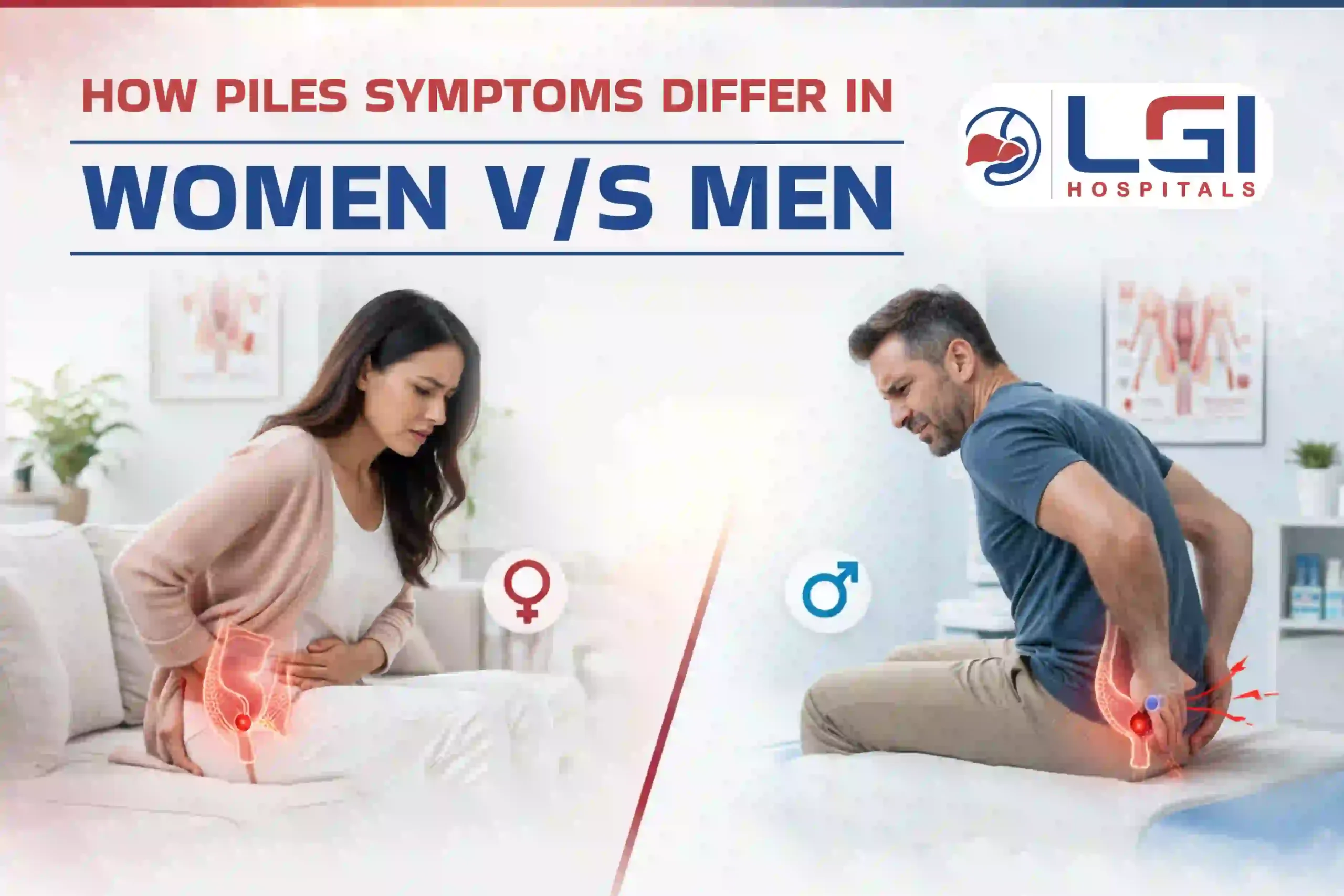
What Are Piles? (Hemorrhoids Explained)
Piles, medically known as hemorrhoids, are swollen and inflamed veins in the rectum and anus. Piles symptoms in women and men can vary in how they appear and feel. They are classified as:
Internal Piles – located inside the rectum, usually painless but cause bleeding
External Piles – located under the skin around the anus, often painful and itchy
Prolapsed Piles – internal piles that protrude outside the anus
Thrombosed Piles – external piles with a blood clot, causing severe pain
According to medical studies, nearly 75% of people experience piles at some point in their lifetime. While both men and women are affected, the symptoms, triggers, and severity often differ based on gender-specific biological factors
Common Symptoms Shared by Both Men and Women
Regardless of gender, the following piles symptoms are typically experienced by both:
- Bright red bleeding during or after bowel movements
- Pain and discomfort around the anus, especially while sitting
- Itching and irritation in the anal region
- Mucus discharge after passing stools
- Swelling or a lump near the anal opening
- A feeling of incomplete bowel emptying after using the toilet
If you are experiencing any of these symptoms, do not delay – consult the specialists at LGI Hospitals for piles treatment in Nagpur and get the right diagnosis today.
Piles Symptoms in Women – Key Differences
Women face unique biological, hormonal, and lifestyle factors that influence how piles develop and present. Here is a detailed breakdown:
1. Pregnancy-Related Piles Symptoms
Pregnancy is one of the most significant triggers of piles in women. As the uterus expands during the second and third trimester, it exerts increasing pressure on the inferior vena cava and pelvic veins, slowing blood circulation and causing rectal veins to swell.
Symptoms during pregnancy include:
- Sudden onset of rectal bleeding in the second or third trimester
- Intense itching and swelling around the anus
- A visible or felt lump near the anal area
- Prolapsed hemorrhoids due to straining during labor
- Symptoms that persist or worsen after delivery
2. Postpartum Piles Symptoms
Many women develop piles after childbirth. The intense pressure of vaginal delivery on the pelvic and anal region is a leading cause. Postpartum piles symptoms include:
- Painful external lumps near the anus
- Difficulty sitting for extended periods after delivery
- Bleeding mistakenly attributed to postpartum vaginal bleeding
- Emotional discomfort and distress during recovery
These symptoms are often under-reported because new mothers attribute all discomfort to childbirth recovery. Early diagnosis at LGI Hospitals ensures that postpartum women receive prompt and compassionate care.
3. Hormonal Fluctuations and the Menstrual Cycle
Women frequently report flare-ups of piles symptoms around their menstrual cycle. The hormone progesterone relaxes the walls of veins and slows digestive movement, leading to constipation and increased rectal pressure.
Menstrual cycle-related symptoms include:
- Worsening itching, pain, and swelling before or during periods
- Increased frequency of bleeding episodes during menstruation
- Water retention worsening anal tissue swelling
- Constipation-induced straining aggravating existing piles
4. Chronic Constipation Due to Hormonal Changes
Women are statistically more prone to constipation than men due to hormonal influences on gut motility. Chronic constipation is a primary driver of piles in women and leads to:
- Harder stools requiring painful straining
- Gradual development of internal piles that go unnoticed until they bleed
- Greater long-term discomfort during bowel movements
5. Symptoms Confused with Gynecological Conditions
One of the biggest diagnostic challenges piles symptoms in women are often mistaken for gynecological issues such as:
- Vaginal infections
- Endometriosis
- Ovarian cysts
- Uterine fibroids
As a result, women may overlook:
- Rectal bleeding, mistaking it for menstrual spotting
- Pelvic pressure, assuming it is a uterine issue
- Mucus discharge, confusing it with vaginal discharge
This leads to delayed diagnosis and worsening of piles. At LGI Hospitals, Nagpur, our specialists are trained to accurately differentiate piles symptoms from gynecological conditions, ensuring you get the correct diagnosis the first time.
Piles Symptoms in Men – Key Differences
Men are equally susceptible to piles, but their triggers and symptom patterns are driven more by lifestyle, occupation, and dietary habits.
1. Earlier Recognition of Rectal Bleeding
Men tend to identify rectal bleeding more quickly than women because they do not have menstrual bleeding to confuse it with. Noticing blood in the stool or on toilet paper is more alarming for men and often prompts faster medical consultation.
2. Pain During Physical Activity and Heavy Lifting
Men who engage in heavy weight lifting, construction work, or strenuous physical labor are at higher risk of developing external piles and thrombosed hemorrhoids.
Symptoms in physically active men include:
- Sharp, sudden pain during or after heavy lifting
- Thrombosed piles causing severe, acute pain
- Visible external swelling that worsens with exertion
- Discomfort during exercise or sports activities
3. Sedentary Jobs and Prolonged Sitting
Men in desk jobs or long-distance driving are particularly vulnerable to piles due to reduced circulation in the rectal region. Symptoms in this group include:
- Persistent dull pressure and discomfort while sitting
- Gradual swelling that becomes noticeable only when significantly painful
- Itching and irritation that worsens as the day progresses
4. Poor Dietary Habits and Dehydration
Men are more likely to consume low-fiber diets and inadequate water, which leads to chronic constipation and excessive straining. This contributes to:
- Faster progression from internal piles to prolapsed or Grade 3/4 piles
- More frequent recurrence due to unchanged eating habits
- Harder stools causing visible external hemorrhoids
5. Delayed Medical Consultation
Men frequently delay seeking medical care due to embarrassment or reluctance to discuss rectal symptoms. By the time they visit a doctor, piles may have progressed to advanced grades requiring surgical intervention.
Important: Early-stage piles (Grade 1 and 2) can often be treated with non-surgical procedures. Delaying treatment increases the risk of requiring surgery. Visit LGI Hospitals for piles treatment in Nagpur before symptoms escalate.
Women vs. Men – Side-by-Side Comparison Table
| Factor | Women | Men |
| Primary triggers | Pregnancy, hormones, constipation | Heavy lifting, sedentary lifestyle, poor diet |
| Bleeding recognition | May be confused with menstrual bleeding | Usually clearly identified |
| Hormonal influence | High – affects veins and digestion | Minimal |
| High-risk life stages | Pregnancy, postpartum, menopause | Middle age, physically demanding jobs |
| Diagnosis delay | Confusion with gynecological conditions | Embarrassment or neglect |
| Pain profile | Worst during pregnancy and postpartum | Worst after physical exertion |
| Constipation risk | Higher due to hormonal factors | Moderate – mainly diet-related |
| Treatment urgency | Often urgent during pregnancy/postpartum | Often delayed until symptoms are severe |
When Should You See a Doctor?
Do not ignore the symptoms. Consult a specialist immediately if you experience:
Rectal bleeding that recurs or does not stop
Severe, persistent pain around the anus
A visible lump near the anus that does not resolve
A feeling of incomplete bowel emptying for several days
Unusual mucus or discharge from the rectum
Piles symptoms in women during pregnancy or postpartum recovery
Fever along with anal pain (possible infection)
Frequently Asked Questions
Q1. Are piles more common in women or men?
Both men and women are equally affected by piles. However, women have additional risk factors such as pregnancy, childbirth, and hormonal changes that make them more vulnerable during specific life stages.
Q2. Can piles symptoms in women be confused with gynecological problems?
Yes. Rectal bleeding, pelvic pressure, and mucus discharge from piles are often mistaken for menstrual bleeding, vaginal infections, or uterine conditions. A proper clinical examination at a specialized hospital like LGI Hospitals ensures accurate diagnosis.
Q3. Do piles go away on their own in women after pregnancy?
Mild pregnancy-related piles may resolve after delivery with lifestyle changes and home care. However, persistent, painful, or bleeding piles require medical treatment. LGI Hospitals offers safe and effective postpartum piles treatment in Nagpur.
Q4. What is the best piles treatment for men with desk jobs?
For men with sedentary lifestyles, treatment includes dietary changes, increased physical activity, and medical procedures such as rubber band ligation or laser hemorrhoidectomy, depending on the grade of piles.
Q5. Is piles treatment safe during pregnancy?
Yes. Non-surgical treatments such as topical medications and dietary management are safe during pregnancy. Surgical options are evaluated post-delivery. The experts at LGI Hospitals provide pregnancy-safe piles management in Nagpur.
Q6. What are the grades of piles and which requires surgery?
- Grade 1 – Small internal piles, no prolapse, treated with diet and medication
- Grade 2 – Prolapse during straining but retracts on their own
- Grade 3 – Prolapse requires manual pushing back, may need procedures
- Grade 4 – Permanently prolapsed, usually requires surgical treatment
Why Choose LGI Hospitals for Piles Treatment in Nagpur?
When searching for piles treatment in Nagpur, LGI Hospitals is the trusted choice for thousands of patients across Central India. Here is why:
Expert Colorectal Surgeons with years of experience treating all grades of piles in both men and women
Advanced Minimally Invasive Treatments – laser surgery, rubber band ligation, sclerotherapy, and more
Women-Centric Care – specialized treatment plans for pregnant women, new mothers, and women experiencing hormonal piles
Accurate Diagnosis – state-of-the-art diagnostic tools to differentiate piles from other conditions
Fast Recovery – minimally invasive procedures mean less pain, shorter hospital stays, and quicker return to daily life
Confidential & Comfortable Environment – we ensure every patient feels at ease discussing sensitive symptoms
Affordable Treatment Packages – quality piles care accessible to all patients in Nagpur and surrounding regions
Book Your Consultation at LGI Hospitals – Piles Treatment in Nagpur
Do not let piles affect your quality of life any longer.
Whether you are a woman dealing with pregnancy-related piles or a man experiencing discomfort from a sedentary lifestyle – LGI Hospitals, Nagpur has the expertise, technology, and compassion to treat you effectively.
Medical Disclaimer: This blog is for informational purposes only and does not replace professional medical advice. Please consult a qualified doctor at LGI Hospitals or your nearest healthcare provider for diagnosis and personalized treatment.